
Blog & Latest Updates
Fly Fishing Articles
Insects by Common Name


Mayfly Family Isonychiidae (Slate Drakes)


Taxonomic Navigation -?-
Kingdom
Animalia (Animals)
» Phylum
Arthropoda (Arthropods)
» Class
Insecta (Insects)
» Order
Ephemeroptera (Mayflies)
» Family Isonychiidae (Slate Drakes)
| Genus in Isonychiidae |  |  |
| IsonychiaSlate Drakes | 0 | 0 |
Common Name
| Match | Common Name |
 | Slate Drakes |
This is page 3 of specimens of Isonychiidae. Visit the main Isonychiidae page for:
- The behavior and habitat of Isonychiidae.
Pictures of 20 Mayfly Specimens in the Family Isonychiidae:
Isonychia bicolor (Mahogany Dun) Mayfly Nymph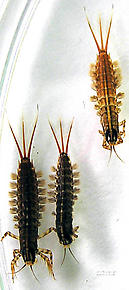 View 2 PicturesThese three Isonychia nymphs show the variety within the species from a single day at a single collection site.
View 2 PicturesThese three Isonychia nymphs show the variety within the species from a single day at a single collection site.Collected January 14, 2004 from the Namekagon River in Wisconsin
Added to Troutnut.com by Troutnut on January 25, 2006
Added to Troutnut.com by Troutnut on January 25, 2006
Isonychia bicolor (Mahogany Dun) Mayfly Nymph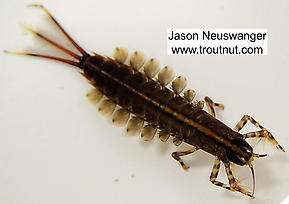 View 2 Pictures
View 2 PicturesCollected February 10, 2004 from the Namekagon River in Wisconsin
Added to Troutnut.com by Troutnut on January 25, 2006
Added to Troutnut.com by Troutnut on January 25, 2006
Isonychia bicolor (Mahogany Dun) Mayfly Nymph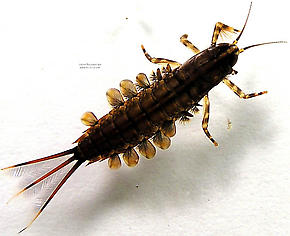 View 2 Pictures
View 2 PicturesCollected January 14, 2004 from unknown in Wisconsin
Added to Troutnut.com by Troutnut on January 25, 2006
Added to Troutnut.com by Troutnut on January 25, 2006
Female Isonychia bicolor (Mahogany Dun) Mayfly Dun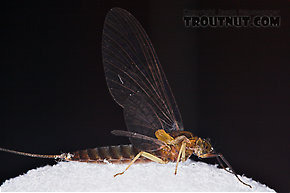 View 6 PicturesThis is a naturally crippled female Isonychia bicolor dun. One of her main wings came out as a deformed, crumpled yellow object. I found her flopped over on her side struggling on the surface of a small stream.
View 6 PicturesThis is a naturally crippled female Isonychia bicolor dun. One of her main wings came out as a deformed, crumpled yellow object. I found her flopped over on her side struggling on the surface of a small stream.Collected August 22, 2006 from the West Branch of Owego Creek in New York
Added to Troutnut.com by Troutnut on August 23, 2006
Added to Troutnut.com by Troutnut on August 23, 2006
Isonychia bicolor (Mahogany Dun) Mayfly Nymph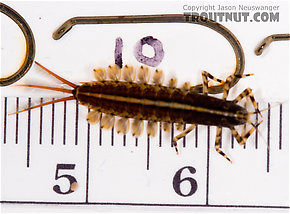 View 3 Pictures
View 3 PicturesCollected April 1, 2007 from Mystery Creek #62 in New York
Added to Troutnut.com by Troutnut on April 3, 2007
Added to Troutnut.com by Troutnut on April 3, 2007
Female Isonychia bicolor (Mahogany Dun) Mayfly Dun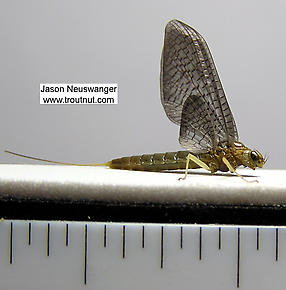 View 3 Pictures
View 3 PicturesCollected September 2, 2004 from the Beaverkill River in New York
Added to Troutnut.com by Troutnut on January 25, 2006
Added to Troutnut.com by Troutnut on January 25, 2006
Isonychia bicolor (Mahogany Dun) Mayfly Nymph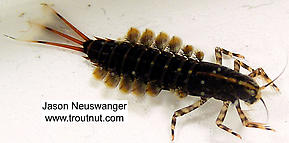 View 3 Pictures
View 3 PicturesCollected May 18, 2004 from the Namekagon River in Wisconsin
Added to Troutnut.com by Troutnut on January 25, 2006
Added to Troutnut.com by Troutnut on January 25, 2006
Top 10 Fly Hatches
 Baetis
 Baetidae
 Ephemerellidae
 Hexagenia limbata
 Chironomidae
 Ephemerella subvaria
 Heptageniidae
 Ephemerella
 Isonychia
 Hydropsychidae
Top Gift Shop Designs
 I outfish my daddy!
 Electric blue Hendrickson dun.
 I love buggers. Big, green, wooly ones.
 I outfish my husband!
 Be the trout.
 Eat mayflies.
Top Insect Specimens
 Baetisca obesa Mayfly Nymph
 Neophylax Caddisfly Adult
 Corydalus Hellgrammite Larva
 Isonychia bicolor Mayfly Spinner
 Ephemerella aurivillii Mayfly Spinner
Miscellaneous Sites
Troutnut.com is copyright © 2004-2024 Jason
Neuswanger (email Jason). See my FAQ for information about use of my images.
 privacy policy
privacy policy