
Blog & Latest Updates
Fly Fishing Articles
Insects by Common Name


Underwater Pictures from Trout Streams, Page 8


Browse through all the underwater photos on this site below, or pick a category on the right.


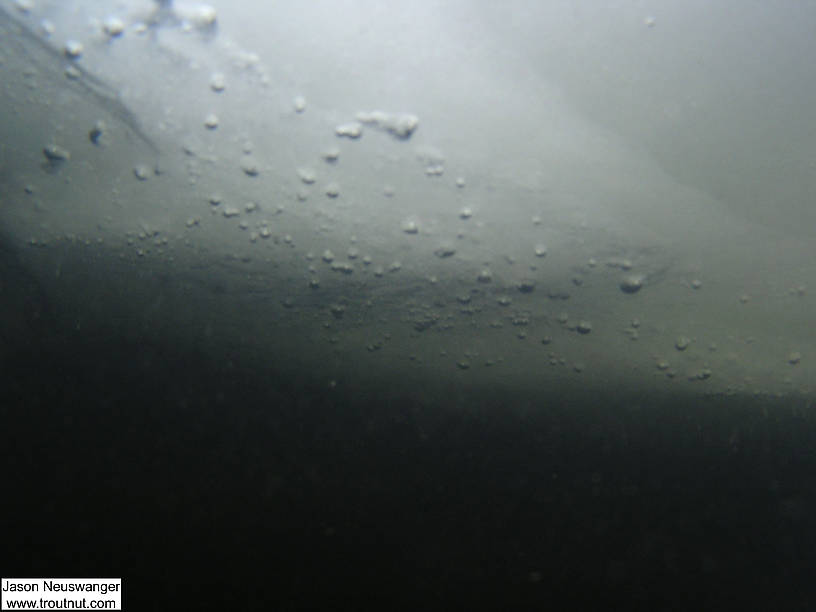
I took this picture of the underside of a large slab of ice in a northern Wisconsin river in early February. I got cold.
StateWisconsin
LocationNamekagon River
Date TakenFeb 2, 2004
Date AddedJan 25, 2006
AuthorTroutnut
CameraOlympus C740UZ
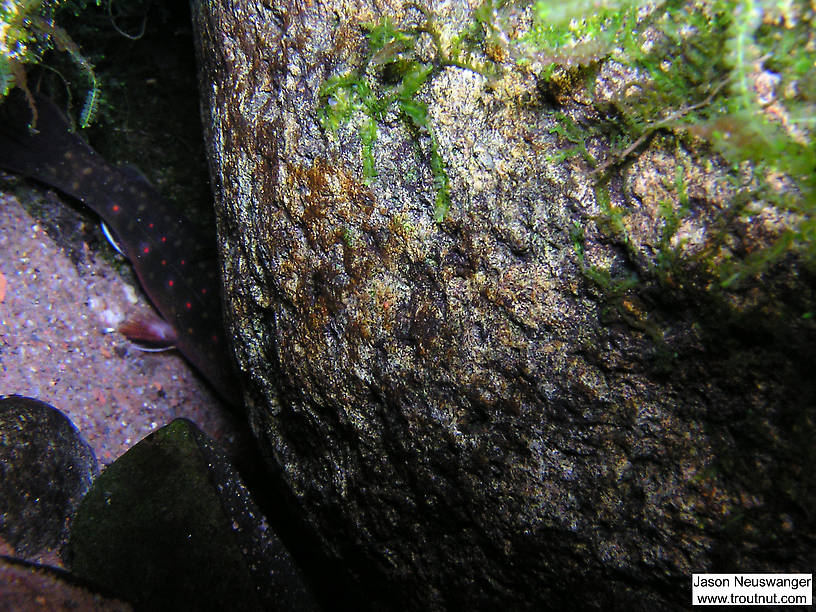
A 4 inch brookie hides from the camera behind a rock under a cut bank.
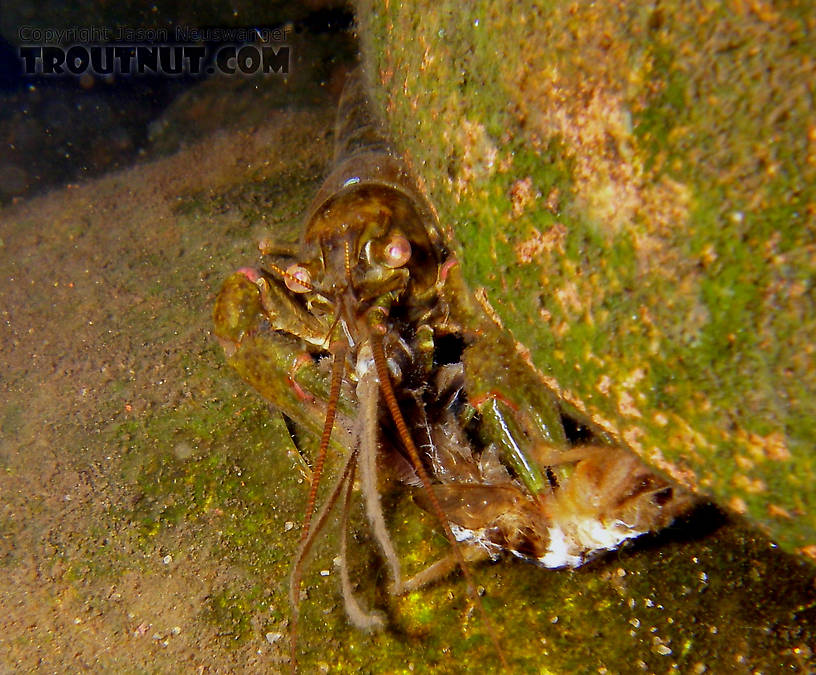
A crayfish chews on a Hexagenia limbata nymph shortly after a small Hex emergence. I didn't catch any fish, but playing around with my flashlight and camera in the rocks proved productive.
In this picture: Arthropod Order Decapoda (Crayfish) and Mayfly Species Hexagenia limbata (Hex).
In this picture: Arthropod Order Decapoda (Crayfish) and Mayfly Species Hexagenia limbata (Hex).
StateWisconsin
LocationNamekagon River
Date TakenJun 14, 2006
Date AddedJun 30, 2006
AuthorTroutnut
CameraPENTAX Optio WPi
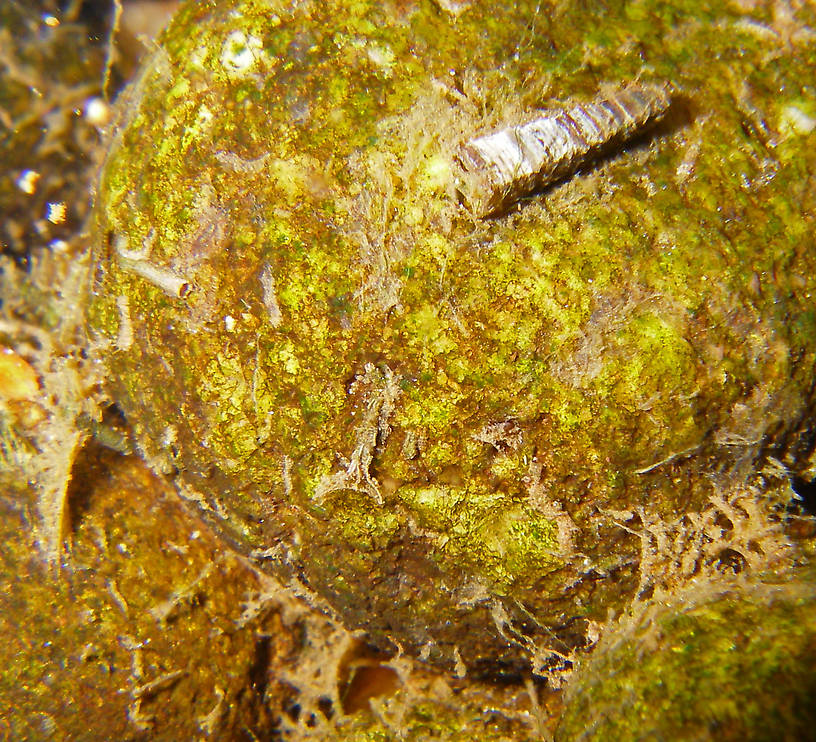
Despite the late date in the season, several caddisfly larvae remain on the rocks in this river.
In this picture: Insect Order Trichoptera (Caddisflies).
In this picture: Insect Order Trichoptera (Caddisflies).
StateNew York
LocationNeversink River
Date TakenSep 5, 2006
Date AddedOct 3, 2006
AuthorTroutnut
CameraPENTAX Optio WPi
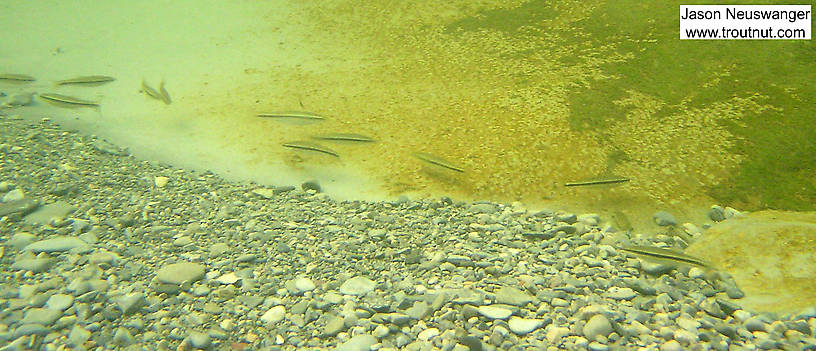
Here's a school of creek chubs.
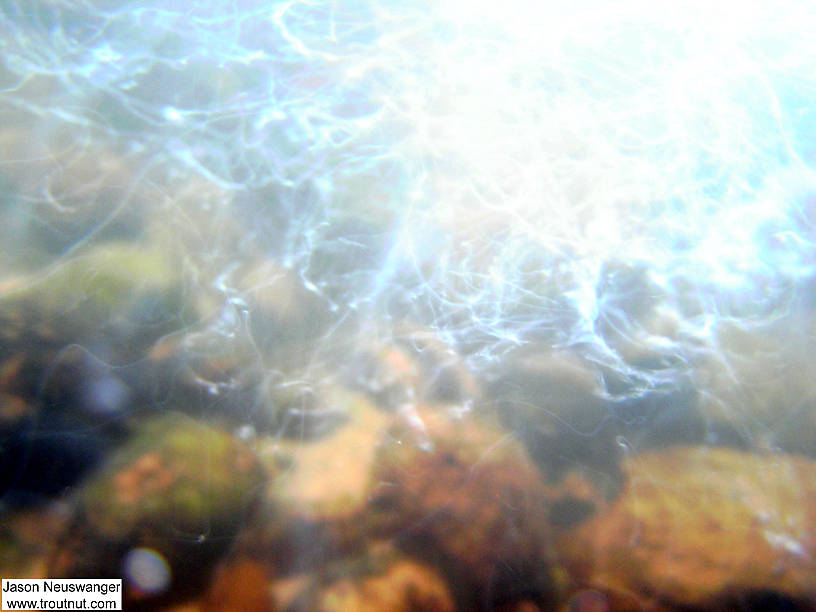
Light reflected from air bubbles left ghostly wisps in this fairly long exposure picture beneath a riffle. It's got an accidental artistic look.
StateWisconsin
LocationEighteenmile Creek
Date TakenMar 19, 2004
Date AddedJan 25, 2006
AuthorTroutnut
CameraOlympus C740UZ
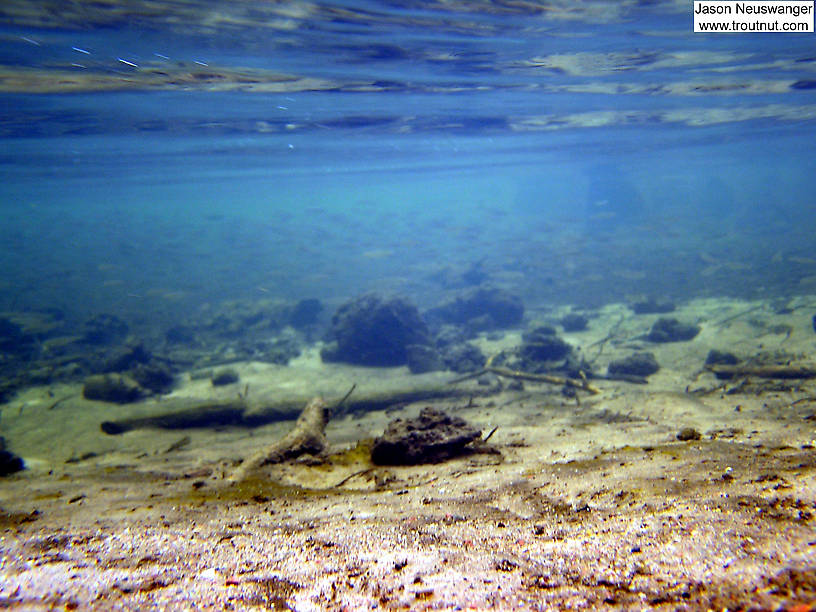
There's a large school of minnows in the far distance here in the clear water of a spring head.
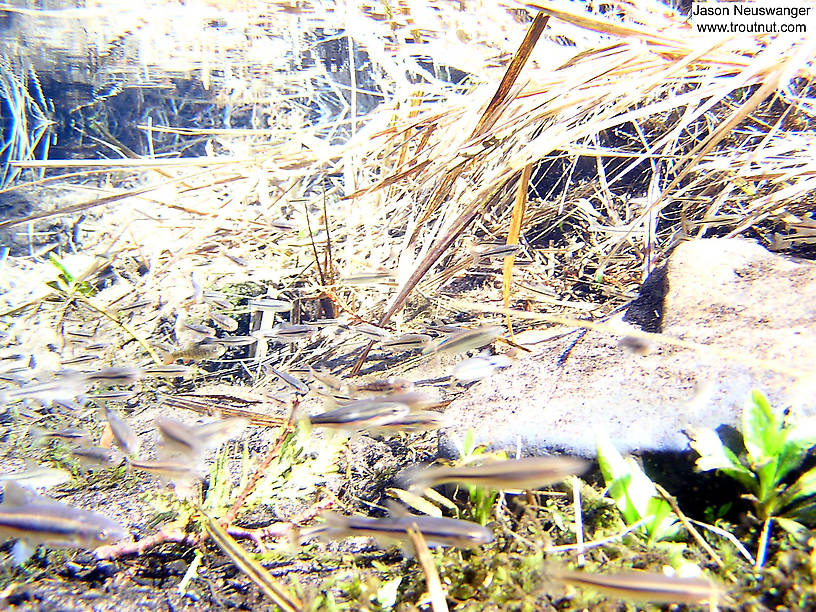
There's one small brook trout running with this school of minnows at the head of a crystal clear spring.
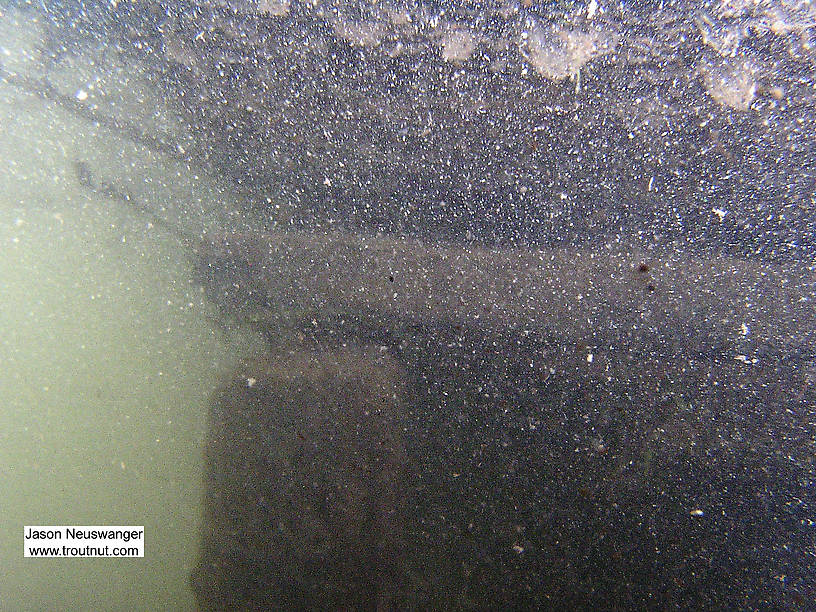
Here's the underside of a "lunker structure", a manmade undercut bank where trout love to hang out. It's amazing how much I've seen the trout use these things. I've also noticed that the best trout populations I've seen are in streams where lunker structures have been installed.
StateWisconsin
LocationSouth Fork of the White River
Date TakenFeb 26, 2004
Date AddedJan 25, 2006
AuthorTroutnut
CameraOlympus C740UZ
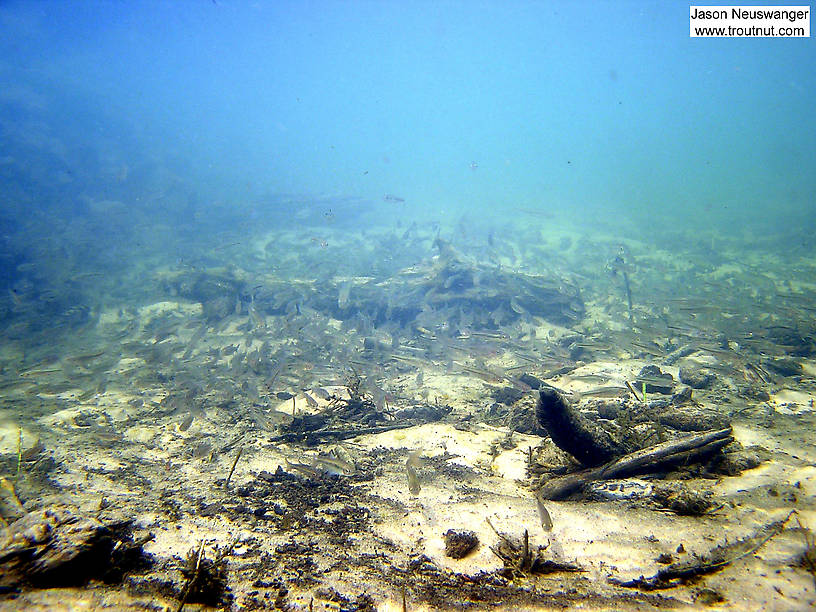
Hundreds of creek chubs and common shiners approach.
Top 10 Fly Hatches
 Baetis
 Baetidae
 Ephemerellidae
 Hexagenia limbata
 Chironomidae
 Heptageniidae
 Ephemerella subvaria
 Ephemerella
 Isonychia
 Hydropsychidae
Top Gift Shop Designs
 I outfish my daddy!
 Electric blue Hendrickson dun.
 I love buggers. Big, green, wooly ones.
 I outfish my husband!
 Be the trout.
 Eat mayflies.
Top Insect Specimens
 Baetisca obesa Mayfly Nymph
 Neophylax Caddisfly Adult
 Corydalus Hellgrammite Larva
 Rhyacophila fuscula Caddisfly LarvaBaetis Mayfly Dun
Miscellaneous Sites
Troutnut.com is copyright © 2004-2024 Jason
Neuswanger (email Jason). See my FAQ for information about use of my images.
 privacy policy
privacy policy