
Blog & Latest Updates
Fly Fishing Articles
Insects by Common Name


Freshwater Invertebrate Underwater Pictures


Browse through all the underwater photos on this site below, or pick a category on the right.


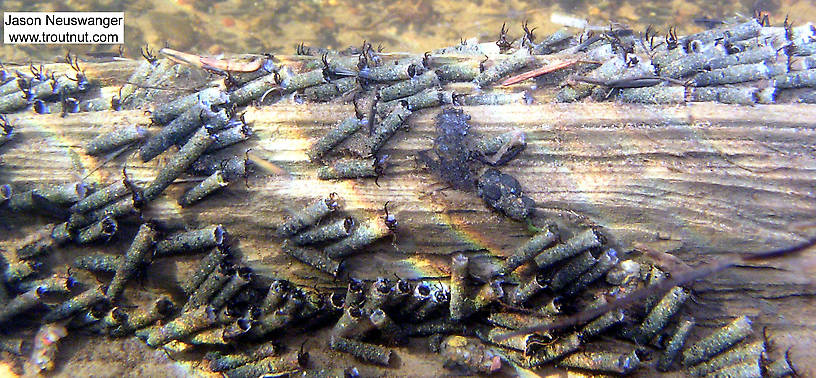
Hundreds of cased caddisfly larvae live on this log in a small brook trout stream.
In this picture: Insect Order Trichoptera (Caddisflies).
In this picture: Insect Order Trichoptera (Caddisflies).
StateWisconsin
LocationEighteenmile Creek
Date TakenApr 14, 2004
Date AddedJan 25, 2006
AuthorTroutnut
CameraOlympus C740UZ
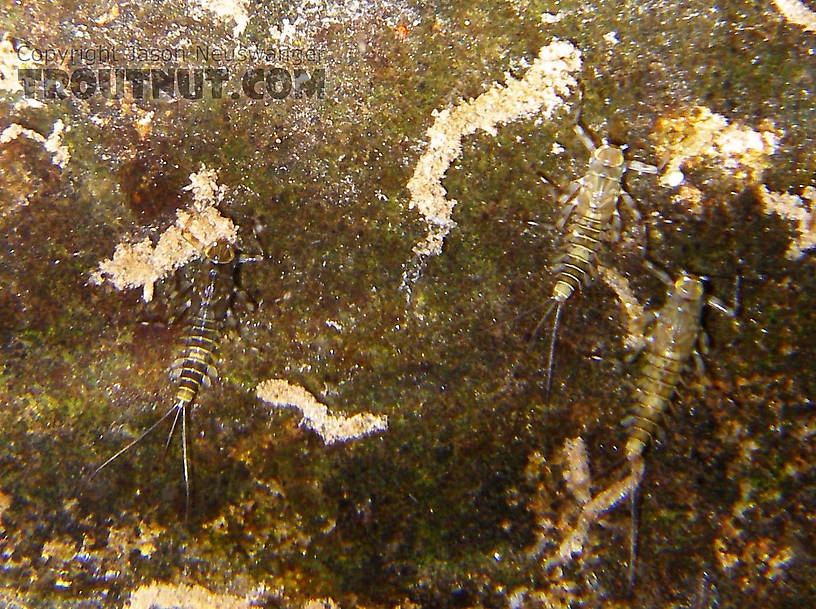
Several Baetidae nymphs line up on a rock.
In this picture: Mayfly Family Baetidae (Blue-Winged Olives).
In this picture: Mayfly Family Baetidae (Blue-Winged Olives).
StateNew York
LocationMongaup Creek
Date TakenApr 19, 2006
Date AddedApr 22, 2006
AuthorTroutnut
CameraPENTAX Optio WPi
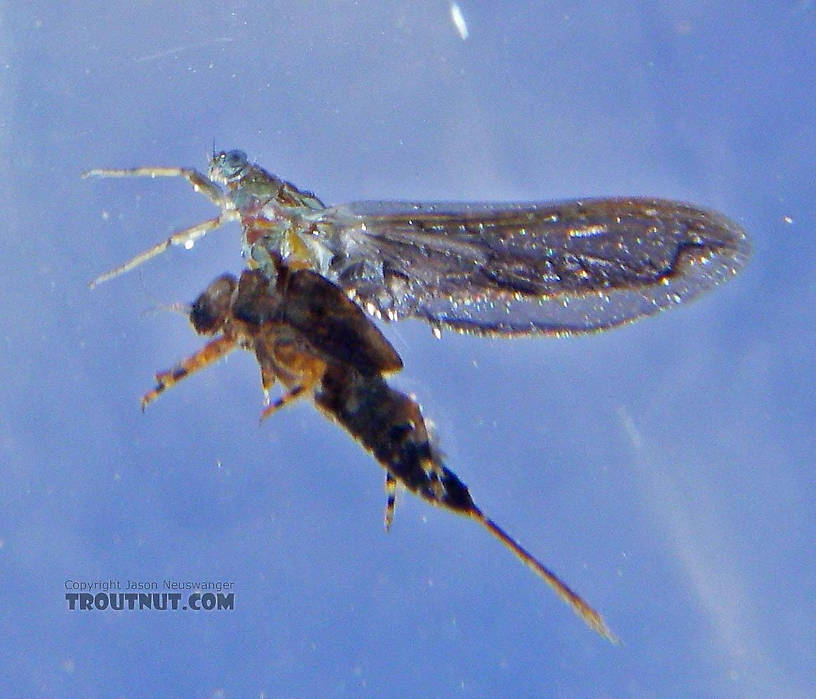
This is a close-up underwater view of a stillborn (Stillborn: In fly fishing, a stillborn insect is one which got stuck in its nymphal or pupal shuck during emergence and floats helplessly on the surface instead of flying away. It is a specific class of cripple, although it is sometimes used interchangeably with that term.) Ephemerella subvaria (Henrickson) female dun.
In this picture: Mayfly Species Ephemerella subvaria (Hendrickson).
 View Full Size
In this picture: Mayfly Species Ephemerella subvaria (Hendrickson).
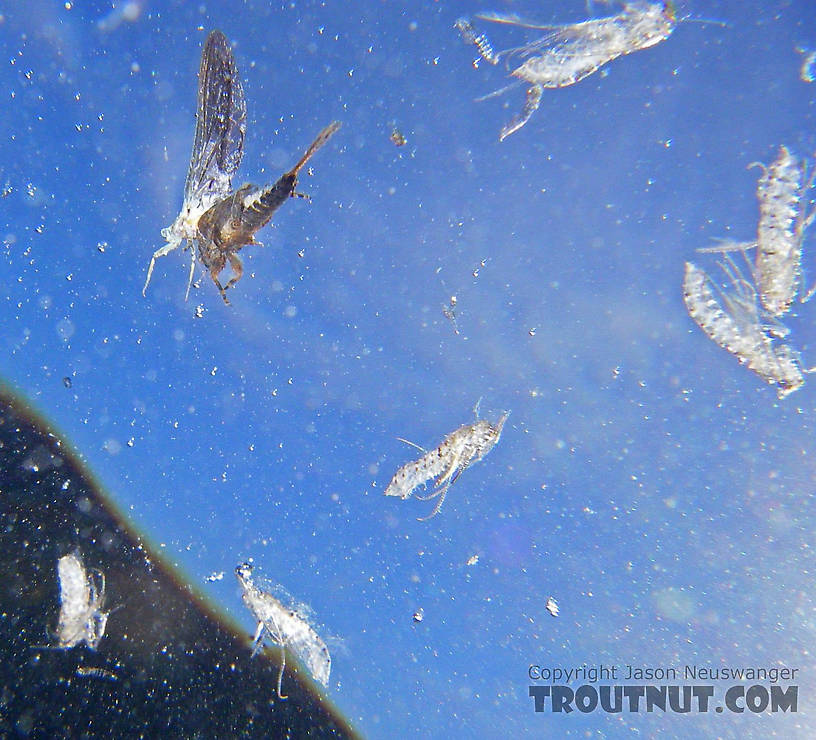
This picture from below shows a stillborn (Stillborn: In fly fishing, a stillborn insect is one which got stuck in its nymphal or pupal shuck during emergence and floats helplessly on the surface instead of flying away. It is a specific class of cripple, although it is sometimes used interchangeably with that term.) Ephemerella subvaria (Hendrickson) dun drifting on the surface amidst a number of shed pupal skins from Brachycentrus caddisflies which were heavily hatching that day.
In this picture: Mayfly Species Ephemerella subvaria (Hendrickson) and Caddisfly Species Brachycentrus appalachia (Apple Caddis).
In this picture: Mayfly Species Ephemerella subvaria (Hendrickson) and Caddisfly Species Brachycentrus appalachia (Apple Caddis).
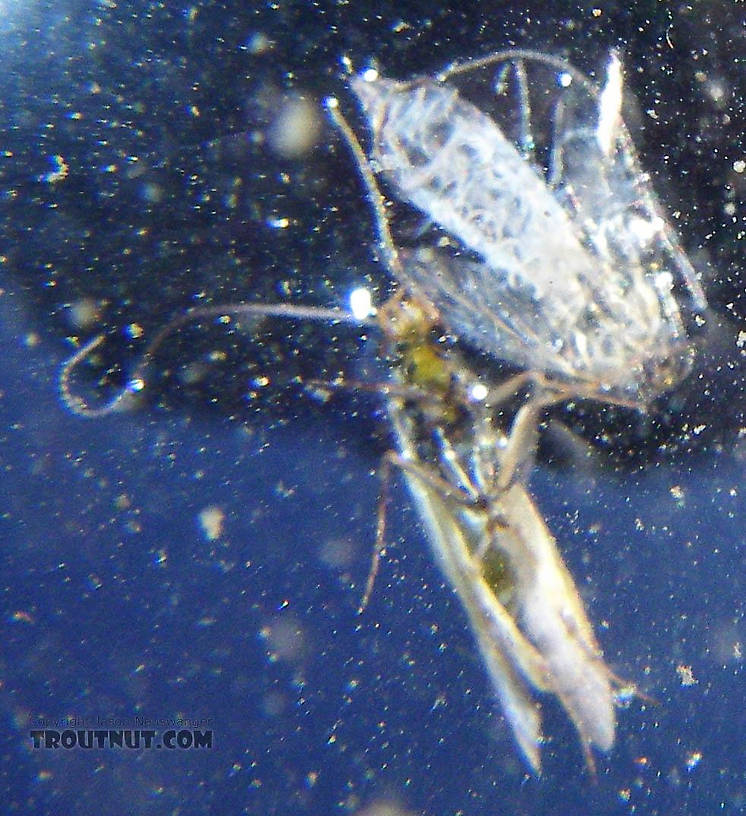
This Brachycentrus "Apple Caddis" struggled more than its kin in escaping its pupal skin, enabling me to take an underwater picture of it from directly below. This is sort of a trout's eye view, but I used the flash for the picture so the transparent shuck (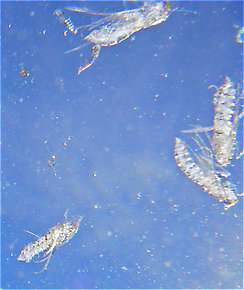 Shuck: The shed exoskeleton left over when an insect molts into its next stage or instar. Most often it describes the last nymphal or pupal skin exited during emergence into a winged adult.) appears far brighter than it really is.
In this picture: Caddisfly Species Brachycentrus appalachia (Apple Caddis).
Here's an underwater view of the pupal shucks of several already-emerged Brachycentrus numerosus caddisflies.
In this picture: Caddisfly Species Brachycentrus appalachia (Apple Caddis).
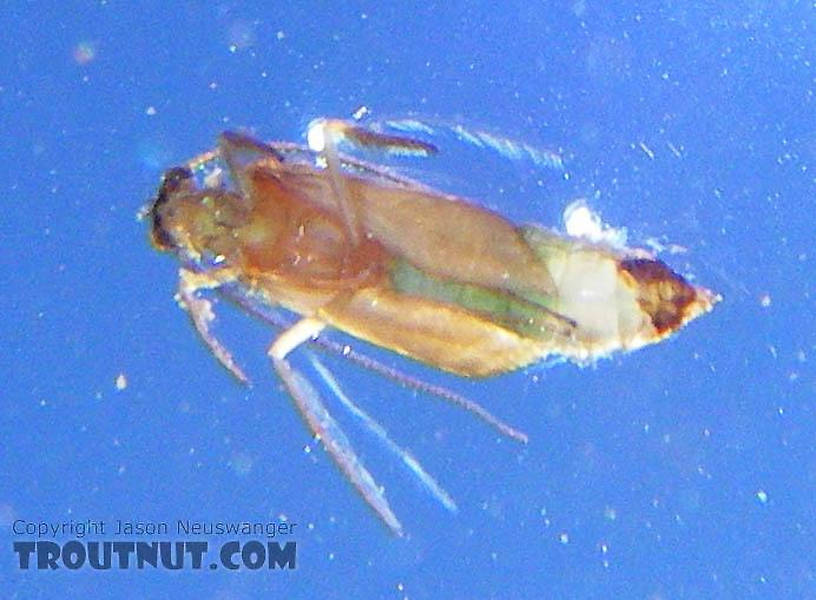
A Brachycentrus "Apple Caddis" pupa scoots around in the surface film. Apparently it had some difficulty emerging, so I was able to slip my camera underneath it and take a picture from below.
In this picture: Caddisfly Species Brachycentrus appalachia (Apple Caddis).
In this picture: Caddisfly Species Brachycentrus appalachia (Apple Caddis).
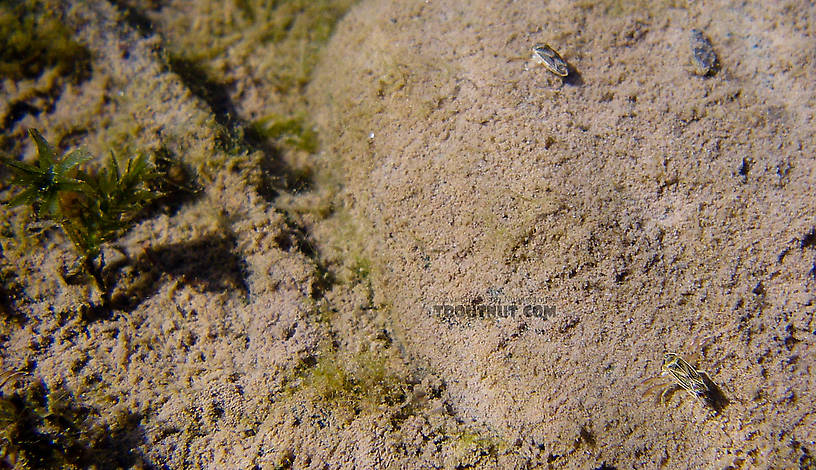
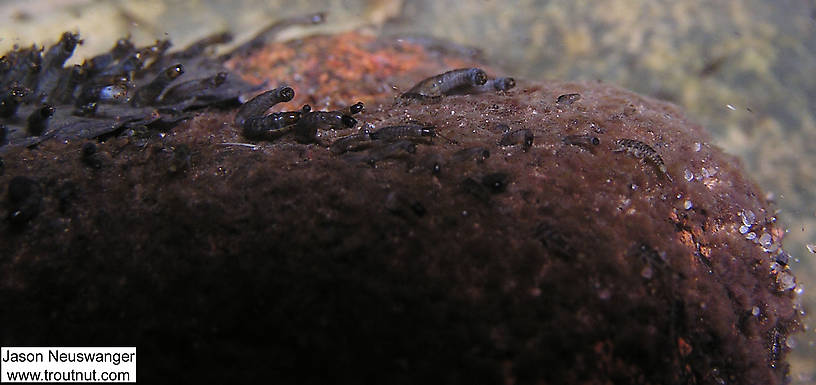
This is my favorite underwater picture so far. It shows a bunch of Simuliidae (black fly) larvae clinging to a rock and swinging in the fast current. There are also at least four visible mayfly nymphs, probably in the family Baetidae.
In this picture: True Fly Family Simuliidae (Black Flies) and Mayfly Family Baetidae (Blue-Winged Olives).
In this picture: True Fly Family Simuliidae (Black Flies) and Mayfly Family Baetidae (Blue-Winged Olives).
StateWisconsin
LocationEighteenmile Creek
Date TakenMar 19, 2004
Date AddedJan 25, 2006
AuthorTroutnut
CameraOlympus C740UZ
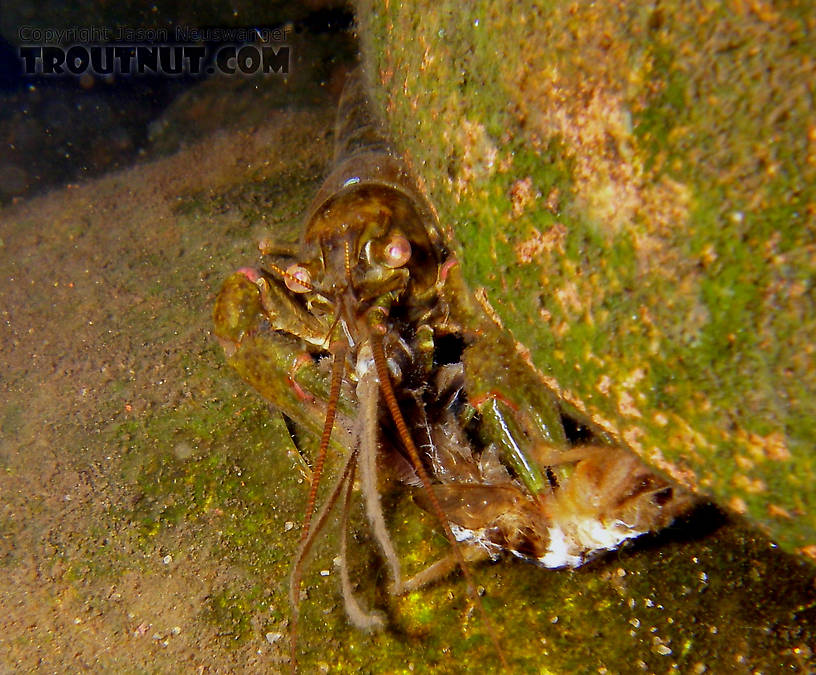
A crayfish chews on a Hexagenia limbata nymph shortly after a small Hex emergence. I didn't catch any fish, but playing around with my flashlight and camera in the rocks proved productive.
In this picture: Arthropod Order Decapoda (Crayfish) and Mayfly Species Hexagenia limbata (Hex).
In this picture: Arthropod Order Decapoda (Crayfish) and Mayfly Species Hexagenia limbata (Hex).
StateWisconsin
LocationNamekagon River
Date TakenJun 14, 2006
Date AddedJun 30, 2006
AuthorTroutnut
CameraPENTAX Optio WPi
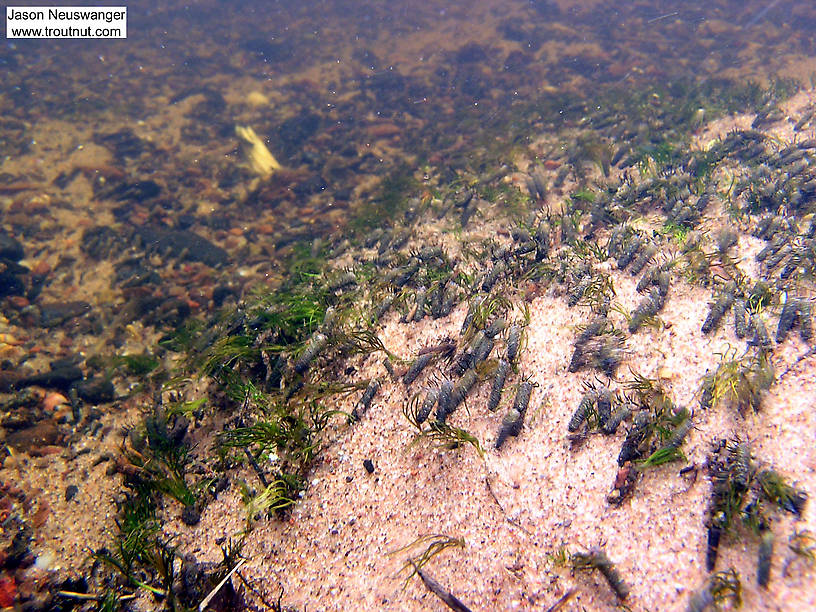
Cased caddis larvae blanket this section of stream bottom.
In this picture: Insect Order Trichoptera (Caddisflies).
In this picture: Insect Order Trichoptera (Caddisflies).
StateWisconsin
LocationEighteenmile Creek
Date TakenApr 14, 2004
Date AddedJan 25, 2006
AuthorTroutnut
CameraOlympus C740UZ
Jargon Defined:
Dun: Mayflies have two adult stages. They first emerge from the water as duns (scientifically known as the subimago stage). They then molt into the spinner (imago) stage, in which they mate and die. Sometimes the word "dun" is confusingly used to refer to a brownish gray color in fly tying materials.
Emergence: The transformation of a nymph or pupa into the adult winged stage of an insect. The term may refer to the emergence of an individual, or the daily or yearly event in which all individuals of a species emerge.
Larvae: Many classes of aquatic insects, such as caddisflies, midges, craneflies, dobsonflies, alderflies, and many more, are known as "larvae" rather than "nymphs" in their juvenile stages. They have mostly soft bodies rather than hard exoskeletons. These insects also advance through a "pupa" stage before reaching adulthood.
Nymphs: The juvenile, underwater stages of mayflies, stoneflies, dragonflies, and damselflies and other aquatic insects whose juvenile stages are covered by hard exoskeletons. The word can also refer to the fishing flies which imitate these creatures, in which case it is used as a blanket term for flies imitating any underwater stage of an invertebrate (except for crayfish and leeches).
Pupa: Any insect which spends most of its juvenile lifetime as a larva first becomes a pupa for a time before emerging as a fully grown adult. Depending on the species, the pupal form can be very important for fly fishermen to imitate.
Here's an underwater view of the pupal shucks of several already-emerged Brachycentrus numerosus caddisflies.
Stillborn: In fly fishing, a stillborn insect is one which got stuck in its nymphal or pupal shuck during emergence and floats helplessly on the surface instead of flying away. It is a specific class of cripple, although it is sometimes used interchangeably with that term.
Top 10 Fly Hatches
 Baetis
 Baetidae
 Ephemerellidae
 Hexagenia limbata
 Chironomidae
 Heptageniidae
 Ephemerella subvaria
 Ephemerella
 Isonychia
 Hydropsychidae
Top Gift Shop Designs
 I outfish my daddy!
 Electric blue Hendrickson dun.
 I love buggers. Big, green, wooly ones.
 I outfish my husband!
 Be the trout.
 Eat mayflies.
Top Insect Specimens
 Baetisca obesa Mayfly Nymph
 Corydalus Hellgrammite Larva
 Neophylax Caddisfly Adult
 Pteronarcys biloba Stonefly Nymph
 Rhyacophila fuscula Caddisfly Larva
Miscellaneous Sites
Troutnut.com is copyright © 2004-2024 Jason
Neuswanger (email Jason). See my FAQ for information about use of my images.
 privacy policy
privacy policy