
Blog & Latest Updates
Fly Fishing Articles
Insects by Common Name


Updates from April 19, 2006


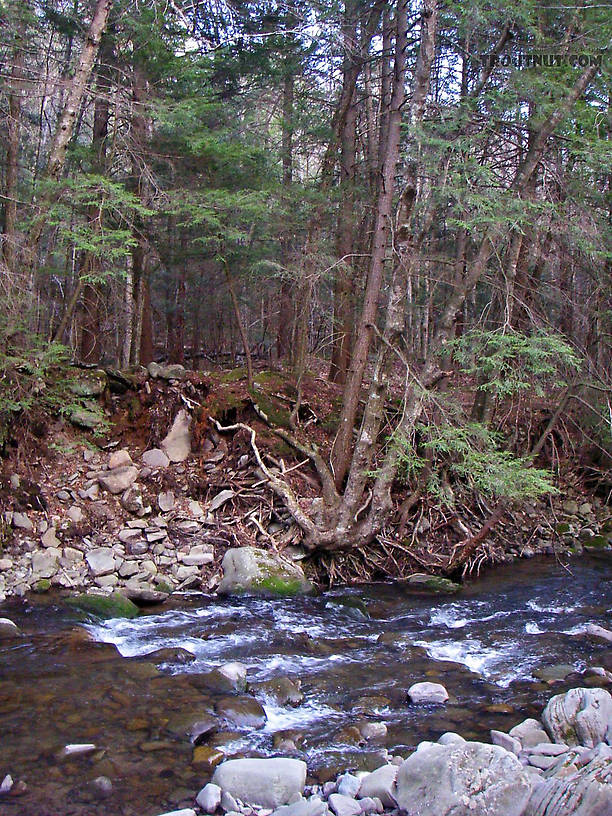
Photos by Troutnut from Mongaup Creek in New York


StateNew York
LocationMongaup Creek
Date TakenApr 19, 2006
Date AddedApr 22, 2006
AuthorTroutnut
CameraPENTAX Optio WPi
Underwater photos by Troutnut from the East Branch of the Delaware River and Mongaup Creek in New York
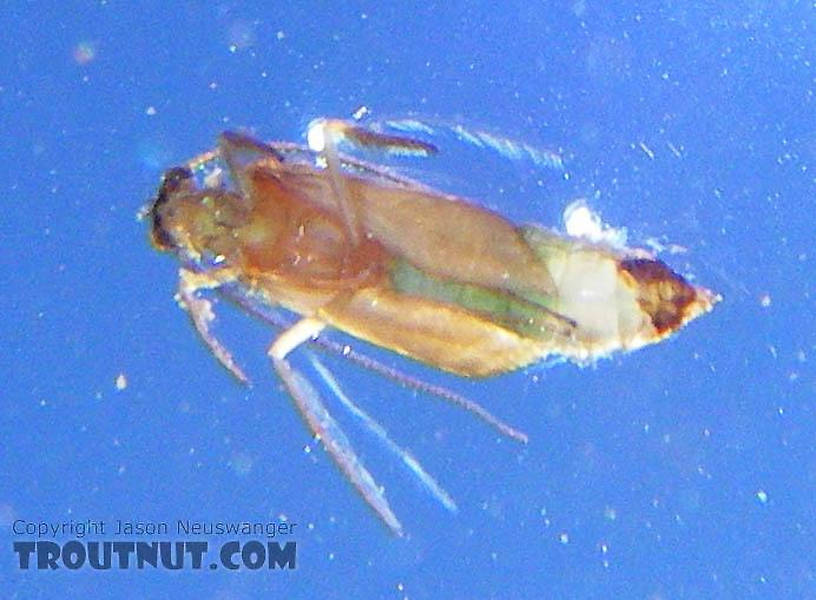
A Brachycentrus "Apple Caddis" pupa scoots around in the surface film. Apparently it had some difficulty emerging, so I was able to slip my camera underneath it and take a picture from below.
In this picture: Caddisfly Species Brachycentrus appalachia (Apple Caddis).
In this picture: Caddisfly Species Brachycentrus appalachia (Apple Caddis).
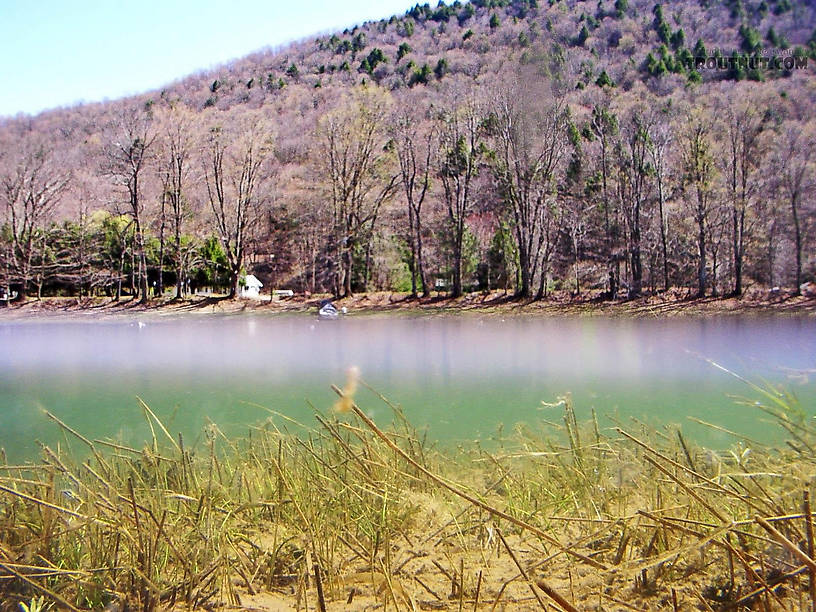
I love this "above & below" landscape from a popular Catskill trout stream. The picture is not doctored to show both perspectives. Instead, my Pentax Optio WPi digital camera is able to take pictures with the tiny lens half-in, half-out of the water.
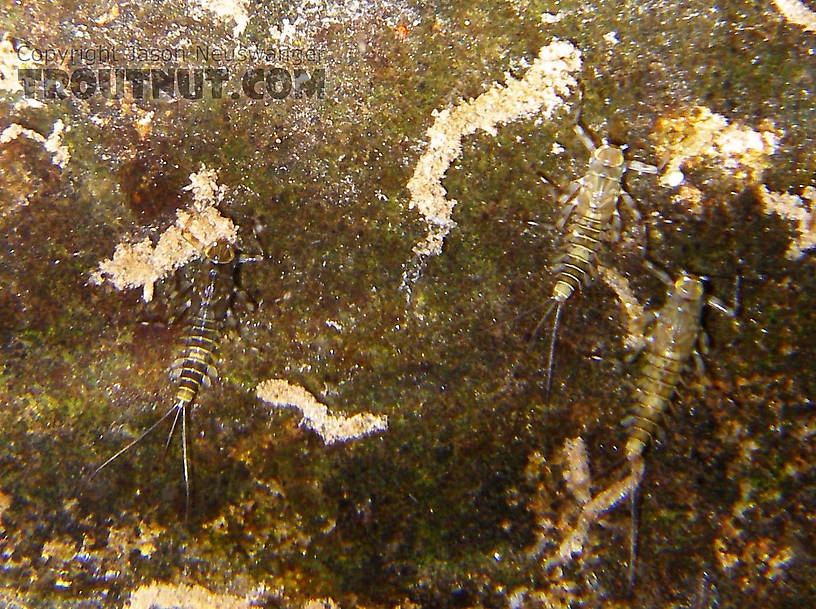
Several Baetidae nymphs line up on a rock.
In this picture: Mayfly Family Baetidae (Blue-Winged Olives).
In this picture: Mayfly Family Baetidae (Blue-Winged Olives).
StateNew York
LocationMongaup Creek
Date TakenApr 19, 2006
Date AddedApr 22, 2006
AuthorTroutnut
CameraPENTAX Optio WPi
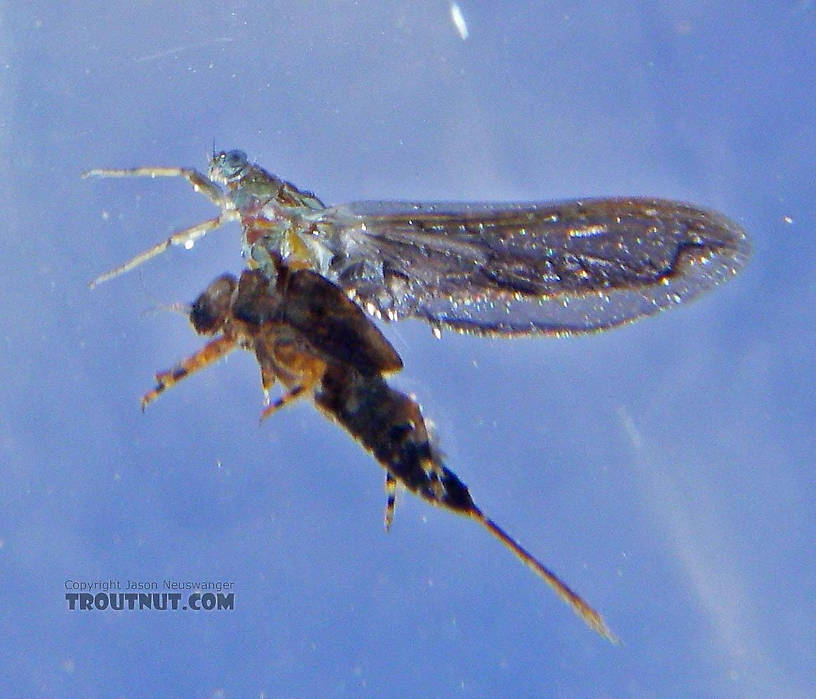
This is a close-up underwater view of a stillborn (Stillborn: In fly fishing, a stillborn insect is one which got stuck in its nymphal or pupal shuck during emergence and floats helplessly on the surface instead of flying away. It is a specific class of cripple, although it is sometimes used interchangeably with that term.) Ephemerella subvaria (Henrickson) female dun.
In this picture: Mayfly Species Ephemerella subvaria (Hendrickson).
 View Full Size
In this picture: Mayfly Species Ephemerella subvaria (Hendrickson).
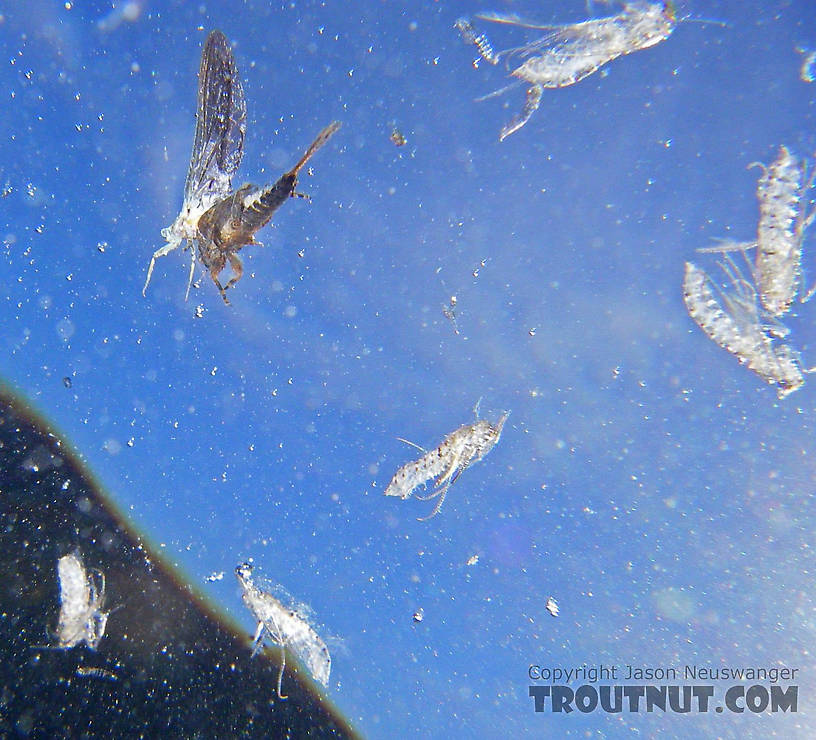
This picture from below shows a stillborn (Stillborn: In fly fishing, a stillborn insect is one which got stuck in its nymphal or pupal shuck during emergence and floats helplessly on the surface instead of flying away. It is a specific class of cripple, although it is sometimes used interchangeably with that term.) Ephemerella subvaria (Hendrickson) dun drifting on the surface amidst a number of shed pupal skins from Brachycentrus caddisflies which were heavily hatching that day.
In this picture: Caddisfly Species Brachycentrus appalachia (Apple Caddis) and Mayfly Species Ephemerella subvaria (Hendrickson).
In this picture: Caddisfly Species Brachycentrus appalachia (Apple Caddis) and Mayfly Species Ephemerella subvaria (Hendrickson).
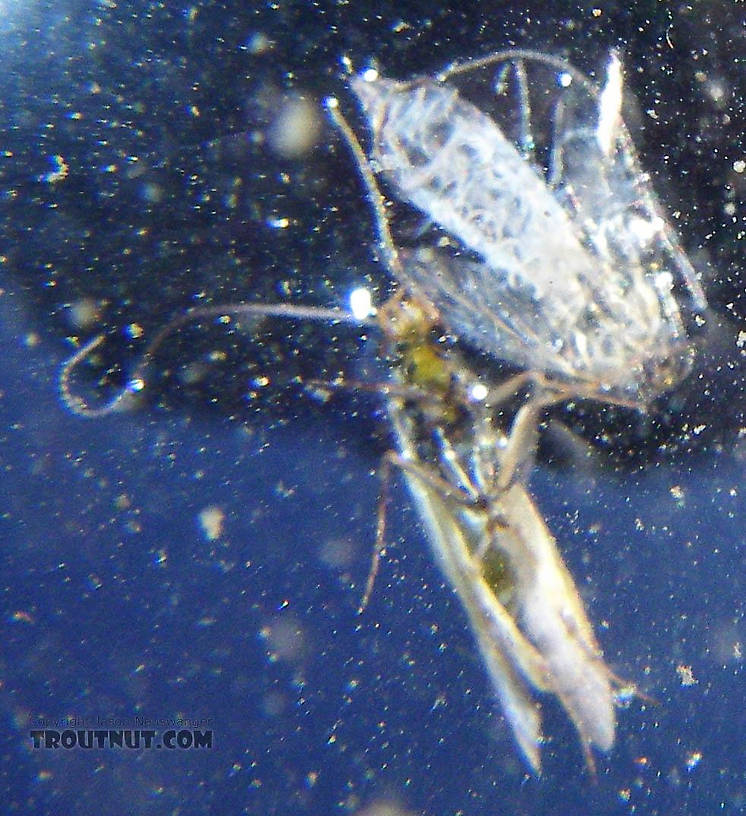
This Brachycentrus "Apple Caddis" struggled more than its kin in escaping its pupal skin, enabling me to take an underwater picture of it from directly below. This is sort of a trout's eye view, but I used the flash for the picture so the transparent shuck ( Shuck: The shed exoskeleton left over when an insect molts into its next stage or instar. Most often it describes the last nymphal or pupal skin exited during emergence into a winged adult.) appears far brighter than it really is.
In this picture: Caddisfly Species Brachycentrus appalachia (Apple Caddis).
Here's an underwater view of the pupal shucks of several already-emerged Brachycentrus numerosus caddisflies.
In this picture: Caddisfly Species Brachycentrus appalachia (Apple Caddis).
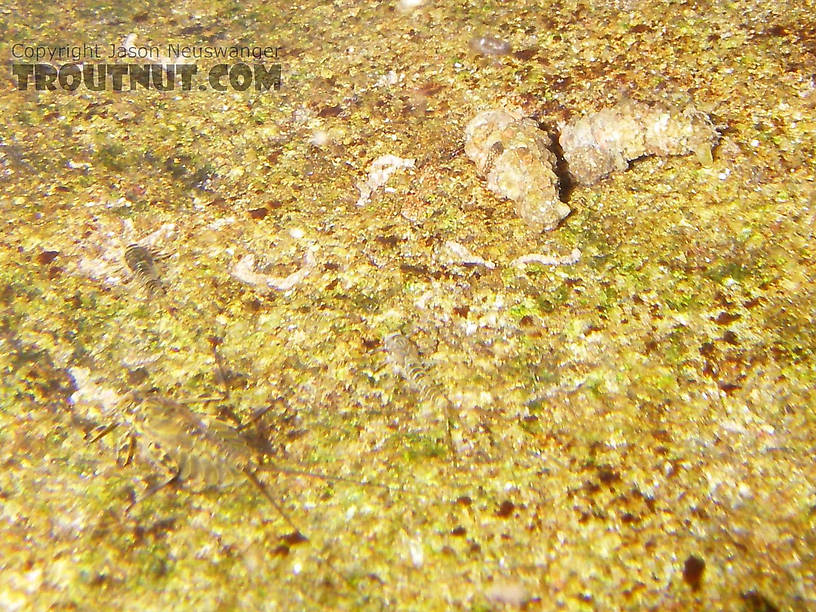
In this picture: Mayfly Genus Epeorus (Little Maryatts), Insect Order Trichoptera (Caddisflies), and Mayfly Family Baetidae (Blue-Winged Olives).
StateNew York
LocationMongaup Creek
Date TakenApr 19, 2006
Date AddedApr 22, 2006
AuthorTroutnut
CameraPENTAX Optio WPi
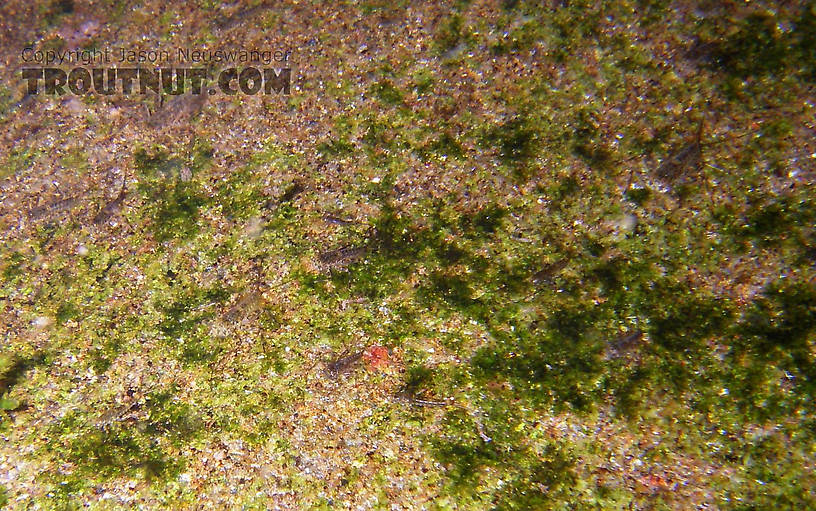
In this picture: Mayfly Genus Epeorus (Little Maryatts) and Mayfly Family Baetidae (Blue-Winged Olives).
StateNew York
LocationMongaup Creek
Date TakenApr 19, 2006
Date AddedApr 22, 2006
AuthorTroutnut
CameraPENTAX Optio WPi
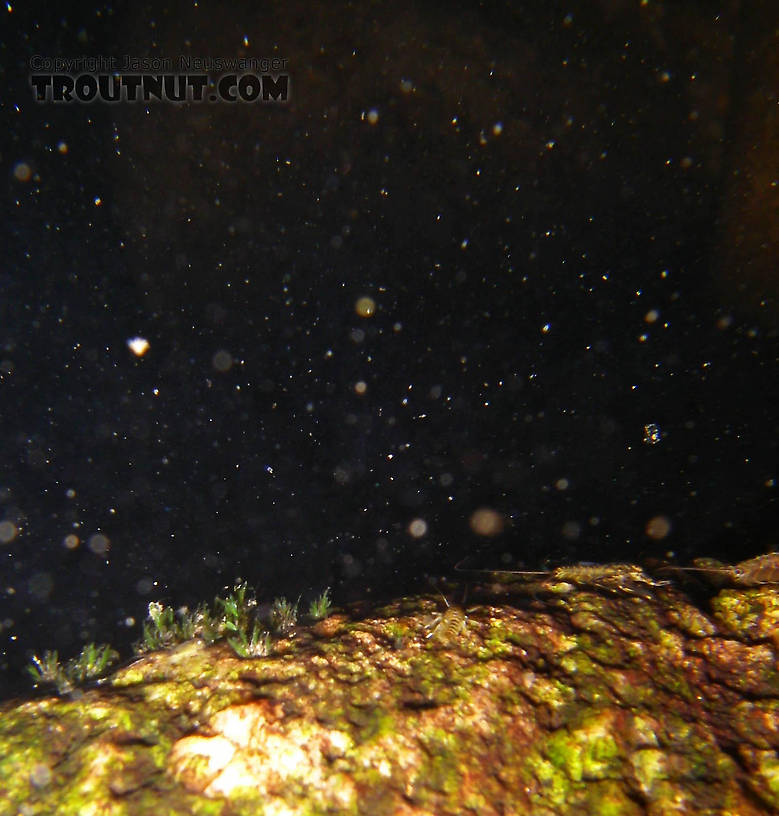
In this picture: Mayfly Genus Epeorus (Little Maryatts) and Mayfly Family Baetidae (Blue-Winged Olives).
StateNew York
LocationMongaup Creek
Date TakenApr 19, 2006
Date AddedApr 22, 2006
AuthorTroutnut
CameraPENTAX Optio WPi
On-stream insect photos by Troutnut from Mongaup Creek in New York
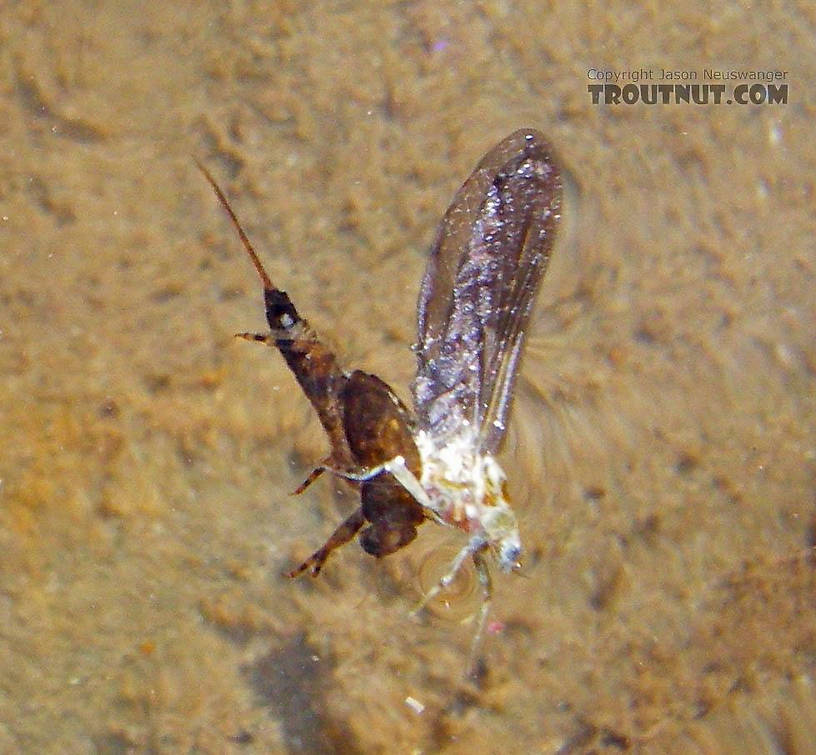
Here's an above-the-water view of a stillborn (Stillborn: In fly fishing, a stillborn insect is one which got stuck in its nymphal or pupal shuck during emergence and floats helplessly on the surface instead of flying away. It is a specific class of cripple, although it is sometimes used interchangeably with that term.) Ephemerella subvaria dun which I also photographed from below the water.
StateNew York
LocationMongaup Creek
Date TakenApr 19, 2006
Date AddedApr 22, 2006
AuthorTroutnut
CameraPENTAX Optio WPi
Closeup insects by Troutnut from Mongaup Creek and the Beaverkill River in New York
Isogenoides hansoni (Appalachian Springfly) Stonefly Nymph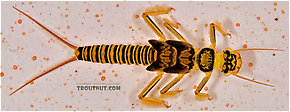 View 11 PicturesThis large Perlodidae stonefly was a strikingly bright yellow color, more so than any other insect I've seen. I didn't enhance it much. See the discussion threads to follow how we identified this specimen, which was listed incorrectly for several years.
View 11 PicturesThis large Perlodidae stonefly was a strikingly bright yellow color, more so than any other insect I've seen. I didn't enhance it much. See the discussion threads to follow how we identified this specimen, which was listed incorrectly for several years.Collected April 19, 2006 from Mongaup Creek in New York
Added to Troutnut.com by Troutnut on April 21, 2006
Added to Troutnut.com by Troutnut on April 21, 2006
Male Ephemerella subvaria (Hendrickson) Mayfly Dun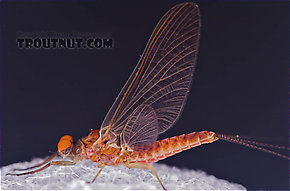 View 9 PicturesI collected this male Hendrickson dun and a female in the pool on the Beaverkill where the popular Hendrickson pattern was first created. He is descended from mayfly royalty.
View 9 PicturesI collected this male Hendrickson dun and a female in the pool on the Beaverkill where the popular Hendrickson pattern was first created. He is descended from mayfly royalty.Collected April 19, 2006 from the Beaverkill River in New York
Added to Troutnut.com by Troutnut on April 22, 2006
Added to Troutnut.com by Troutnut on April 22, 2006
Male Epeorus pleuralis (Quill Gordon) Mayfly Spinner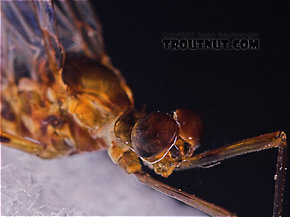 View 10 PicturesI spent (Spent: The wing position of many aquatic insects when they fall on the water after mating. The wings of both sides lay flat on the water. The word may be used to describe insects with their wings in that position, as well as the position itself.) most of the day looking for Epeorus pluralis duns or spinners without any luck on the major Catskill rivers. Finally in the evening I arrived at a small stream somebody had recommended, and when I got out of the car I was happy to find that I had parked in the middle of a cloud of male spinners.
View 10 PicturesI spent (Spent: The wing position of many aquatic insects when they fall on the water after mating. The wings of both sides lay flat on the water. The word may be used to describe insects with their wings in that position, as well as the position itself.) most of the day looking for Epeorus pluralis duns or spinners without any luck on the major Catskill rivers. Finally in the evening I arrived at a small stream somebody had recommended, and when I got out of the car I was happy to find that I had parked in the middle of a cloud of male spinners.Collected April 19, 2006 from Mongaup Creek in New York
Added to Troutnut.com by Troutnut on April 22, 2006
Added to Troutnut.com by Troutnut on April 22, 2006
Female Ephemerella subvaria (Hendrickson) Mayfly Dun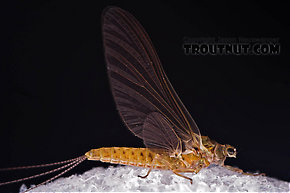 View 9 PicturesI collected this female Hendrickson dun and a male in the pool on the Beaverkill where the popular Hendrickson pattern was first created. She is descended from mayfly royalty.
View 9 PicturesI collected this female Hendrickson dun and a male in the pool on the Beaverkill where the popular Hendrickson pattern was first created. She is descended from mayfly royalty.Collected April 19, 2006 from the Beaverkill River in New York
Added to Troutnut.com by Troutnut on April 22, 2006
Added to Troutnut.com by Troutnut on April 22, 2006
Pteronarcys proteus (Salmonfly) Stonefly Nymph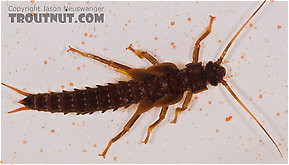 View 10 Pictures
View 10 PicturesCollected April 19, 2006 from Mongaup Creek in New York
Added to Troutnut.com by Troutnut on April 21, 2006
Added to Troutnut.com by Troutnut on April 21, 2006
Female Baetis (Blue-Winged Olives) Mayfly Dun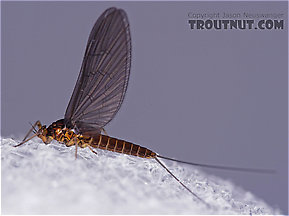 View 7 PicturesThis little early-season dun molted into this spinner after I photographed her.
View 7 PicturesThis little early-season dun molted into this spinner after I photographed her.Collected April 19, 2006 from Mongaup Creek in New York
Added to Troutnut.com by Troutnut on April 21, 2006
Added to Troutnut.com by Troutnut on April 21, 2006
Ephemerella invaria (Sulphur Dun) Mayfly Nymph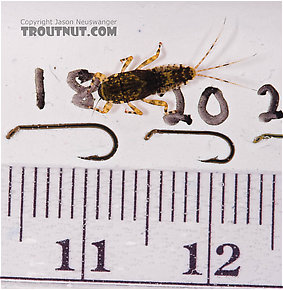 View 8 PicturesThis small Ephemerella invaria nymph was at least a month away from emergence.
View 8 PicturesThis small Ephemerella invaria nymph was at least a month away from emergence.Collected April 19, 2006 from the Beaverkill River in New York
Added to Troutnut.com by Troutnut on April 21, 2006
Added to Troutnut.com by Troutnut on April 21, 2006
Isonychia bicolor (Mahogany Dun) Mayfly Nymph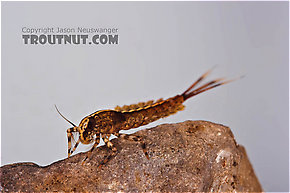 View 7 PicturesThis Isonychia bicolor nymph from the Catskills displays the prominent white stripe sometimes characteristic of its species. This is the first such specimen I've photographed, because members of the same species in the Upper Midwest have a more subdued stripe (and were once thought to be a different species, Isonychia sadleri). The striking coloration on this eastern nymph is more appealing.
View 7 PicturesThis Isonychia bicolor nymph from the Catskills displays the prominent white stripe sometimes characteristic of its species. This is the first such specimen I've photographed, because members of the same species in the Upper Midwest have a more subdued stripe (and were once thought to be a different species, Isonychia sadleri). The striking coloration on this eastern nymph is more appealing.Collected April 19, 2006 from the Beaverkill River in New York
Added to Troutnut.com by Troutnut on April 21, 2006
Added to Troutnut.com by Troutnut on April 21, 2006
Ephemerella aurivillii Mayfly Nymph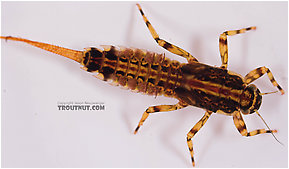 View 6 PicturesThis specimen was collected together with a lighter one of the same species.
It resembles another specimen from about 1300 miles away in Wisconsin, which I tentatively called Ephemerella needhami. This one has much less prominent abdominal tubercles (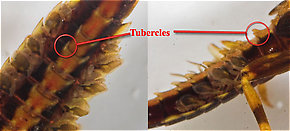 Tubercle: Various peculiar little bumps or projections on an insect. Their character is important for the identification of many kinds of insects, such as the nymphs of Ephemerellidae mayflies.). It may be that they're both the same species and I don't have my identifications straight.
View 6 PicturesThis specimen was collected together with a lighter one of the same species.It resembles another specimen from about 1300 miles away in Wisconsin, which I tentatively called Ephemerella needhami. This one has much less prominent abdominal tubercles (
A few (not all) of the abdominal tubercles on this Ephemerella needhami nymph are circled. They are especially large in this species.
Collected April 19, 2006 from Mongaup Creek in New York
Added to Troutnut.com by Troutnut on April 21, 2006
Added to Troutnut.com by Troutnut on April 21, 2006
Hexatoma True Fly Larva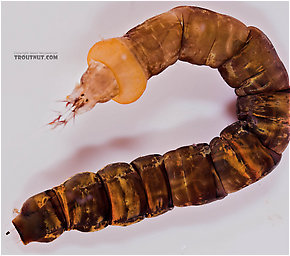 View 6 PicturesI'm not sure if this cranefly larva is in the genus Hexatoma or Limnophila, but the habitat suggests Hexatoma. Its coloring is iridescent, and I've never heard of that before. However, there is an insect virus genus Iridovirus which can infect craneflies and causes iridescence. It has not been reported in this region as far as I can tell, but perhaps it is the culprit. It makes for beautiful pictures.
View 6 PicturesI'm not sure if this cranefly larva is in the genus Hexatoma or Limnophila, but the habitat suggests Hexatoma. Its coloring is iridescent, and I've never heard of that before. However, there is an insect virus genus Iridovirus which can infect craneflies and causes iridescence. It has not been reported in this region as far as I can tell, but perhaps it is the culprit. It makes for beautiful pictures.Collected April 19, 2006 from Mongaup Creek in New York
Added to Troutnut.com by Troutnut on April 21, 2006
Added to Troutnut.com by Troutnut on April 21, 2006
Tallaperla (Roachflies) Stonefly Nymph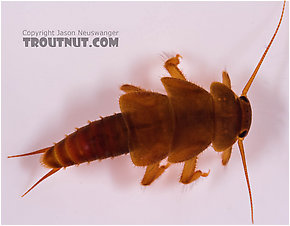 View 6 PicturesThis is the first specimen of the Peltoperlidae stonefly family that I've collected. It's very small and probably an early instar (Instar: Many invertebrates molt through dozens of progressively larger and better-developed stages as they grow. Each of these stages is known as an instar. Hard-bodied nymphs typically molt through more instars than soft-bodied larvae.), but I'm not choosy about new bugs.
View 6 PicturesThis is the first specimen of the Peltoperlidae stonefly family that I've collected. It's very small and probably an early instar (Instar: Many invertebrates molt through dozens of progressively larger and better-developed stages as they grow. Each of these stages is known as an instar. Hard-bodied nymphs typically molt through more instars than soft-bodied larvae.), but I'm not choosy about new bugs.Collected April 19, 2006 from Mongaup Creek in New York
Added to Troutnut.com by Troutnut on April 21, 2006
Added to Troutnut.com by Troutnut on April 21, 2006
Rhithrogena impersonata (Dark Red Quill) Mayfly Nymph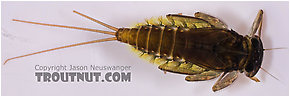 View 6 PicturesThis was the only Rhithrogena specimen in a large sample of nymphs from a small Catskill stream. It looks virtually identical to Rhithrogena impersonata specimens collected in the Midwest, but I didn't get to check the distinguishing features under a microscope.
View 6 PicturesThis was the only Rhithrogena specimen in a large sample of nymphs from a small Catskill stream. It looks virtually identical to Rhithrogena impersonata specimens collected in the Midwest, but I didn't get to check the distinguishing features under a microscope.Collected April 19, 2006 from Mongaup Creek in New York
Added to Troutnut.com by Troutnut on April 21, 2006
Added to Troutnut.com by Troutnut on April 21, 2006
Neoleptophlebia Mayfly Nymph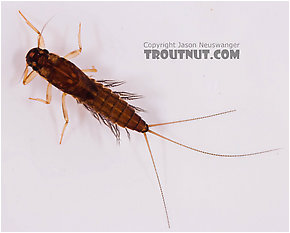 View 6 Pictures
View 6 PicturesCollected April 19, 2006 from Mongaup Creek in New York
Added to Troutnut.com by Troutnut on April 21, 2006
Added to Troutnut.com by Troutnut on April 21, 2006
Maccaffertium vicarium (March Brown) Mayfly Nymph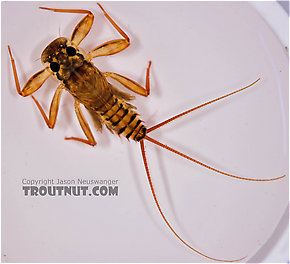 View 5 Pictures
View 5 PicturesCollected April 19, 2006 from the Beaverkill River in New York
Added to Troutnut.com by Troutnut on April 21, 2006
Added to Troutnut.com by Troutnut on April 21, 2006
Isonychia bicolor (Mahogany Dun) Mayfly Nymph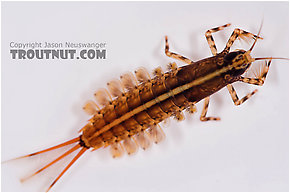 View 5 Pictures
View 5 PicturesCollected April 19, 2006 from the Beaverkill River in New York
Added to Troutnut.com by Troutnut on April 21, 2006
Added to Troutnut.com by Troutnut on April 21, 2006
Epeorus pleuralis (Quill Gordon) Mayfly Nymph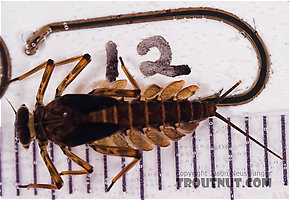 View 4 PicturesThis Epeorus pluralis dun is recently deceased in these photos. I decided not to photograph several lively, less mature nymphs. This one was ready to hatch, as indicated by the black wing pads (
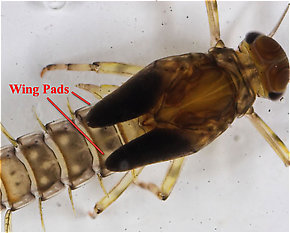 Wing pad: A protrusion from the thorax of an insect nymph which holds the developing wings. Black wing pads usually indicate that the nymph is nearly ready to emerge into an adult.). I believe it had not been dead long enough to lose its natural coloration.
View 4 PicturesThis Epeorus pluralis dun is recently deceased in these photos. I decided not to photograph several lively, less mature nymphs. This one was ready to hatch, as indicated by the black wing pads (
The wing pads on this final instar Baetidae mayfly nymph are extremely dark.
Collected April 19, 2006 from Mongaup Creek in New York
Added to Troutnut.com by Troutnut on April 21, 2006
Added to Troutnut.com by Troutnut on April 21, 2006
Maccaffertium vicarium (March Brown) Mayfly Nymph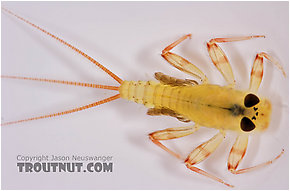 View 4 PicturesI photographed this Maccaffertium vicarium nymph shortly after it molted to a new instar (Instar: Many invertebrates molt through dozens of progressively larger and better-developed stages as they grow. Each of these stages is known as an instar. Hard-bodied nymphs typically molt through more instars than soft-bodied larvae.) in my holding container. Many nymphs take on drastically different coloration immediately after molting, and this species is no exception.
View 4 PicturesI photographed this Maccaffertium vicarium nymph shortly after it molted to a new instar (Instar: Many invertebrates molt through dozens of progressively larger and better-developed stages as they grow. Each of these stages is known as an instar. Hard-bodied nymphs typically molt through more instars than soft-bodied larvae.) in my holding container. Many nymphs take on drastically different coloration immediately after molting, and this species is no exception.Collected April 19, 2006 from the Beaverkill River in New York
Added to Troutnut.com by Troutnut on April 21, 2006
Added to Troutnut.com by Troutnut on April 21, 2006
Female Baetis (Blue-Winged Olives) Mayfly Spinner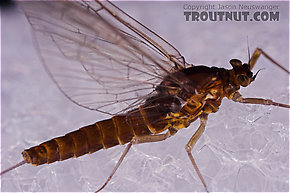 View 4 PicturesI captured and photographed this specimen as a dun before she molted into the spinner photographed here. Her wings got a bit torn up in the process.
View 4 PicturesI captured and photographed this specimen as a dun before she molted into the spinner photographed here. Her wings got a bit torn up in the process.Collected April 19, 2006 from Mongaup Creek in New York
Added to Troutnut.com by Troutnut on April 21, 2006
Added to Troutnut.com by Troutnut on April 21, 2006
Female Paraleptophlebia (Blue Quills and Mahogany Duns) Mayfly Dun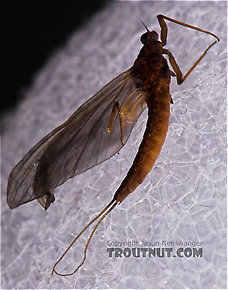 View 4 PicturesI really hoped to catch some good blue quill specimens on this trip, but they are very fragile mayflies and this one was in the best condition of the few that I caught after I drove them home to my camera. It may not be pretty, but you get an idea of the size/shape/color anyway.
View 4 PicturesI really hoped to catch some good blue quill specimens on this trip, but they are very fragile mayflies and this one was in the best condition of the few that I caught after I drove them home to my camera. It may not be pretty, but you get an idea of the size/shape/color anyway.Collected April 19, 2006 from the Beaverkill River in New York
Added to Troutnut.com by Troutnut on April 21, 2006
Added to Troutnut.com by Troutnut on April 21, 2006
Ephemerella aurivillii Mayfly Nymph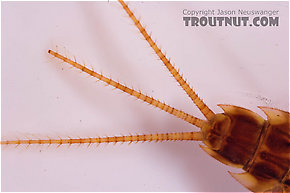 View 4 PicturesThis specimen was collected together with a darker one of the same species.
View 4 PicturesThis specimen was collected together with a darker one of the same species.Collected April 19, 2006 from Mongaup Creek in New York
Added to Troutnut.com by Troutnut on April 21, 2006
Added to Troutnut.com by Troutnut on April 21, 2006
Cinygmula subaequalis (Small Gordon Quill) Mayfly Nymph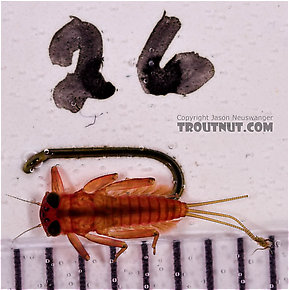 View 3 PicturesI had heard reports of a bright red heptageniid nymph before but never seen one until I found this early instar (Instar: Many invertebrates molt through dozens of progressively larger and better-developed stages as they grow. Each of these stages is known as an instar. Hard-bodied nymphs typically molt through more instars than soft-bodied larvae.) specimen in a very high water quality small stream in the Catskills.
View 3 PicturesI had heard reports of a bright red heptageniid nymph before but never seen one until I found this early instar (Instar: Many invertebrates molt through dozens of progressively larger and better-developed stages as they grow. Each of these stages is known as an instar. Hard-bodied nymphs typically molt through more instars than soft-bodied larvae.) specimen in a very high water quality small stream in the Catskills.Collected April 19, 2006 from Mongaup Creek in New York
Added to Troutnut.com by Troutnut on April 21, 2006
Added to Troutnut.com by Troutnut on April 21, 2006
Maccaffertium vicarium (March Brown) Mayfly Nymph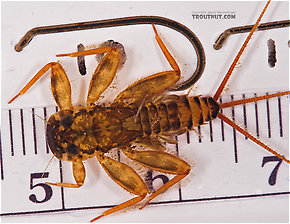 View 3 Pictures
View 3 PicturesCollected April 19, 2006 from the Beaverkill River in New York
Added to Troutnut.com by Troutnut on April 21, 2006
Added to Troutnut.com by Troutnut on April 21, 2006
Most recent comments on this post (latest on top)
Comment on this post
Jargon Defined:
Dun: Mayflies have two adult stages. They first emerge from the water as duns (scientifically known as the subimago stage). They then molt into the spinner (imago) stage, in which they mate and die. Sometimes the word "dun" is confusingly used to refer to a brownish gray color in fly tying materials.
Emergence: The transformation of a nymph or pupa into the adult winged stage of an insect. The term may refer to the emergence of an individual, or the daily or yearly event in which all individuals of a species emerge.
Instar: Many invertebrates molt through dozens of progressively larger and better-developed stages as they grow. Each of these stages is known as an instar. Hard-bodied nymphs typically molt through more instars than soft-bodied larvae.
Larva: Many classes of aquatic insects, such as caddisflies, midges, craneflies, dobsonflies, alderflies, and many more, are known as "larvae" rather than "nymphs" in their juvenile stages. They have mostly soft bodies rather than hard exoskeletons. These insects also advance through a "pupa" stage before reaching adulthood.
Molting: When aquatic insects with hard exoskeletons (like mayfly and stonefly nymphs) grow bigger, their exoskeleton does not grow with them. Instead they grow a new, larger one underneath and shed the old one when it's too small. This process is called molting.
Natural: A natural is a real insect (or similar creature) a trout might eat. The term is used to specify the real thing as opposed to its artificial imitation.
Nymphs: The juvenile, underwater stages of mayflies, stoneflies, dragonflies, and damselflies and other aquatic insects whose juvenile stages are covered by hard exoskeletons. The word can also refer to the fishing flies which imitate these creatures, in which case it is used as a blanket term for flies imitating any underwater stage of an invertebrate (except for crayfish and leeches).
Pupa: Any insect which spends most of its juvenile lifetime as a larva first becomes a pupa for a time before emerging as a fully grown adult. Depending on the species, the pupal form can be very important for fly fishermen to imitate.
Here's an underwater view of the pupal shucks of several already-emerged Brachycentrus numerosus caddisflies.
Spent: The wing position of many aquatic insects when they fall on the water after mating. The wings of both sides lay flat on the water. The word may be used to describe insects with their wings in that position, as well as the position itself.
Spinner: There are two winged stages of adult mayflies. They emerge from the water as duns, molt on land (usually) into their fully mature stage, spinners. As spinners, they mate, lay eggs, and die.
Stillborn: In fly fishing, a stillborn insect is one which got stuck in its nymphal or pupal shuck during emergence and floats helplessly on the surface instead of flying away. It is a specific class of cripple, although it is sometimes used interchangeably with that term.
A few (not all) of the abdominal tubercles on this Ephemerella needhami nymph are circled. They are especially large in this species.
The wing pads on this final instar Baetidae mayfly nymph are extremely dark.
Top 10 Fly Hatches
 Baetis
 Baetidae
 Ephemerellidae
 Hexagenia limbata
 Chironomidae
 Ephemerella subvaria
 Heptageniidae
 Ephemerella
 Isonychia
 Hydropsychidae
Top Gift Shop Designs
 I outfish my daddy!
 Electric blue Hendrickson dun.
 I love buggers. Big, green, wooly ones.
 I outfish my husband!
 Be the trout.
 Eat mayflies.
Top Insect Specimens
 Baetisca obesa Mayfly Nymph
 Neophylax Caddisfly Adult
 Corydalus Hellgrammite Larva
 Isonychia bicolor Mayfly Spinner
 Ephemerella aurivillii Mayfly Spinner
Miscellaneous Sites
Troutnut.com is copyright © 2004-2024 Jason
Neuswanger (email Jason). See my FAQ for information about use of my images.
 privacy policy
privacy policy