
Blog & Latest Updates
Fly Fishing Articles
Insects by Common Name


Updates from June 9, 2005


Photos by Troutnut from the Bois Brule River in Wisconsin


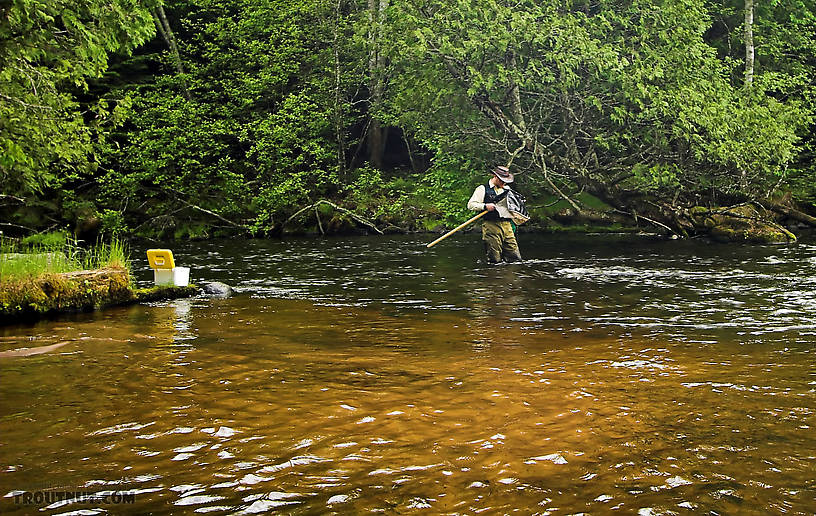
Here I'm looking through the sampling net for interesting nymphs, some of which ended up on this site.
StateWisconsin
LocationBois Brule River
Date TakenJun 9, 2005
Date AddedFeb 8, 2006
AuthorTroutnut
CameraCanon EOS 20D
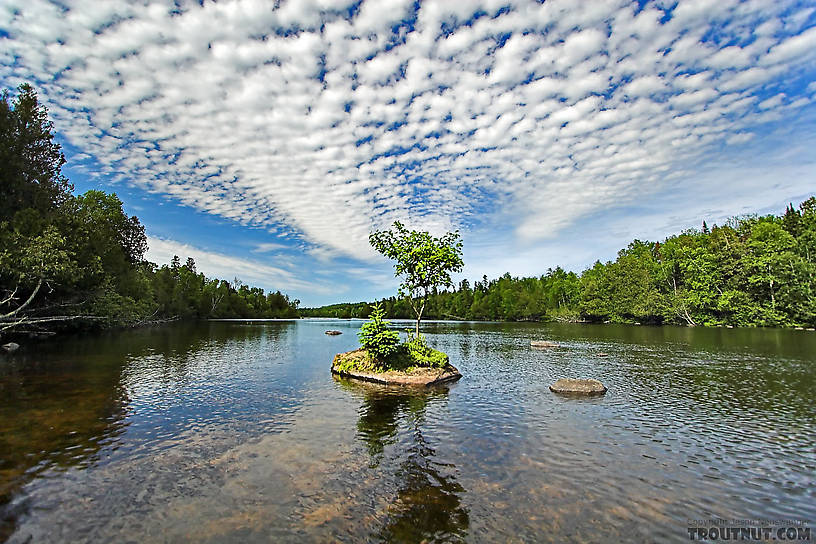
This looks like a normal lake at first, but it's actually a natural, shallow widening in the channel of a famous trout stream. On clear days canoeists drift through and watch small trout and suckers swim beneath them. Large brown trout lay hidden in the weeds, hard to catch during the day but a fun challenge for any angler willing to brave the mosquitoes.
StateWisconsin
LocationBois Brule River
Date TakenJun 9, 2005
Date AddedFeb 8, 2006
AuthorTroutnut
CameraCanon EOS 20D
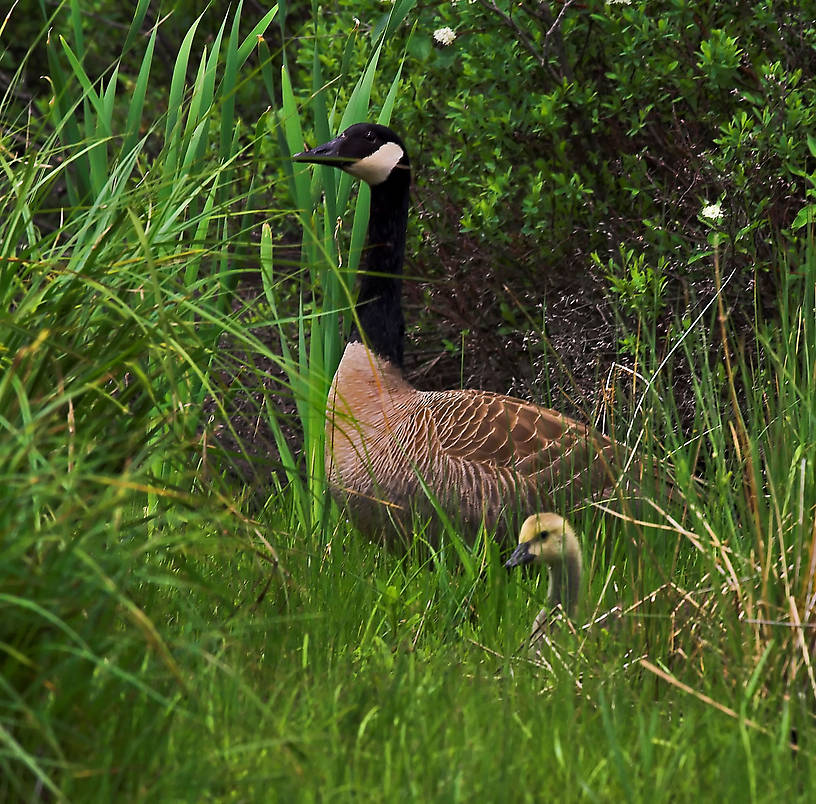
A Canada goose and gosling poke their heads out of the grass along a trout stream.
StateWisconsin
LocationBois Brule River
Date TakenJun 9, 2005
Date AddedFeb 8, 2006
AuthorTroutnut
CameraCanon EOS 20D
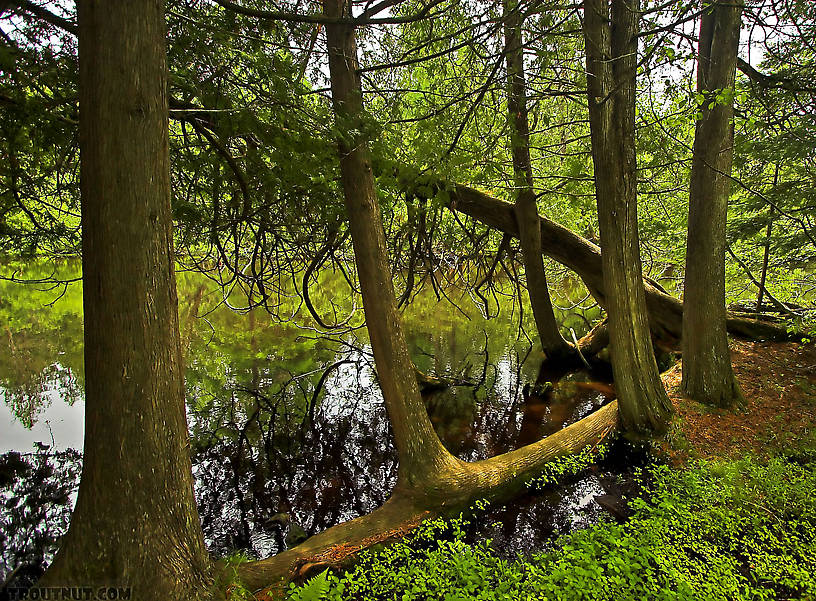
Cedar sweepers line the fertile spring creek headwaters of a famous trout stream.
StateWisconsin
LocationBois Brule River
Date TakenJun 9, 2005
Date AddedFeb 8, 2006
AuthorTroutnut
CameraCanon EOS 20D
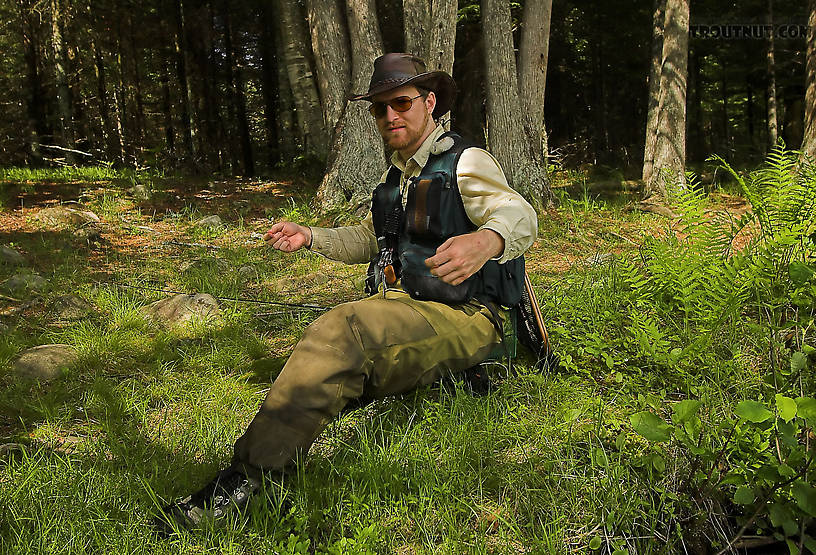
Here I'm tying on a fly in the middle of a warm summer day. Despite the conditions, the trout responded well.
StateWisconsin
LocationBois Brule River
Date TakenJun 9, 2005
Date AddedFeb 8, 2006
AuthorTroutnut
CameraCanon EOS 20D
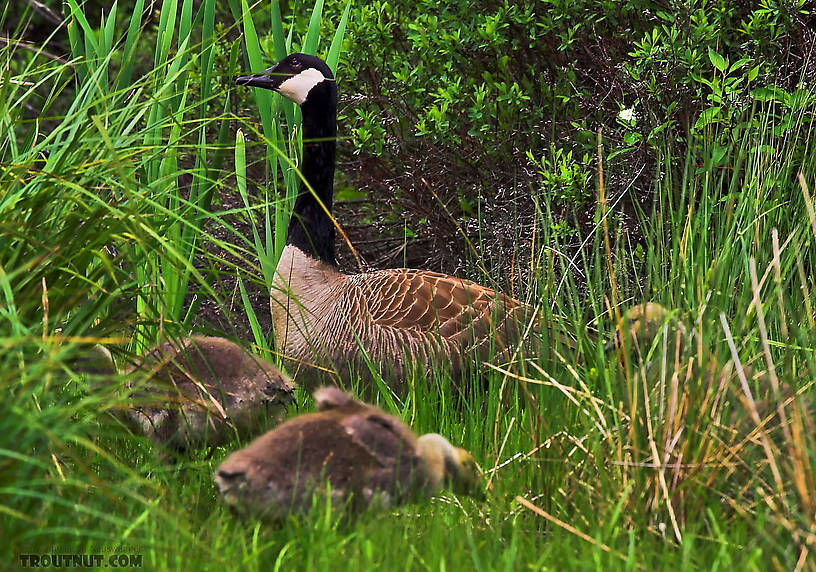
A canada goose looks over some large, downy goslings.
StateWisconsin
LocationBois Brule River
Date TakenJun 9, 2005
Date AddedFeb 8, 2006
AuthorTroutnut
CameraCanon EOS 20D
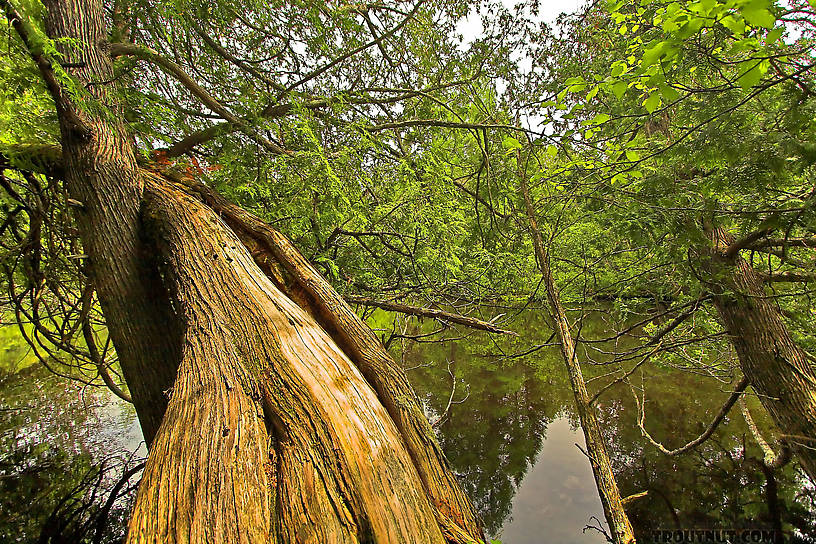
Gnarled cedars twist out over a nice trout stream.
StateWisconsin
LocationBois Brule River
Date TakenJun 9, 2005
Date AddedFeb 8, 2006
AuthorTroutnut
CameraCanon EOS 20D
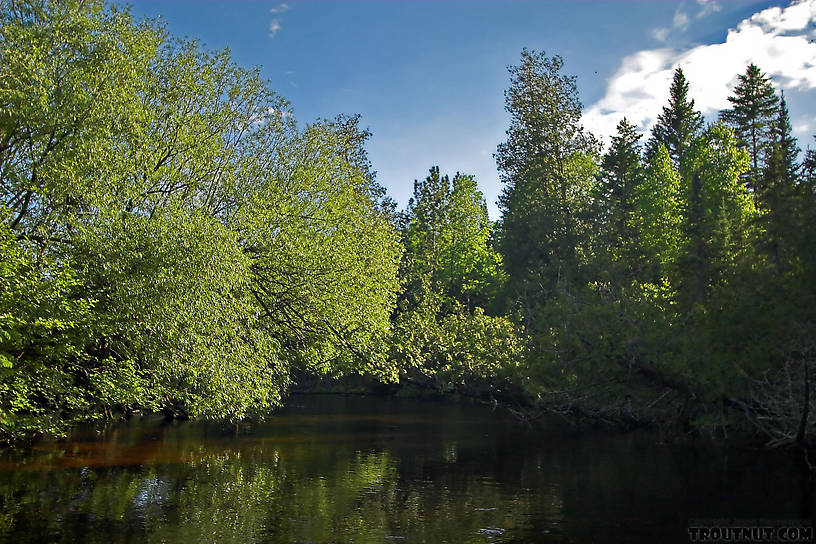
StateWisconsin
LocationBois Brule River
Date TakenJun 9, 2005
Date AddedFeb 8, 2006
AuthorTroutnut
CameraCanon EOS 20D
Closeup insects by Troutnut from the Bois Brule River in Wisconsin
Male Baetidae (Blue-Winged Olives) Mayfly Nymph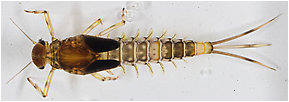 View 10 PicturesThis male nymph is probably in its final instar (Instar: Many invertebrates molt through dozens of progressively larger and better-developed stages as they grow. Each of these stages is known as an instar. Hard-bodied nymphs typically molt through more instars than soft-bodied larvae.). The wing pads (
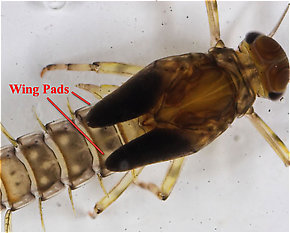 Wing pad: A protrusion from the thorax of an insect nymph which holds the developing wings. Black wing pads usually indicate that the nymph is nearly ready to emerge into an adult.) are extremely black and the large turbinate (
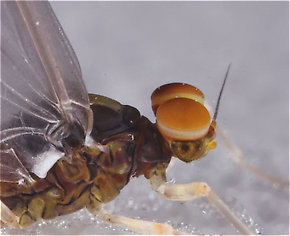 Turbinate: Shaped like a top or elevated on a stalk; usually refers to the eyes of some adult male Baetidae mayflies which are wider near the tip than at the base.) eyes are very apparent inside the nymph's head.
View 10 PicturesThis male nymph is probably in its final instar (Instar: Many invertebrates molt through dozens of progressively larger and better-developed stages as they grow. Each of these stages is known as an instar. Hard-bodied nymphs typically molt through more instars than soft-bodied larvae.). The wing pads (
The wing pads on this final instar Baetidae mayfly nymph are extremely dark.
This male Baetidae dun has slightly turbinate eyes.
Collected June 9, 2005 from the Bois Brule River in Wisconsin
Added to Troutnut.com by Troutnut on May 26, 2006
Added to Troutnut.com by Troutnut on May 26, 2006
Teloganopsis deficiens (Little Black Quill) Mayfly Nymph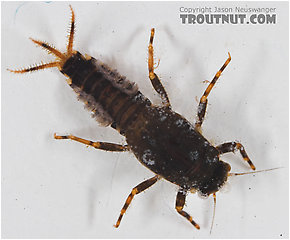 View 6 PicturesThis nymph has tiny, barely detectable tubercles (
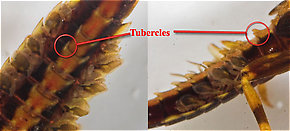 Tubercle: Various peculiar little bumps or projections on an insect. Their character is important for the identification of many kinds of insects, such as the nymphs of Ephemerellidae mayflies.) on its abdominal segments, and I could not find the maxillary palpi. I have tentatively guessed that it is Serratella deficiens.
View 6 PicturesThis nymph has tiny, barely detectable tubercles (
A few (not all) of the abdominal tubercles on this Ephemerella needhami nymph are circled. They are especially large in this species.
Collected June 9, 2005 from the Bois Brule River in Wisconsin
Added to Troutnut.com by Troutnut on May 26, 2006
Added to Troutnut.com by Troutnut on May 26, 2006
Ephemerella needhami (Little Dark Hendrickson) Mayfly Nymph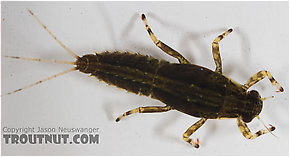 View 6 PicturesI photographed three strange striped Ephemerella nymphs from the same trip on the same river: this one, a brown one, and a very very striped one. I have tentatively put them all in Ephemerella needhami for now.
View 6 PicturesI photographed three strange striped Ephemerella nymphs from the same trip on the same river: this one, a brown one, and a very very striped one. I have tentatively put them all in Ephemerella needhami for now.Collected June 9, 2005 from the Bois Brule River in Wisconsin
Added to Troutnut.com by Troutnut on May 26, 2006
Added to Troutnut.com by Troutnut on May 26, 2006
Ephemerella excrucians (Pale Morning Dun) Mayfly Nymph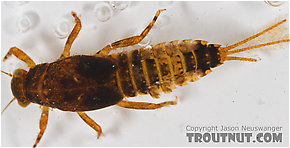 View 5 PicturesI spent (Spent: The wing position of many aquatic insects when they fall on the water after mating. The wings of both sides lay flat on the water. The word may be used to describe insects with their wings in that position, as well as the position itself.) a while with a microscope to fairly positively identify this specimen as Ephemerella excrucians.
View 5 PicturesI spent (Spent: The wing position of many aquatic insects when they fall on the water after mating. The wings of both sides lay flat on the water. The word may be used to describe insects with their wings in that position, as well as the position itself.) a while with a microscope to fairly positively identify this specimen as Ephemerella excrucians.Collected June 9, 2005 from the Bois Brule River in Wisconsin
Added to Troutnut.com by Troutnut on May 26, 2006
Added to Troutnut.com by Troutnut on May 26, 2006
Leucrocuta hebe (Little Yellow Quill) Mayfly Nymph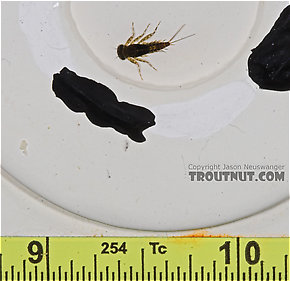 View 4 Pictures
View 4 PicturesCollected June 9, 2005 from the Bois Brule River in Wisconsin
Added to Troutnut.com by Troutnut on May 26, 2006
Added to Troutnut.com by Troutnut on May 26, 2006
Maccaffertium vicarium (March Brown) Mayfly Nymph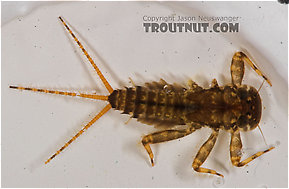 View 3 PicturesI keyed this nymph to Stenonema fuscom, which is now synonymized with Maccaffertium vicarium. However, the size, markings, and time of year make me very skeptical of this identification.
View 3 PicturesI keyed this nymph to Stenonema fuscom, which is now synonymized with Maccaffertium vicarium. However, the size, markings, and time of year make me very skeptical of this identification.Collected June 9, 2005 from the Bois Brule River in Wisconsin
Added to Troutnut.com by Troutnut on May 26, 2006
Added to Troutnut.com by Troutnut on May 26, 2006
Ephemerella needhami (Little Dark Hendrickson) Mayfly Nymph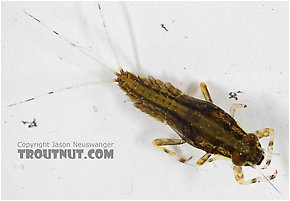 View 3 PicturesI photographed three strange striped Ephemerella nymphs from the same trip on the same river: a black and olive one, a brown one, and this one. I have tentatively put them all in Ephemerella needhami for now.
View 3 PicturesI photographed three strange striped Ephemerella nymphs from the same trip on the same river: a black and olive one, a brown one, and this one. I have tentatively put them all in Ephemerella needhami for now.Collected June 9, 2005 from the Bois Brule River in Wisconsin
Added to Troutnut.com by Troutnut on May 26, 2006
Added to Troutnut.com by Troutnut on May 26, 2006
Ephemerella needhami (Little Dark Hendrickson) Mayfly Nymph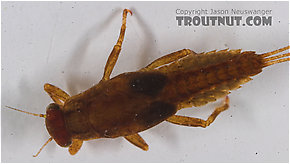 View 2 PicturesI photographed three strange striped Ephemerella nymphs from the same trip on the same river: a black and olive one, this one, and a very very striped one. I have tentatively put them all in Ephemerella needhami for now.
View 2 PicturesI photographed three strange striped Ephemerella nymphs from the same trip on the same river: a black and olive one, this one, and a very very striped one. I have tentatively put them all in Ephemerella needhami for now.Collected June 9, 2005 from the Bois Brule River in Wisconsin
Added to Troutnut.com by Troutnut on May 26, 2006
Added to Troutnut.com by Troutnut on May 26, 2006
Most recent comments on this post (latest on top)
Comment on this post
Jargon Defined:
Instar: Many invertebrates molt through dozens of progressively larger and better-developed stages as they grow. Each of these stages is known as an instar. Hard-bodied nymphs typically molt through more instars than soft-bodied larvae.
Nymphs: The juvenile, underwater stages of mayflies, stoneflies, dragonflies, and damselflies and other aquatic insects whose juvenile stages are covered by hard exoskeletons. The word can also refer to the fishing flies which imitate these creatures, in which case it is used as a blanket term for flies imitating any underwater stage of an invertebrate (except for crayfish and leeches).
Spent: The wing position of many aquatic insects when they fall on the water after mating. The wings of both sides lay flat on the water. The word may be used to describe insects with their wings in that position, as well as the position itself.
A few (not all) of the abdominal tubercles on this Ephemerella needhami nymph are circled. They are especially large in this species.
This male Baetidae dun has slightly turbinate eyes.
The wing pads on this final instar Baetidae mayfly nymph are extremely dark.
Top 10 Fly Hatches
 Baetis
 Baetidae
 Ephemerellidae
 Hexagenia limbata
 Chironomidae
 Ephemerella subvaria
 Heptageniidae
 Ephemerella
 Isonychia
 Hydropsychidae
Top Gift Shop Designs
 I outfish my daddy!
 Electric blue Hendrickson dun.
 I love buggers. Big, green, wooly ones.
 I outfish my husband!
 Be the trout.
 Eat mayflies.
Top Insect Specimens
 Baetisca obesa Mayfly Nymph
 Neophylax Caddisfly Adult
 Corydalus Hellgrammite Larva
 Isonychia bicolor Mayfly Spinner
 Ephemerella aurivillii Mayfly Spinner
Miscellaneous Sites
Troutnut.com is copyright © 2004-2024 Jason
Neuswanger (email Jason). See my FAQ for information about use of my images.
 privacy policy
privacy policy