
Blog & Latest Updates
Fly Fishing Articles
Insects by Common Name


Chocolate Duns


Scientific Names
| Match | Scientific Name |
 | Eurylophella |
| Eurylophella bicolor |
 | Ephemerella needhami |
| Ephemera simulans |
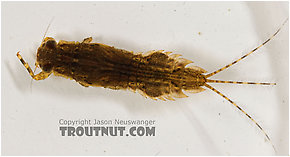
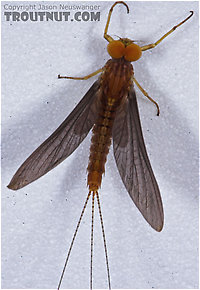
Like most common names, "Chocolate Dun" can refer to more than one taxon. They're previewed below, along with 8 specimens. For more detail click through to the scientific names.
Mayfly Genus Eurylophella
These are often called Chocolate Duns.
None of the species in this genus are recognized as significant hatches. Nevertheless, I have found their nymphs in my samples in many streams in both the East and Midwest.
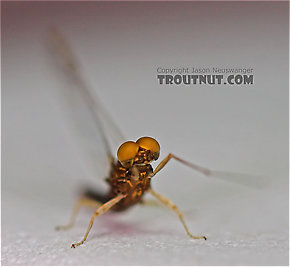
See 19 more specimens...
Mayfly Species Eurylophella bicolor
These are often called Chocolate Duns.
According to the Leonards in Mayflies: An Angler's Study of Trout Water Ephemeroptera , this species and Eurylophella bicolor are the two most likely hatches for fly fishermen to encounter in Michigan. Based on my sampling, it seems other species may be more prevalent elsewhere.
Mayfly Species Ephemerella needhami
These are very rarely called Chocolate Duns.
This small and slightly noteworthy mayfly appears during the finest hours of the year. Ernest Schwiebert describes an Ephemerella needhami day in Matching the Hatch:
I have not fished a needhami emergence, but the exquisite nymphs show up often (though never abundantly) in my samples.
"It was a wonderul morning, with a sky of indescribable blue and big, clean-looking cumulus clouds, and the water was sparkling and alive. You have seen the water with that lively look; you have also seen it dead and uninviting in a way that dampens the enthusiasm the moment you wade out into the current."
I have not fished a needhami emergence, but the exquisite nymphs show up often (though never abundantly) in my samples.
Ephemerella needhami (Little Dark Hendrickson) Mayfly Nymph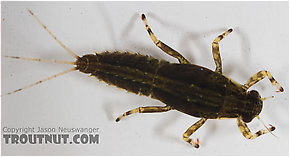 View 6 PicturesI photographed three strange striped Ephemerella nymphs from the same trip on the same river: this one, a brown one, and a very very striped one. I have tentatively put them all in Ephemerella needhami for now.
View 6 PicturesI photographed three strange striped Ephemerella nymphs from the same trip on the same river: this one, a brown one, and a very very striped one. I have tentatively put them all in Ephemerella needhami for now.Ephemerella needhami (Little Dark Hendrickson) Mayfly Dun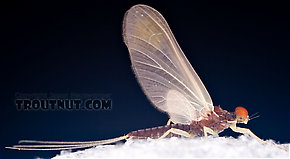 View 7 PicturesSee the comments for an interesting discussion of the identification of this dun.
View 7 PicturesSee the comments for an interesting discussion of the identification of this dun.See 7 more specimens...
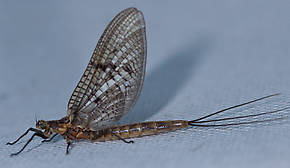
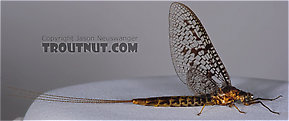
Mayfly Species Ephemera simulans
These are very rarely called Chocolate Duns.
The Brown Drakes are a favorite hatch of many in the Midwest, and they make a good showing on localized waters across the country. They are usually the first in a series of big drakes which bring large trout to the surface at twilight and into the early hours of the night.
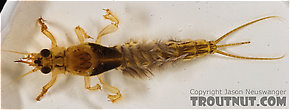
See 12 more specimens...
Top 10 Fly Hatches
 Baetis
 Baetidae
 Ephemerellidae
 Hexagenia limbata
 Chironomidae
 Ephemerella subvaria
 Heptageniidae
 Ephemerella
 Isonychia
 Hydropsychidae
Top Gift Shop Designs
 I outfish my daddy!
 Electric blue Hendrickson dun.
 I love buggers. Big, green, wooly ones.
 I outfish my husband!
 Be the trout.
 Eat mayflies.
Top Insect Specimens
 Baetisca obesa Mayfly Nymph
 Corydalus Hellgrammite Larva
 Neophylax Caddisfly Adult
 Pteronarcys biloba Stonefly Nymph
 Hydropsyche aenigma Caddisfly Adult
Miscellaneous Sites
Troutnut.com is copyright © 2004-2024 Jason
Neuswanger (email Jason). See my FAQ for information about use of my images.
 privacy policy
privacy policy