
Blog & Latest Updates
Fly Fishing Articles
Insects by Common Name


Freshwater Invertebrate Underwater Pictures, Page 3


Browse through all the underwater photos on this site below, or pick a category on the right.


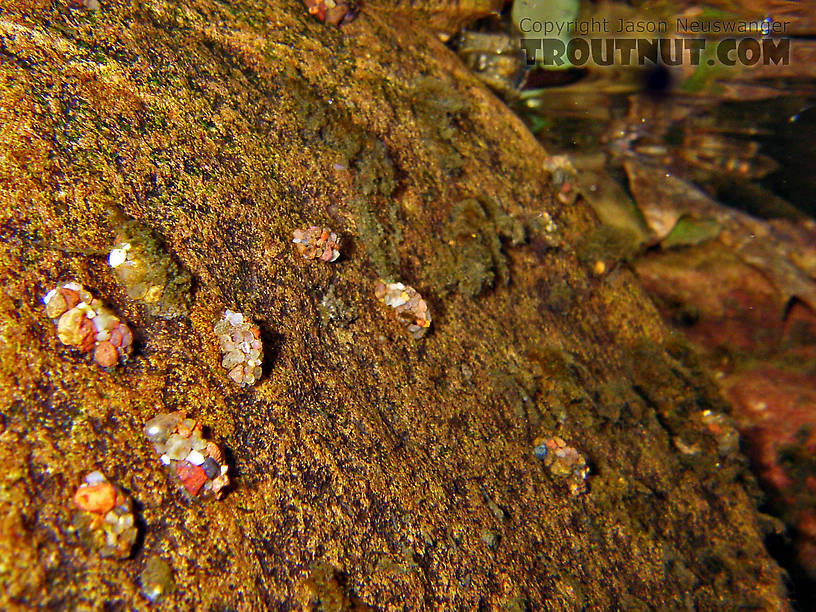
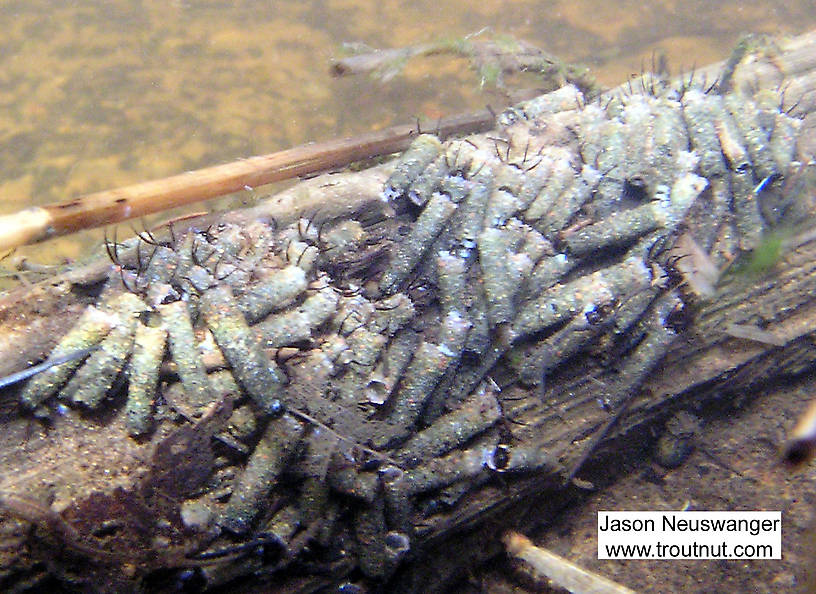
These are glossosomatids, Jason. They are probably Glossosoma nigrior, though it is possible that we are looking at mixed species. The ones to the right with their aggregate of similar sized grains are classic Glossosoma, while the ones to the left with the large anchor pebbles could possibly be Agapetus. Regardless, they're all commonly referred to as saddle case makers.
In this picture: Caddisfly Family Glossosomatidae (Saddle-case Makers).
In this picture: Caddisfly Family Glossosomatidae (Saddle-case Makers).
StateWisconsin
LocationSpring Creek
Date TakenJun 22, 2006
Date AddedJul 1, 2006
AuthorTroutnut
CameraPENTAX Optio WPi
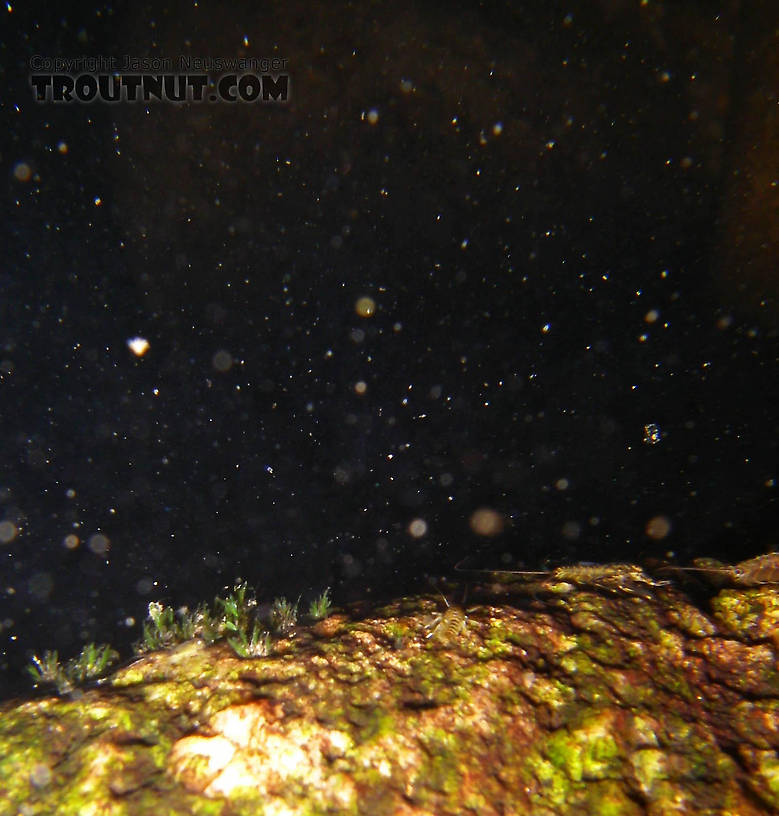
In this picture: Mayfly Genus Epeorus (Little Maryatts) and Mayfly Family Baetidae (Blue-Winged Olives).
StateNew York
LocationMongaup Creek
Date TakenApr 19, 2006
Date AddedApr 22, 2006
AuthorTroutnut
CameraPENTAX Optio WPi
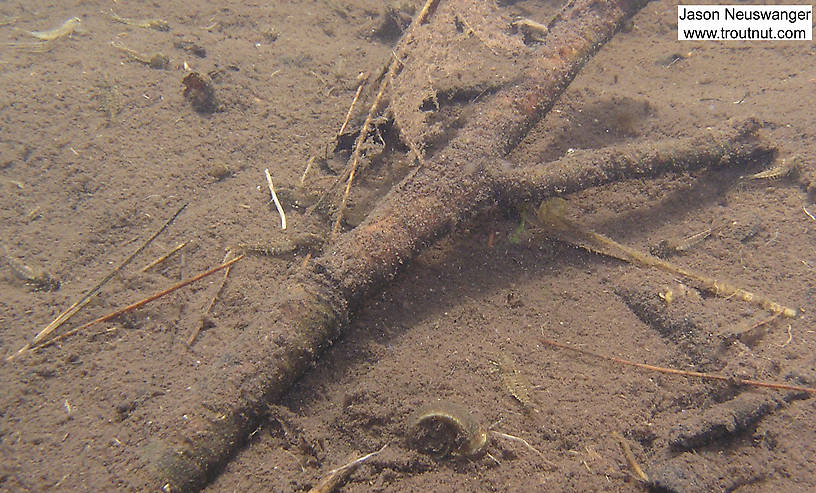
Several fast-swimming Siphlonurus nymphs blend in very well with the silt in this slow backwater along a trout stream.
In this picture: Mayfly Genus Siphlonurus (Gray Drakes).
In this picture: Mayfly Genus Siphlonurus (Gray Drakes).
StateWisconsin
LocationNamekagon River
Date TakenMay 15, 2004
Date AddedJan 25, 2006
AuthorTroutnut
CameraOlympus C740UZ
StateWisconsin
LocationEighteenmile Creek
Date TakenApr 14, 2004
Date AddedJan 25, 2006
AuthorTroutnut
CameraOlympus C740UZ
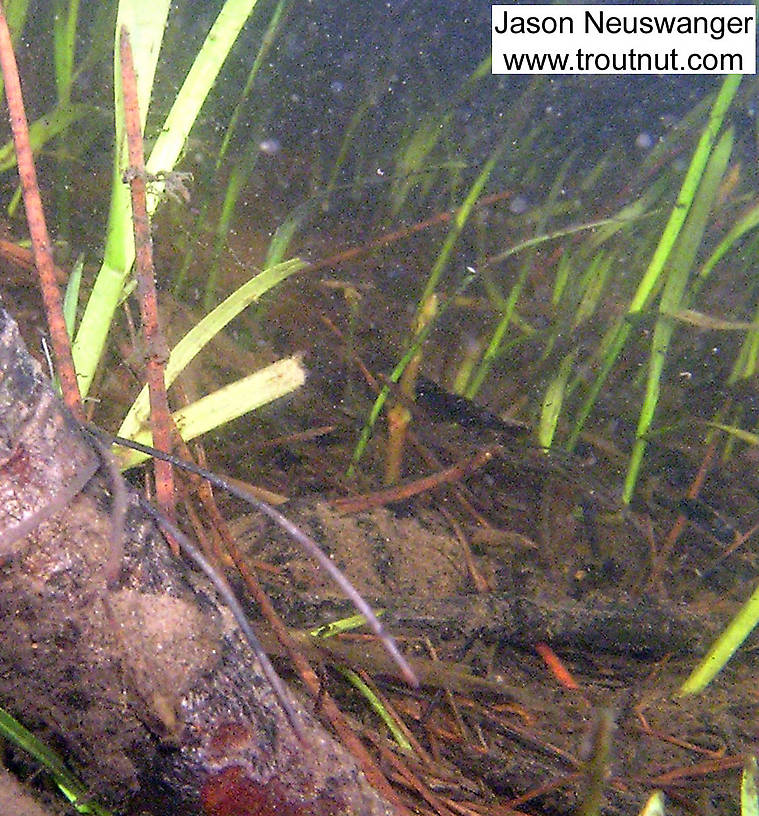
There's a very well-camouflaged Baetisca laurentina mayfly nymph resting on the twig in the bottom left corner of this picture. Can you spot him?
In this picture: Mayfly Species Baetisca laurentina (Armored Mayfly).
In this picture: Mayfly Species Baetisca laurentina (Armored Mayfly).
StateWisconsin
LocationNamekagon River
Date TakenApr 24, 2004
Date AddedJan 25, 2006
AuthorTroutnut
CameraOlympus C740UZ
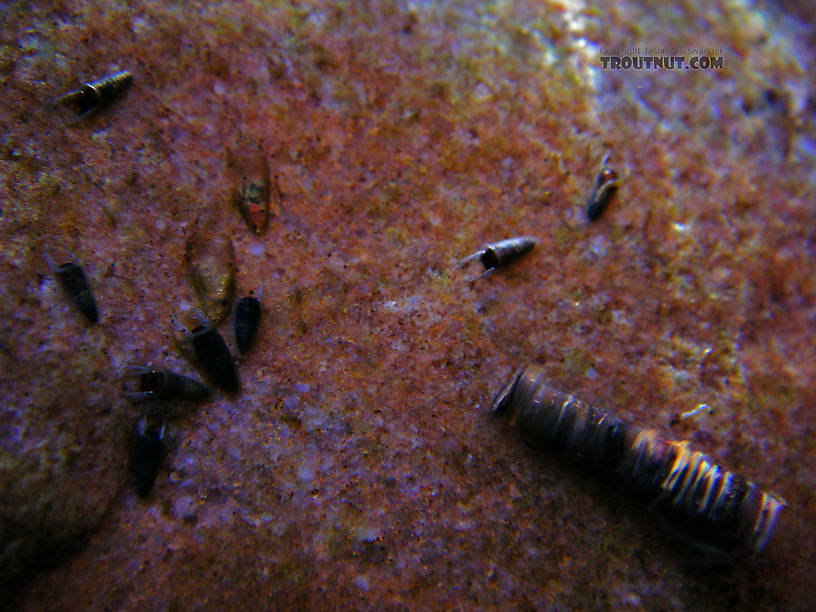
The large caddisfly case (really less than 1/2 inch) is a Brachycentridae larva. The other cases are actually the protective sheaths of black fly (Simuliidae) pupae. The two antler-like pieces sticking out of each one are not legs, but antennal sheaths.
In this picture: Caddisfly Family Brachycentridae (Apple Caddis and Grannoms) and True Fly Family Simuliidae (Black Flies).
In this picture: Caddisfly Family Brachycentridae (Apple Caddis and Grannoms) and True Fly Family Simuliidae (Black Flies).
StateWisconsin
LocationSpring Creek
Date TakenJun 22, 2006
Date AddedJul 1, 2006
AuthorTroutnut
CameraPENTAX Optio WPi
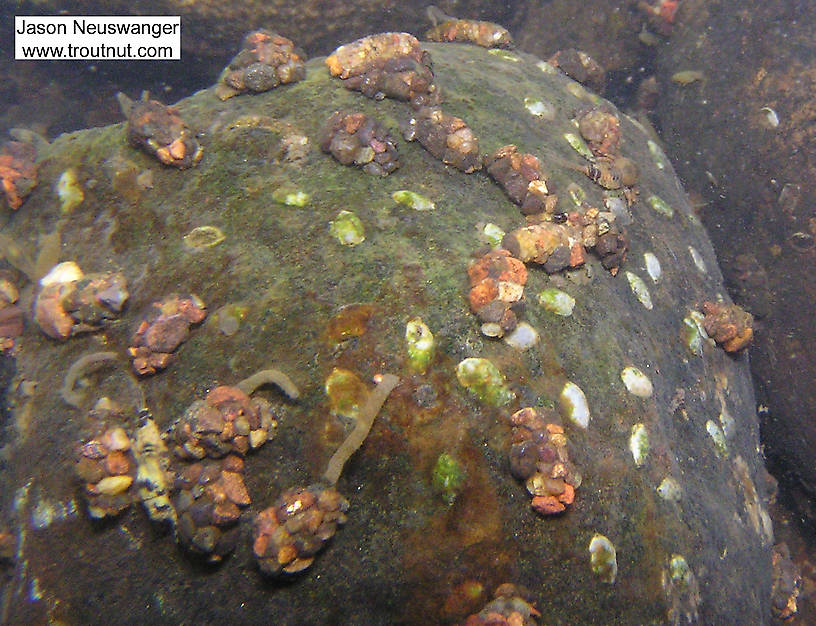
The white blotches on this rock are Leucotrichia caddisfly cases, and the wispy tubes are cases made by a type of midge.
In this picture: Mayfly Species Ephemerella invaria (Sulphur Dun), Caddisfly Species Leucotrichia pictipes (Ring Horn Microcaddis), and True Fly Family Chironomidae (Midges).
In this picture: Mayfly Species Ephemerella invaria (Sulphur Dun), Caddisfly Species Leucotrichia pictipes (Ring Horn Microcaddis), and True Fly Family Chironomidae (Midges).
StateWisconsin
LocationNamekagon River
Date TakenMar 24, 2004
Date AddedJan 25, 2006
AuthorTroutnut
CameraOlympus C740UZ
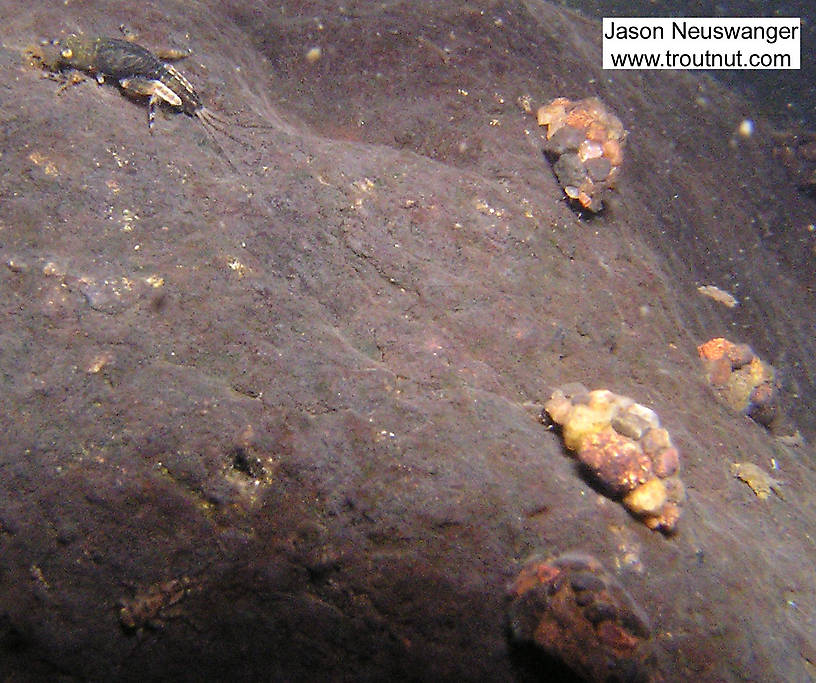
There's a large Ephemerella subvaria nymph in the top left.
In this picture: Mayfly Species Ephemerella invaria (Sulphur Dun), Insect Order Trichoptera (Caddisflies), and Mayfly Species Ephemerella subvaria (Hendrickson).
In this picture: Mayfly Species Ephemerella invaria (Sulphur Dun), Insect Order Trichoptera (Caddisflies), and Mayfly Species Ephemerella subvaria (Hendrickson).
StateWisconsin
LocationNamekagon River
Date TakenMar 20, 2004
Date AddedJan 25, 2006
AuthorTroutnut
CameraOlympus C740UZ
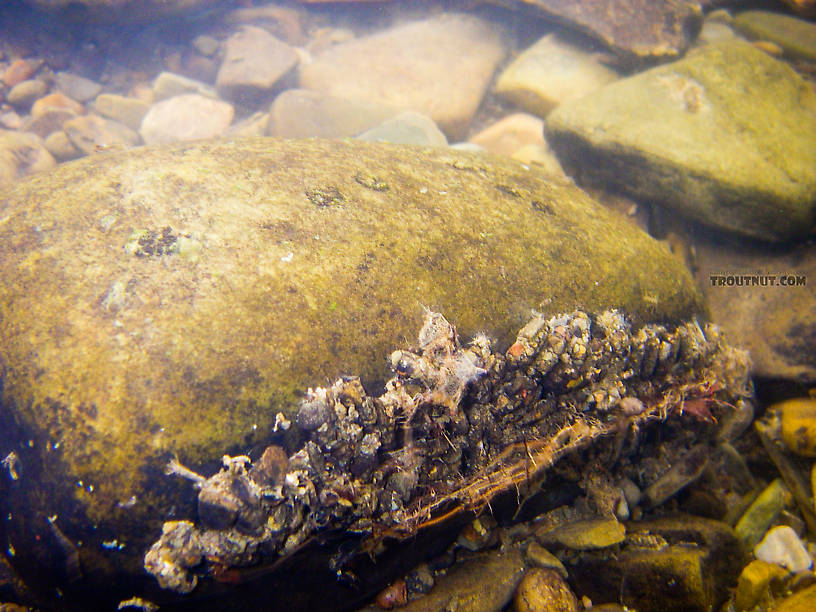
A wide variety of caddis larvae and other insects have clustered together on the backside of this rock in fast water.
In this picture: Caddisfly Genus Neophylax (Autumn Mottled Sedges).
In this picture: Caddisfly Genus Neophylax (Autumn Mottled Sedges).
StateNew York
LocationCayuta Creek
Date TakenApr 14, 2007
Date AddedMay 3, 2007
AuthorTroutnut
CameraPENTAX Optio WPi
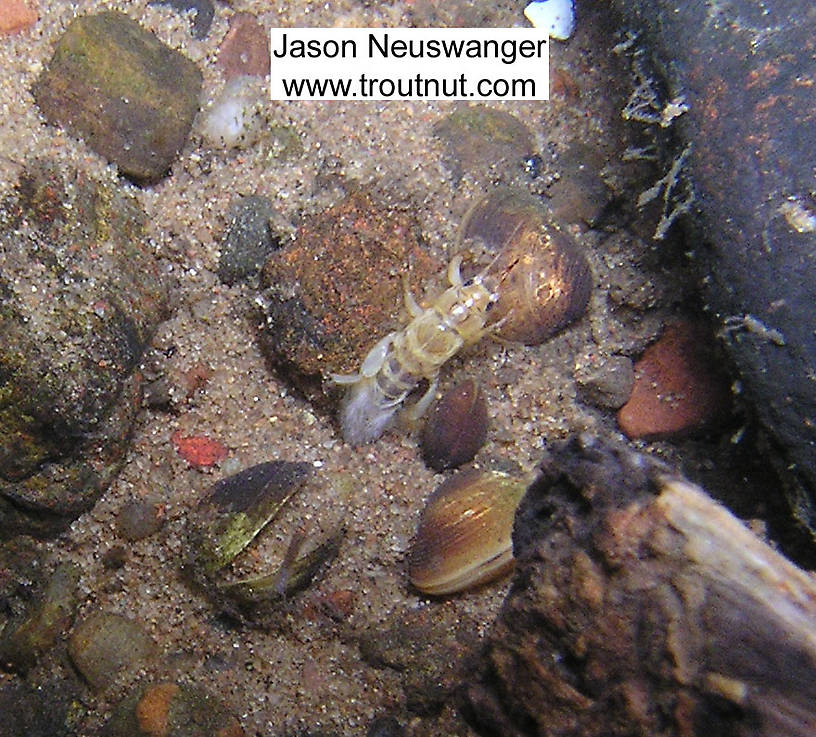
I lifted a rock in pursuit of a stonefly nymph that had scurried beneath it, and instead I found this Ephemera simulans burrowing mayfly nymph waiting to be photographed.
In this picture: Mayfly Species Ephemera simulans (Brown Drake).
In this picture: Mayfly Species Ephemera simulans (Brown Drake).
StateWisconsin
LocationNamekagon River
Date TakenApr 16, 2004
Date AddedJan 25, 2006
AuthorTroutnut
CameraOlympus C740UZ
Top 10 Fly Hatches
 Baetis
 Baetidae
 Ephemerellidae
 Hexagenia limbata
 Chironomidae
 Ephemerella subvaria
 Heptageniidae
 Ephemerella
 Isonychia
 Hydropsychidae
Top Gift Shop Designs
 I outfish my daddy!
 Electric blue Hendrickson dun.
 I love buggers. Big, green, wooly ones.
 I outfish my husband!
 Be the trout.
 Eat mayflies.
Top Insect Specimens
 Baetisca obesa Mayfly Nymph
 Corydalus Hellgrammite Larva
 Neophylax Caddisfly Adult
 Pteronarcys biloba Stonefly Nymph
 Hydropsyche aenigma Caddisfly Adult
Miscellaneous Sites
Troutnut.com is copyright © 2004-2024 Jason
Neuswanger (email Jason). See my FAQ for information about use of my images.
 privacy policy
privacy policy