
Blog & Latest Updates
Fly Fishing Articles
Insects by Common Name


Underwater Pictures from Trout Streams, Page 5


Browse through all the underwater photos on this site below, or pick a category on the right.


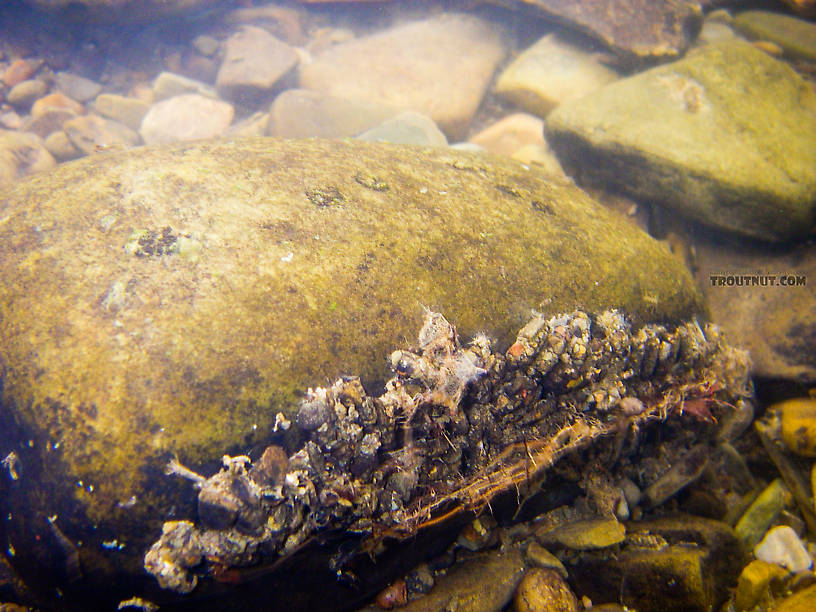
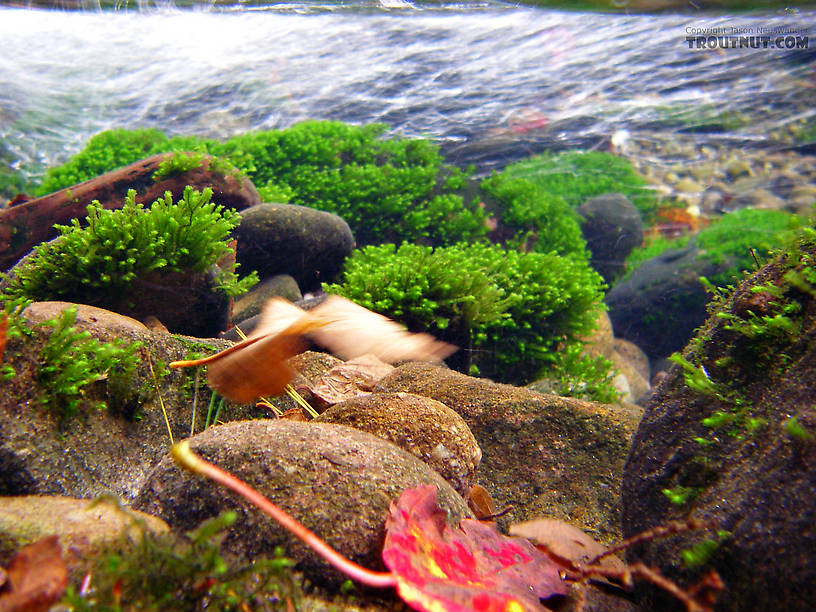
A wide variety of caddis larvae and other insects have clustered together on the backside of this rock in fast water.
In this picture: Caddisfly Genus Neophylax (Autumn Mottled Sedges).
In this picture: Caddisfly Genus Neophylax (Autumn Mottled Sedges).
StateNew York
LocationCayuta Creek
Date TakenApr 14, 2007
Date AddedMay 3, 2007
AuthorTroutnut
CameraPENTAX Optio WPi
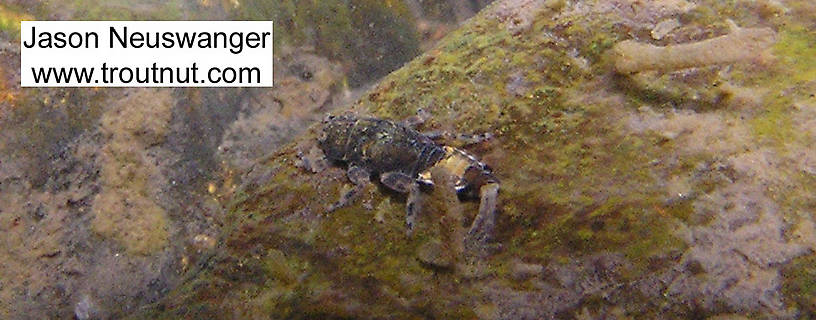
This Ephemerella subvaria (Hendrickson) nymph picture is one of my favorites.
In this picture: Mayfly Species Ephemerella subvaria (Hendrickson).
In this picture: Mayfly Species Ephemerella subvaria (Hendrickson).
StateWisconsin
LocationNamekagon River
Date TakenMar 24, 2004
Date AddedJan 25, 2006
AuthorTroutnut
CameraOlympus C740UZ
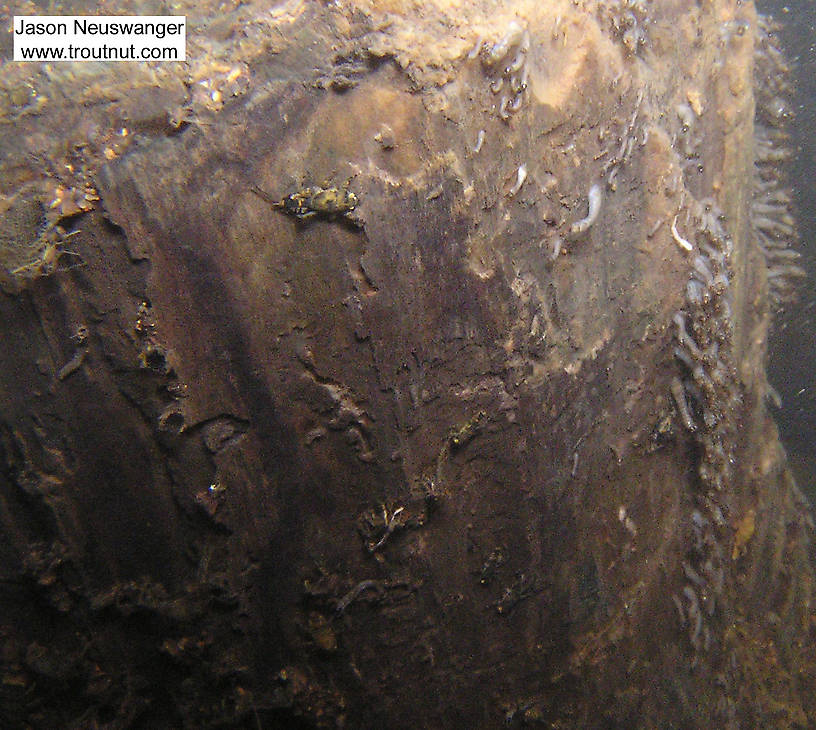
Some large Ephemerella mayfly nymphs cling to a log. In the background, hundreds of Simuliidae black fly larvae swing in large clusters in the current.
In this picture: Mayfly Species Ephemerella subvaria (Hendrickson), True Fly Family Simuliidae (Black Flies), and Mayfly Species Ephemerella invaria (Sulphur Dun).
In this picture: Mayfly Species Ephemerella subvaria (Hendrickson), True Fly Family Simuliidae (Black Flies), and Mayfly Species Ephemerella invaria (Sulphur Dun).
StateWisconsin
LocationNamekagon River
Date TakenMar 20, 2004
Date AddedJan 25, 2006
AuthorTroutnut
CameraOlympus C740UZ
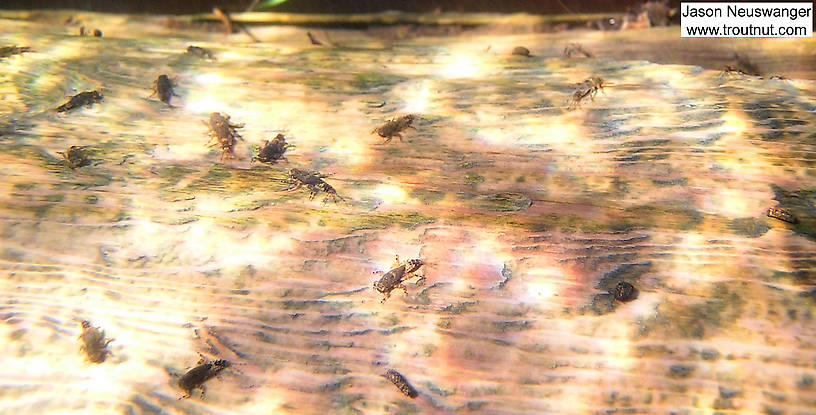
In this picture: Mayfly Species Ephemerella subvaria (Hendrickson) and Mayfly Species Ephemerella invaria (Sulphur Dun).
StateWisconsin
LocationNamekagon River
Date TakenApr 23, 2004
Date AddedJan 25, 2006
AuthorTroutnut
CameraOlympus C740UZ
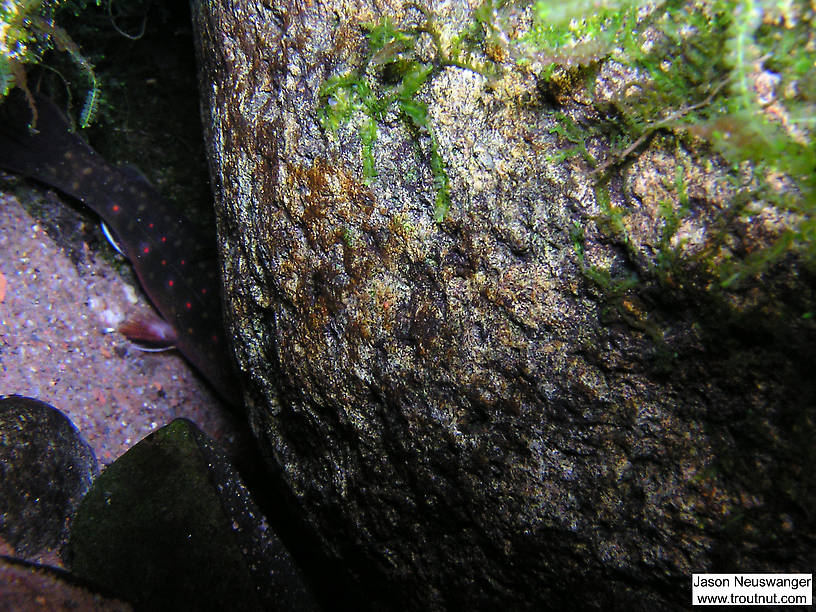
A 4 inch brookie hides from the camera behind a rock under a cut bank.
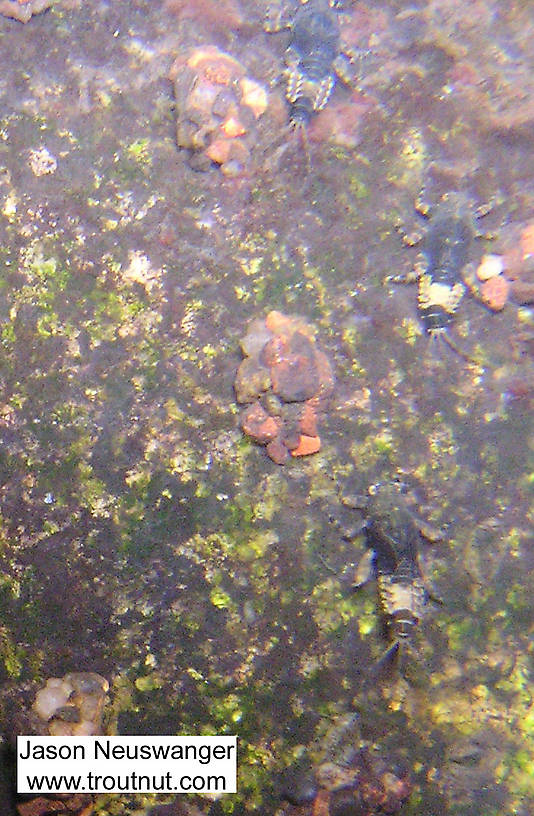
Three big Ephemerella subvaria mayfly nymphs share a rock with some cased caddis larvae.
In this picture: Mayfly Species Ephemerella subvaria (Hendrickson) and Saddle-case Maker Genus Glossosoma (Little Brown Short-horned Sedges).
In this picture: Mayfly Species Ephemerella subvaria (Hendrickson) and Saddle-case Maker Genus Glossosoma (Little Brown Short-horned Sedges).
StateWisconsin
LocationNamekagon River
Date TakenMar 20, 2004
Date AddedJan 25, 2006
AuthorTroutnut
CameraOlympus C740UZ
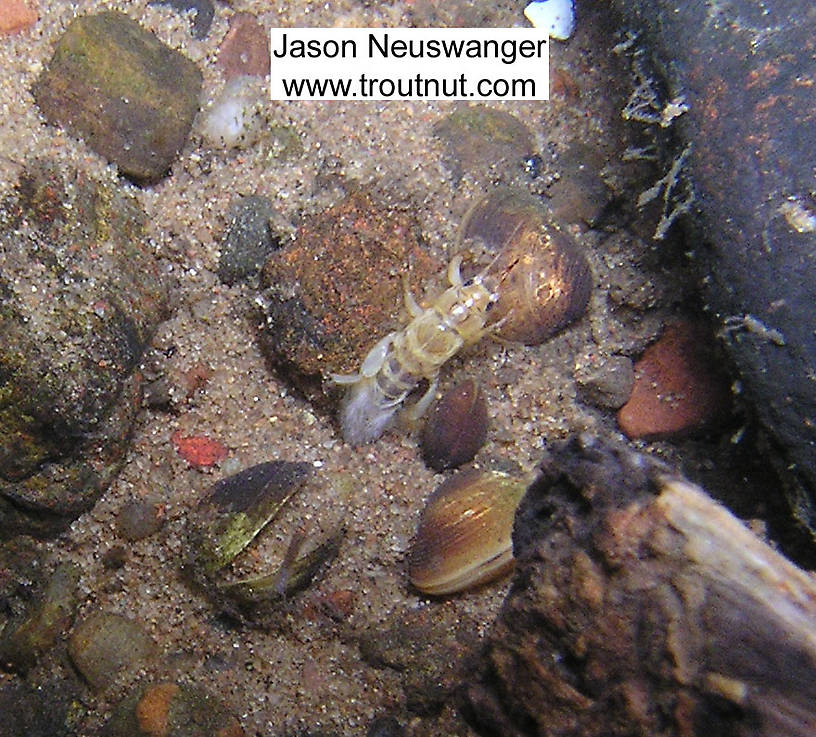
I lifted a rock in pursuit of a stonefly nymph that had scurried beneath it, and instead I found this Ephemera simulans burrowing mayfly nymph waiting to be photographed.
In this picture: Mayfly Species Ephemera simulans (Brown Drake).
In this picture: Mayfly Species Ephemera simulans (Brown Drake).
StateWisconsin
LocationNamekagon River
Date TakenApr 16, 2004
Date AddedJan 25, 2006
AuthorTroutnut
CameraOlympus C740UZ
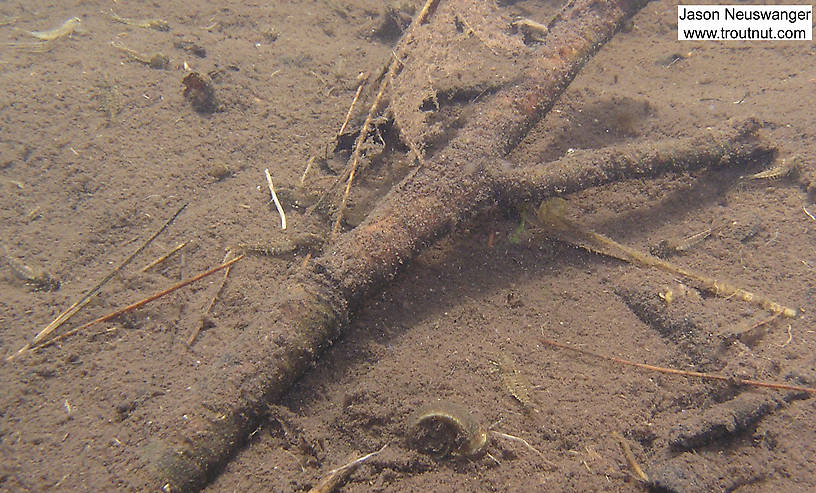
Several fast-swimming Siphlonurus nymphs blend in very well with the silt in this slow backwater along a trout stream.
In this picture: Mayfly Genus Siphlonurus (Gray Drakes).
In this picture: Mayfly Genus Siphlonurus (Gray Drakes).
StateWisconsin
LocationNamekagon River
Date TakenMay 15, 2004
Date AddedJan 25, 2006
AuthorTroutnut
CameraOlympus C740UZ
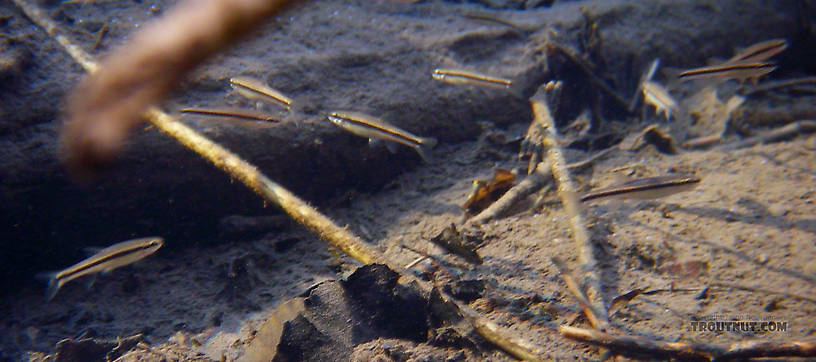
Several small minnows (bluntnose minnows, maybe?) mill around in this still backwater of a small trout stream.
Top 10 Fly Hatches
 Baetis
 Baetidae
 Ephemerellidae
 Hexagenia limbata
 Chironomidae
 Heptageniidae
 Ephemerella subvaria
 Ephemerella
 Isonychia
 Hydropsychidae
Top Gift Shop Designs
 I outfish my daddy!
 Electric blue Hendrickson dun.
 I love buggers. Big, green, wooly ones.
 I outfish my husband!
 Be the trout.
 Eat mayflies.
Top Insect Specimens
 Baetisca obesa Mayfly Nymph
 Corydalus Hellgrammite Larva
 Neophylax Caddisfly Adult
 Rhyacophila fuscula Caddisfly Larva
 Pteronarcys biloba Stonefly Nymph
Miscellaneous Sites
Troutnut.com is copyright © 2004-2024 Jason
Neuswanger (email Jason). See my FAQ for information about use of my images.
 privacy policy
privacy policy