
Blog & Latest Updates
Fly Fishing Articles
Insects by Common Name


> > pmd hatches in ny?
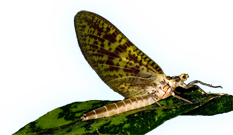
This topic is about the Mayfly Genus Ephemerella
This genus contains the legendary Hendricksons and Sulphurs of the East and the equally important Pale Morning Duns of western waters.
No scientific name in American angling literature is more renowned and at the same time capable of more confusion than the genus name "Ephemerella." It is important that anglers have a good overall grasp of its taxonomic history if they are to make any sense out of the rich literary heritage involving this mayfly name.
By the time American angling literature began to take serious note of entomology in the decades of the early to mid 20th century, Ephemerella was considered a "super-genus" in the family Baetidae, containing all of the important species to anglers in the subfamily Ephemerellinae. Taxonomists organized them by association with "type" species that were referred to as "groups" within this very large and unruly genus.
This organizational structure held sway until the 70's when they were recognized as separate from the Baetidae with their own family, the Ephemerellidae. The "groups" (after a little name changing and reorganization) were given subgenus status, but in conformance with taxonomical convention,the nomenclature retained the use of the name Ephemerella when referring to individual species genus status. More change occurred towards the end of the century as consensus formed around the subgenera achieving full generic status. The broad use of Ephemerella was then dropped in favor of the new generic names.
These changes were necessary in that they addressed many problems exposed in older taxonomies. Unfortunately, all during this period the changes were reported with varying degrees of accuracy and acceptance. For anglers this was exacerbated by the continued use and reliance on older entomology texts in many circles. Be that as it may, recent or updated angler entomologies now recognize that many of the old Ephemerella species are spread out among several genera in the Ephemerellidae family. These include the various Blue-Winged Olives and Western Green Drakes of the Drunella genus as well as several important species scattered in genera like Attenella and Serratella, to name a few.
Despite these revisions in classification, the Ephemerella genus still contains arguably the most important species in North America, and remains a "super-genus" to anglers.
There is a lot of variation; refer to the genus species hatch pages for details. Read more...


There are 155 more specimens...
The Discussion
| Trouthunter | April 18th, 2009, 5:28 pm | |
| Posts: 2 | I was recently told by a close friend of mine that in the southertier of ny ( finger lakes region) that we have very good hatches of pmds. I was hoping that someone could confirm this or otherwise before I tye up patterns. I have seen what I believe are sulphurs with slightly the same body and wing coloration but again thought that these couldn't be the famed insect. | |
Quick Reply
You have to be logged in to post on the forum. It's this easy:
Troutnut.com is copyright © 2004-2024 Jason
Neuswanger (email Jason). See my FAQ for information about use of my images.
 privacy policy
privacy policy