
Blog & Latest Updates
Fly Fishing Articles
Insects by Common Name


Mayfly Genus Epeorus (Little Maryatts)


Taxonomic Navigation -?-
Kingdom
Animalia (Animals)
» Phylum
Arthropoda (Arthropods)
» Class
Insecta (Insects)
» Order
Ephemeroptera (Mayflies)
» Genus Epeorus (Little Maryatts)


9 species aren't included.
Common Names


This is page 4 of specimens of Epeorus. Visit the main Epeorus page for:
- The behavior and habitat of Epeorus.
- 9 underwater pictures of Epeorus.
Pictures of 52 Mayfly Specimens in the Genus Epeorus:
Epeorus vitreus (Sulphur) Mayfly Nymph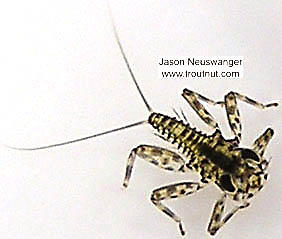 View 3 PicturesKey features I discerned with a microscope include that the femoral flange is sharp, and the first gill is not extended.
View 3 PicturesKey features I discerned with a microscope include that the femoral flange is sharp, and the first gill is not extended.Collected February 7, 2004 from unknown in Wisconsin
Added to Troutnut.com by Troutnut on January 25, 2006
Added to Troutnut.com by Troutnut on January 25, 2006
Male Epeorus frisoni Mayfly Dun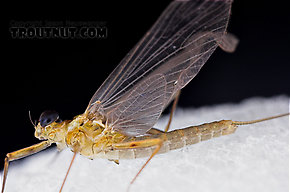 View 2 PicturesI collected this male dun together with a female spinner, a female dun, and another male dun. I photographed this bedraggled one, larger than the other male, to show some of the greatest size variation within the species.
View 2 PicturesI collected this male dun together with a female spinner, a female dun, and another male dun. I photographed this bedraggled one, larger than the other male, to show some of the greatest size variation within the species.Collected September 6, 2006 from Mystery Creek #23 in New York
Added to Troutnut.com by Troutnut on October 3, 2006
Added to Troutnut.com by Troutnut on October 3, 2006
Epeorus grandis Mayfly Nymph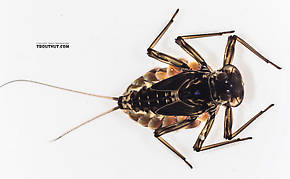 View 11 Pictures
View 11 PicturesCollected March 19, 2019 from the South Fork Snoqualmie River in Washington
Added to Troutnut.com by Troutnut on June 14, 2019
Added to Troutnut.com by Troutnut on June 14, 2019
Male Epeorus pleuralis (Quill Gordon) Mayfly Dun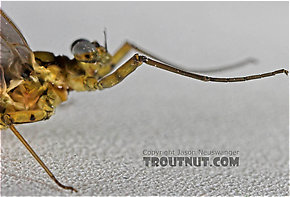 View 9 Pictures
View 9 PicturesCollected May 7, 2005 from the Beaverkill River in New York
Added to Troutnut.com by Troutnut on May 16, 2006
Added to Troutnut.com by Troutnut on May 16, 2006
Epeorus vitreus (Sulphur) Mayfly Nymph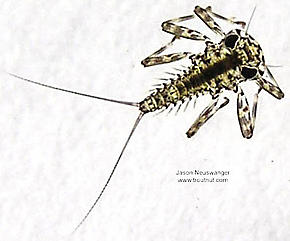 View 3 PicturesI suspect this is an Epeorus vitreus nymph. At the current instar (Instar: Many invertebrates molt through dozens of progressively larger and better-developed stages as they grow. Each of these stages is known as an instar. Hard-bodied nymphs typically molt through more instars than soft-bodied larvae.), it's tough to make out the pair of dots on the tergites (
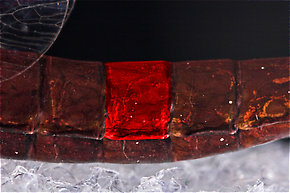 Tergite: The top (dorsal) part of a single segment on an insect's abdomen when it consists of a single chitinous plate (sclerite), or an individual sclerite if the segment has more than one.) which signify that species, but with zooming and contrast enhancement they become evident.
View 3 PicturesI suspect this is an Epeorus vitreus nymph. At the current instar (Instar: Many invertebrates molt through dozens of progressively larger and better-developed stages as they grow. Each of these stages is known as an instar. Hard-bodied nymphs typically molt through more instars than soft-bodied larvae.), it's tough to make out the pair of dots on the tergites (
One tergite of this Isonychia bicolor mayfly spinner is highlighted in red.
Collected January 13, 2004 from the Namekagon River in Wisconsin
Added to Troutnut.com by Troutnut on January 25, 2006
Added to Troutnut.com by Troutnut on January 25, 2006
Epeorus vitreus (Sulphur) Mayfly Nymph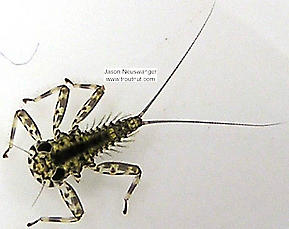 View 2 Pictures
View 2 PicturesCollected February 7, 2004 from unknown in Wisconsin
Added to Troutnut.com by Troutnut on January 25, 2006
Added to Troutnut.com by Troutnut on January 25, 2006
Epeorus vitreus (Sulphur) Mayfly Nymph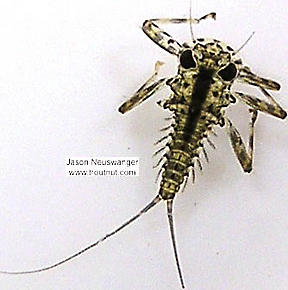 View 2 Pictures
View 2 PicturesCollected February 7, 2004 from unknown in Wisconsin
Added to Troutnut.com by Troutnut on January 25, 2006
Added to Troutnut.com by Troutnut on January 25, 2006
Epeorus vitreus (Sulphur) Mayfly Nymph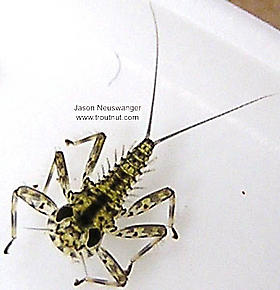 View 2 PicturesKey features I discerned with a microscope include that the femoral flange is blunt (again, given the other features and location, I probably misread this one), postero-lateral (Lateral: To the side.) spines with the anterior (Anterior: Toward the front of an organism's body. The phrase "anterior to" means "in front of.") longer, and the first gill is not extended.
View 2 PicturesKey features I discerned with a microscope include that the femoral flange is blunt (again, given the other features and location, I probably misread this one), postero-lateral (Lateral: To the side.) spines with the anterior (Anterior: Toward the front of an organism's body. The phrase "anterior to" means "in front of.") longer, and the first gill is not extended.Collected February 7, 2004 from unknown in Wisconsin
Added to Troutnut.com by Troutnut on January 25, 2006
Added to Troutnut.com by Troutnut on January 25, 2006
Epeorus vitreus (Sulphur) Mayfly Nymph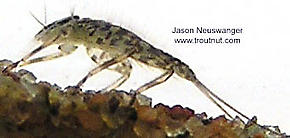 View 3 PicturesKey features I discerned with a microscope include that the femoral flange is blunt (later note: on nymphs of this size, it's somewhat ambiguous and the femora (
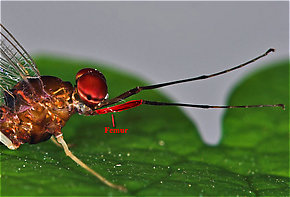 Femur: The main segment of an insect's leg close to the body, in between the tibia and the trochanter.) can be damaged in the collection process), the postero-lateral (Lateral: To the side.) spines have a longer anterior (Anterior: Toward the front of an organism's body. The phrase "anterior to" means "in front of."), the first gill is not extended, all gills are tracheated, and the femora (
Femur: The main segment of an insect's leg close to the body, in between the tibia and the trochanter.) have a distinctive brown spot on the center while all the other spots are gray.
Femur: The main segment of an insect's leg close to the body, in between the tibia and the trochanter.) can be damaged in the collection process), the postero-lateral (Lateral: To the side.) spines have a longer anterior (Anterior: Toward the front of an organism's body. The phrase "anterior to" means "in front of."), the first gill is not extended, all gills are tracheated, and the femora (
Femur: The main segment of an insect's leg close to the body, in between the tibia and the trochanter.) have a distinctive brown spot on the center while all the other spots are gray.
View 3 PicturesKey features I discerned with a microscope include that the femoral flange is blunt (later note: on nymphs of this size, it's somewhat ambiguous and the femora (
The femur of this Isonychia bicolor mayfly spinner is highlighted in red.
The femur of this Isonychia bicolor mayfly spinner is highlighted in red.
Collected February 7, 2004 from unknown in Wisconsin
Added to Troutnut.com by Troutnut on January 25, 2006
Added to Troutnut.com by Troutnut on January 25, 2006
Female Epeorus vitreus (Sulphur) Mayfly Dun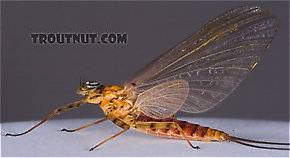 View 6 Pictures
View 6 PicturesCollected May 28, 2005 from the Namekagon River in Wisconsin
Added to Troutnut.com by Troutnut on May 24, 2006
Added to Troutnut.com by Troutnut on May 24, 2006
Jargon Defined:
Anterior: Toward the front of an organism's body. The phrase "anterior to" means "in front of."
Dun: Mayflies have two adult stages. They first emerge from the water as duns (scientifically known as the subimago stage). They then molt into the spinner (imago) stage, in which they mate and die. Sometimes the word "dun" is confusingly used to refer to a brownish gray color in fly tying materials.
The femur of this Isonychia bicolor mayfly spinner is highlighted in red.
Instar: Many invertebrates molt through dozens of progressively larger and better-developed stages as they grow. Each of these stages is known as an instar. Hard-bodied nymphs typically molt through more instars than soft-bodied larvae.
Lateral: To the side.
Nymph: The juvenile, underwater stages of mayflies, stoneflies, dragonflies, and damselflies and other aquatic insects whose juvenile stages are covered by hard exoskeletons. The word can also refer to the fishing flies which imitate these creatures, in which case it is used as a blanket term for flies imitating any underwater stage of an invertebrate (except for crayfish and leeches).
Spinner: There are two winged stages of adult mayflies. They emerge from the water as duns, molt on land (usually) into their fully mature stage, spinners. As spinners, they mate, lay eggs, and die.
One tergite of this Isonychia bicolor mayfly spinner is highlighted in red.
Useful References:
Arbona, Fred Jr. 1989. Mayflies, the Angler, and the Trout. Nick Lyons Books.
Caucci, Al and Nastasi, Bob. 2004. Hatches II. The Lyons Press.
Knopp, Malcolm and Robert Cormier. 1997. Mayflies: An Angler's Study of Trout Water Ephemeroptera . The Lyons Press.
Top 10 Fly Hatches
 Baetis
 Baetidae
 Ephemerellidae
 Hexagenia limbata
 Chironomidae
 Heptageniidae
 Ephemerella subvaria
 Ephemerella
 Isonychia
 Hydropsychidae
Top Gift Shop Designs
 I outfish my daddy!
 Electric blue Hendrickson dun.
 I love buggers. Big, green, wooly ones.
 I outfish my husband!
 Be the trout.
 Eat mayflies.
Top Insect Specimens
 Baetisca obesa Mayfly Nymph
 Corydalus Hellgrammite Larva
 Neophylax Caddisfly Adult
 Rhyacophila fuscula Caddisfly Larva
 Pteronarcys biloba Stonefly Nymph
Miscellaneous Sites
Troutnut.com is copyright © 2004-2024 Jason
Neuswanger (email Jason). See my FAQ for information about use of my images.
 privacy policy
privacy policy