
Blog & Latest Updates
Fly Fishing Articles
Insects by Common Name

Insect Order Ephemeroptera (Mayflies)


Taxonomic Navigation -?-
Kingdom
Animalia (Animals)
» Phylum
Arthropoda (Arthropods)
» Class
Insecta (Insects)
» Order Ephemeroptera (Mayflies)


8 families aren't included.
Common Name
| Match | Common Name |
 | Mayflies |
This is page 2 of underwater photos of Ephemeroptera. Visit the main Ephemeroptera page for:
- The behavior and habitat of Ephemeroptera.
- Studio pictures of 828 Ephemeroptera specimens.
67 Underwater Pictures of Mayflies:


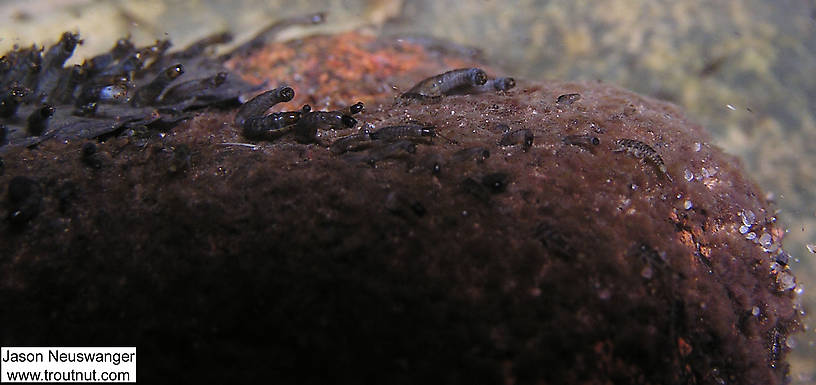
This is my favorite underwater picture so far. It shows a bunch of Simuliidae (black fly) larvae clinging to a rock and swinging in the fast current. There are also at least four visible mayfly nymphs, probably in the family Baetidae.
In this picture: True Fly Family Simuliidae (Black Flies) and Mayfly Family Baetidae (Blue-Winged Olives).
In this picture: True Fly Family Simuliidae (Black Flies) and Mayfly Family Baetidae (Blue-Winged Olives).
StateWisconsin
LocationEighteenmile Creek
Date TakenMar 19, 2004
Date AddedJan 25, 2006
AuthorTroutnut
CameraOlympus C740UZ
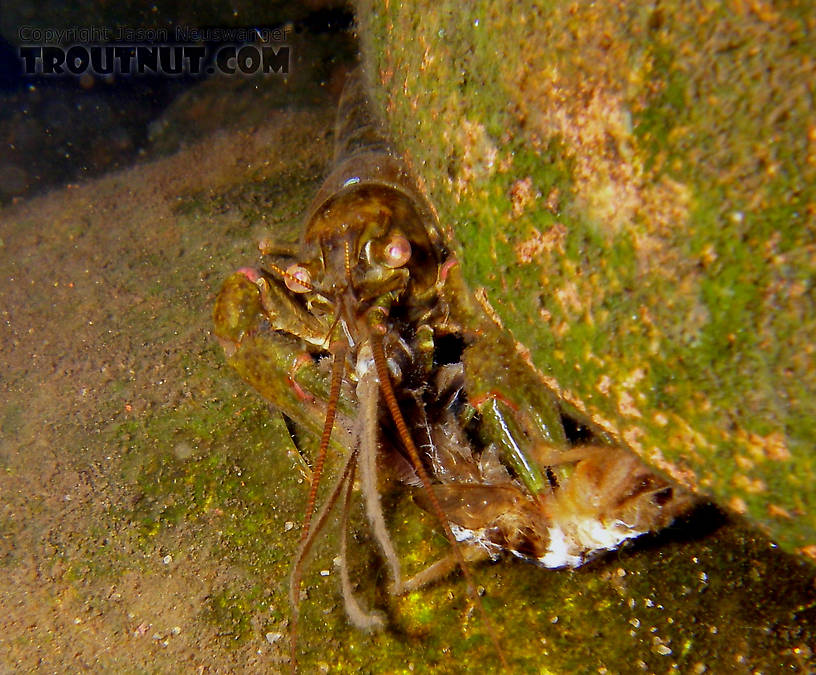
A crayfish chews on a Hexagenia limbata nymph shortly after a small Hex emergence. I didn't catch any fish, but playing around with my flashlight and camera in the rocks proved productive.
In this picture: Arthropod Order Decapoda (Crayfish) and Mayfly Species Hexagenia limbata (Hex).
In this picture: Arthropod Order Decapoda (Crayfish) and Mayfly Species Hexagenia limbata (Hex).
StateWisconsin
LocationNamekagon River
Date TakenJun 14, 2006
Date AddedJun 30, 2006
AuthorTroutnut
CameraPENTAX Optio WPi
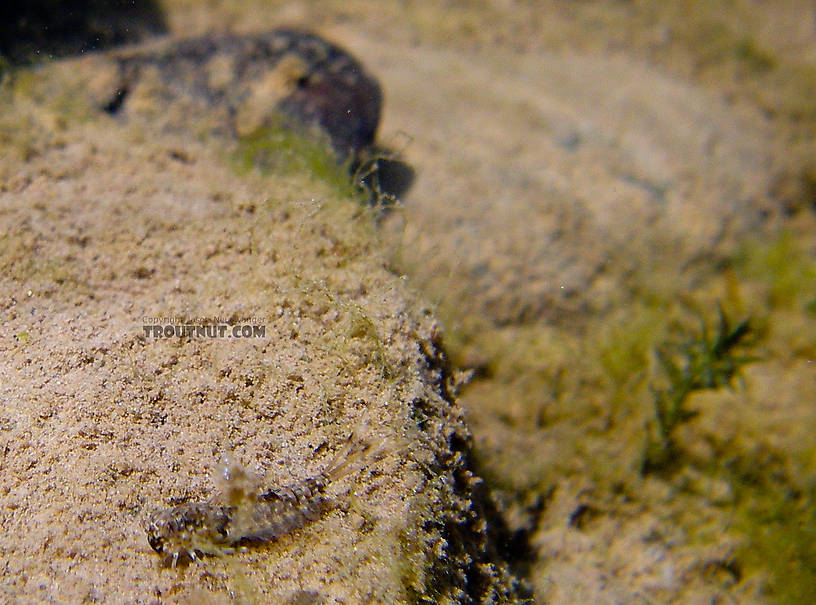
In this picture: Mayfly Family Baetidae (Blue-Winged Olives), Insect Order Trichoptera (Caddisflies), and Mayfly Genus Epeorus (Little Maryatts).
StateNew York
LocationMongaup Creek
Date TakenApr 19, 2006
Date AddedApr 22, 2006
AuthorTroutnut
CameraPENTAX Optio WPi
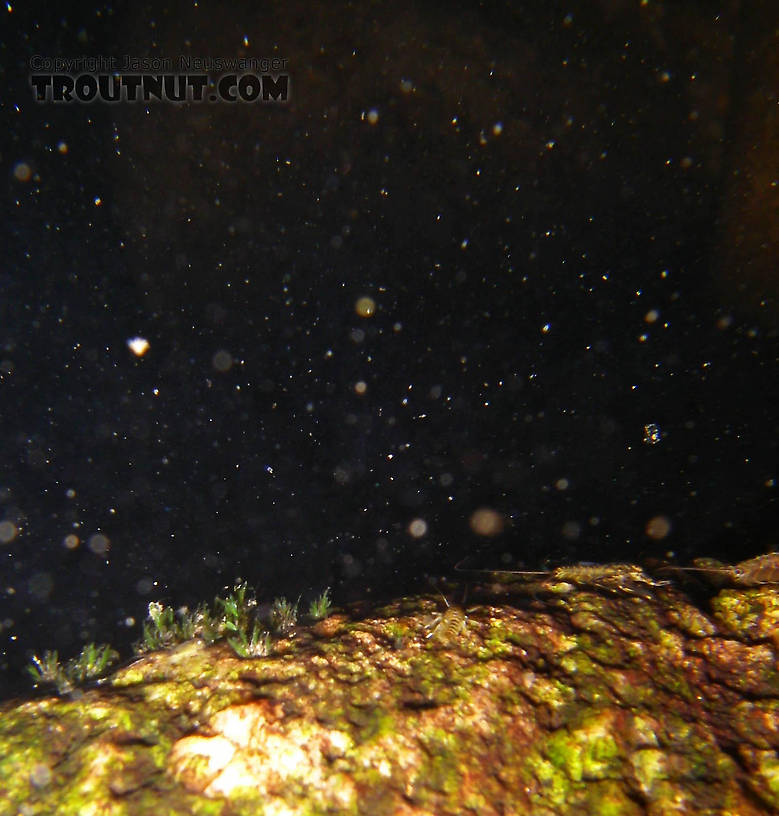
In this picture: Mayfly Genus Epeorus (Little Maryatts) and Mayfly Family Baetidae (Blue-Winged Olives).
StateNew York
LocationMongaup Creek
Date TakenApr 19, 2006
Date AddedApr 22, 2006
AuthorTroutnut
CameraPENTAX Optio WPi
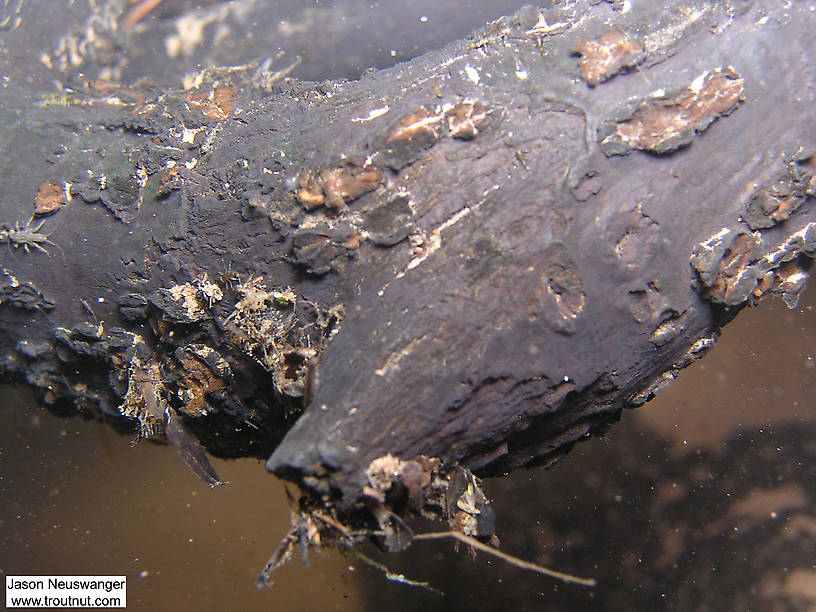
There are several mayfly and stonefly nymphs clinging to this log.
In this picture: Mayfly Family Baetidae (Blue-Winged Olives) and Stonefly Family Taeniopterygidae (Willowflies).
In this picture: Mayfly Family Baetidae (Blue-Winged Olives) and Stonefly Family Taeniopterygidae (Willowflies).
StateWisconsin
LocationEighteenmile Creek
Date TakenMar 19, 2004
Date AddedJan 25, 2006
AuthorTroutnut
CameraOlympus C740UZ
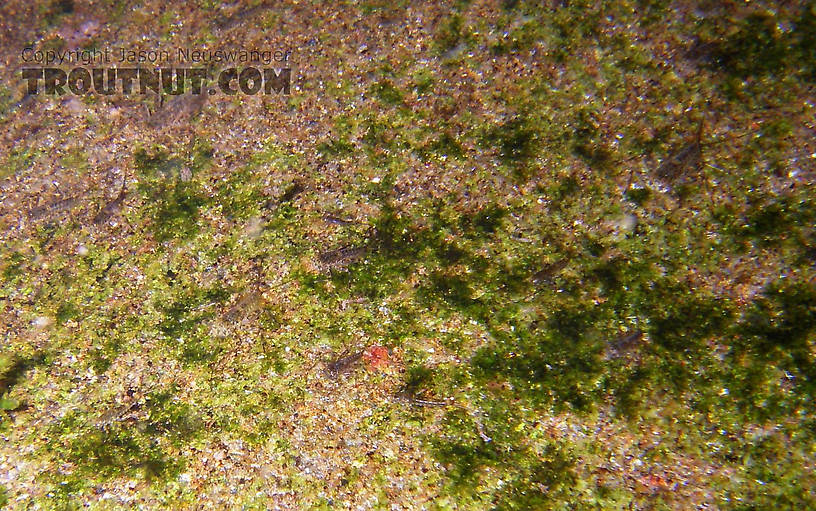
In this picture: Mayfly Genus Epeorus (Little Maryatts) and Mayfly Family Baetidae (Blue-Winged Olives).
StateNew York
LocationMongaup Creek
Date TakenApr 19, 2006
Date AddedApr 22, 2006
AuthorTroutnut
CameraPENTAX Optio WPi
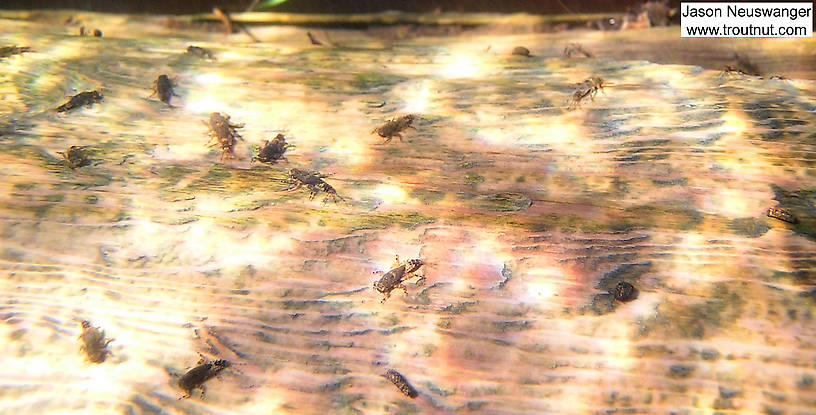
In this picture: Mayfly Species Ephemerella subvaria (Hendrickson) and Mayfly Species Ephemerella invaria (Sulphur Dun).
StateWisconsin
LocationNamekagon River
Date TakenApr 23, 2004
Date AddedJan 25, 2006
AuthorTroutnut
CameraOlympus C740UZ
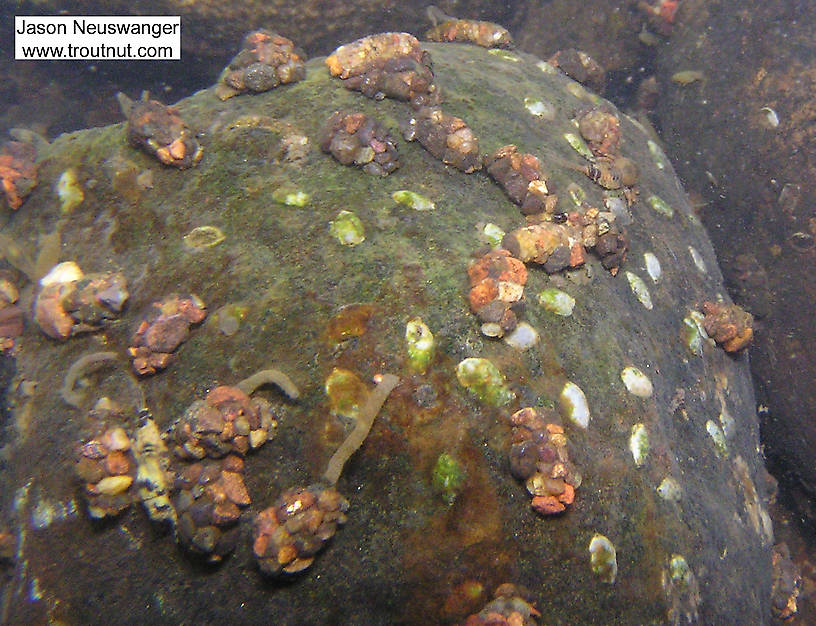
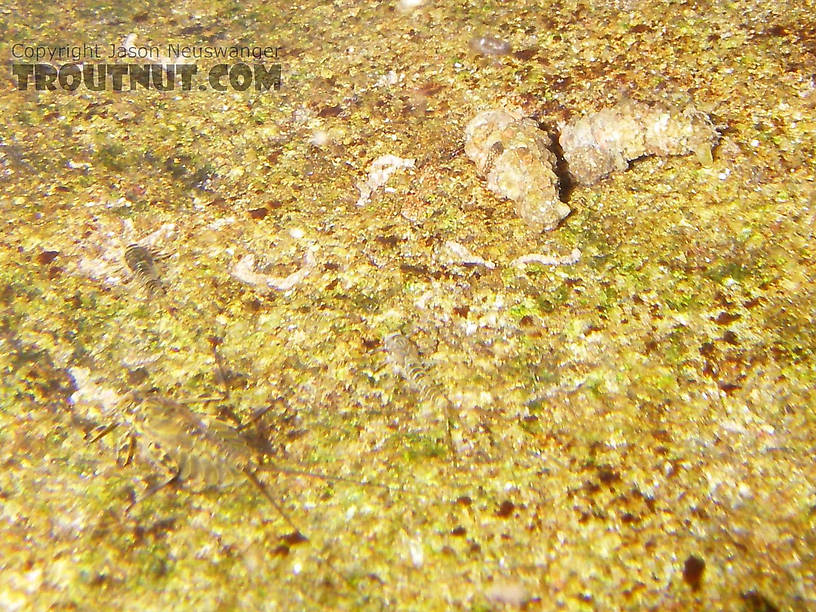
The white blotches on this rock are Leucotrichia caddisfly cases, and the wispy tubes are cases made by a type of midge.
In this picture: Mayfly Species Ephemerella invaria (Sulphur Dun), Caddisfly Species Leucotrichia pictipes (Ring Horn Microcaddis), and True Fly Family Chironomidae (Midges).
In this picture: Mayfly Species Ephemerella invaria (Sulphur Dun), Caddisfly Species Leucotrichia pictipes (Ring Horn Microcaddis), and True Fly Family Chironomidae (Midges).
StateWisconsin
LocationNamekagon River
Date TakenMar 24, 2004
Date AddedJan 25, 2006
AuthorTroutnut
CameraOlympus C740UZ
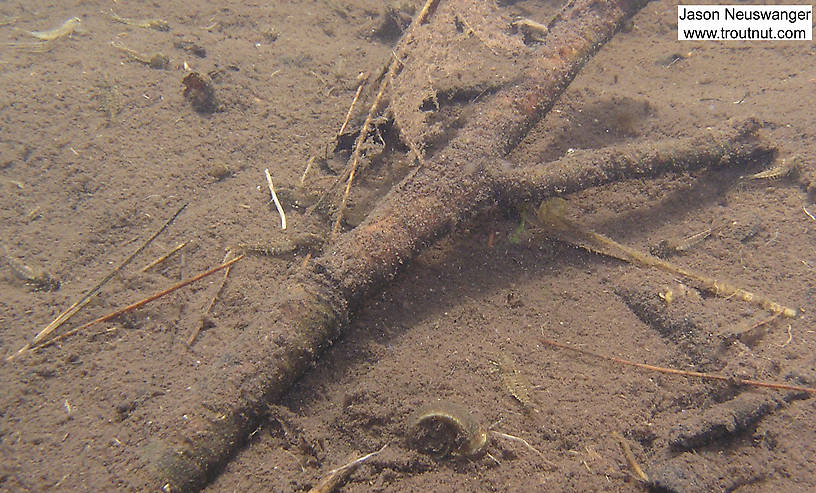
Several fast-swimming Siphlonurus nymphs blend in very well with the silt in this slow backwater along a trout stream.
In this picture: Mayfly Genus Siphlonurus (Gray Drakes).
In this picture: Mayfly Genus Siphlonurus (Gray Drakes).
StateWisconsin
LocationNamekagon River
Date TakenMay 15, 2004
Date AddedJan 25, 2006
AuthorTroutnut
CameraOlympus C740UZ
Top 10 Fly Hatches
 Baetis
 Baetidae
 Ephemerellidae
 Hexagenia limbata
 Chironomidae
 Heptageniidae
 Ephemerella subvaria
 Ephemerella
 Isonychia
 Hydropsychidae
Top Gift Shop Designs
 I outfish my daddy!
 Electric blue Hendrickson dun.
 I love buggers. Big, green, wooly ones.
 I outfish my husband!
 Be the trout.
 Eat mayflies.
Top Insect Specimens
 Baetisca obesa Mayfly Nymph
 Corydalus Hellgrammite Larva
 Neophylax Caddisfly Adult
 Pteronarcys biloba Stonefly Nymph
 Rhyacophila fuscula Caddisfly Larva
Miscellaneous Sites
Troutnut.com is copyright © 2004-2024 Jason
Neuswanger (email Jason). See my FAQ for information about use of my images.
 privacy policy
privacy policy