
Blog & Latest Updates
Fly Fishing Articles
Insects by Common Name


Arthropod Class Insecta (Insects)


Taxonomic Navigation -?-


1 order isn't included.
Common Name
| Match | Common Name |
 | Insects |
This is page 4 of specimens of Insecta. Visit the main Insecta page for:
- The behavior and habitat of Insecta.
- 114 underwater pictures of Insecta.
Pictures of 1229 Insect Specimens:
Female Isonychia bicolor (Mahogany Dun) Mayfly Dun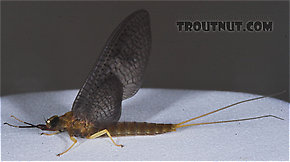 View 13 Pictures
View 13 PicturesCollected June 14, 2005 from the Namekagon River in Wisconsin
Added to Troutnut.com by Troutnut on May 26, 2006
Added to Troutnut.com by Troutnut on May 26, 2006
Nigronia serricornis (Fishfly) Hellgrammite Larva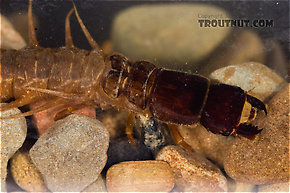 View 13 Pictures
View 13 PicturesCollected April 24, 2007 from Factory Brook in New York
Added to Troutnut.com by Troutnut on April 24, 2007
Added to Troutnut.com by Troutnut on April 24, 2007
Penelomax septentrionalis Mayfly Nymph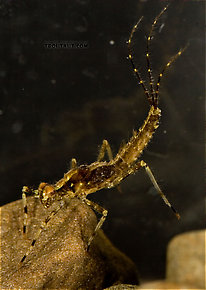 View 12 PicturesThis is surely the most distinctive-looking species in Ephemerellidae. I like the rugged, spindly look. If mayflies made movies, Penelomax septentrionalis would probably play the supervillain.
Maybe I should take a break and get something to eat.
View 12 PicturesThis is surely the most distinctive-looking species in Ephemerellidae. I like the rugged, spindly look. If mayflies made movies, Penelomax septentrionalis would probably play the supervillain.Maybe I should take a break and get something to eat.
Collected May 13, 2007 from the Delaware River in New York
Added to Troutnut.com by Troutnut on May 18, 2007
Added to Troutnut.com by Troutnut on May 18, 2007
Male Isonychia bicolor (Mahogany Dun) Mayfly Spinner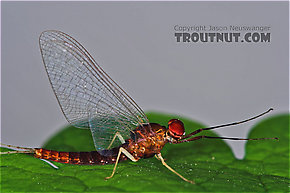 View 15 PicturesI got several really nice pictures of this spinner. I also collected a female on the same trip.
View 15 PicturesI got several really nice pictures of this spinner. I also collected a female on the same trip.Collected August 9, 2006 from the West Branch of Owego Creek in New York
Added to Troutnut.com by Troutnut on August 11, 2006
Added to Troutnut.com by Troutnut on August 11, 2006
Male Stenacron (Light Cahills) Mayfly Dun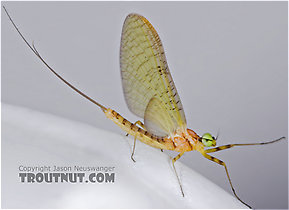 View 13 Pictures
View 13 PicturesCollected May 27, 2005 from the Teal River in Wisconsin
Added to Troutnut.com by Troutnut on May 22, 2006
Added to Troutnut.com by Troutnut on May 22, 2006
Rhyacophila fuscula (Green Sedge) Caddisfly Larva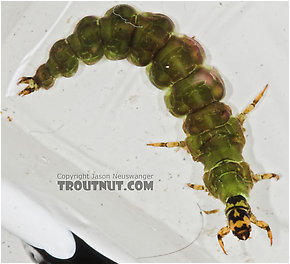 View 11 PicturesI collected this larva and several like it from the same stream and on the same day as this pupa. I suspect they're the same species.
View 11 PicturesI collected this larva and several like it from the same stream and on the same day as this pupa. I suspect they're the same species.Collected June 5, 2005 from the Long Lake Branch of the White River in Wisconsin
Added to Troutnut.com by Troutnut on May 25, 2006
Added to Troutnut.com by Troutnut on May 25, 2006
Male Ephemerella subvaria (Hendrickson) Mayfly Spinner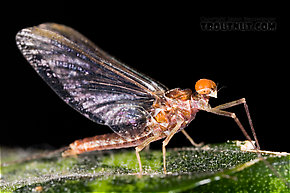 View 11 PicturesI collected this beautiful male Hendrickson specimen as a dun, along with a female Hendrickson from the same hatch. Both molted into spinners in my house within a couple of days.
View 11 PicturesI collected this beautiful male Hendrickson specimen as a dun, along with a female Hendrickson from the same hatch. Both molted into spinners in my house within a couple of days.Collected April 23, 2007 from Fall Creek in New York
Added to Troutnut.com by Troutnut on April 25, 2007
Added to Troutnut.com by Troutnut on April 25, 2007
Male Ephemerella aurivillii Mayfly Dun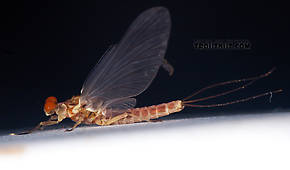 View 14 PicturesThis is the most widespread species of Ephemerella, and also the most abundant in some places, but nobody I've talked to seemed to know what its duns looked like, and there were no pictures of its duns online or in any angling books. That mystery is solved with this male dun, which hatched from a definitively identified nymph.
View 14 PicturesThis is the most widespread species of Ephemerella, and also the most abundant in some places, but nobody I've talked to seemed to know what its duns looked like, and there were no pictures of its duns online or in any angling books. That mystery is solved with this male dun, which hatched from a definitively identified nymph.Rhyacophila (Green Sedges) Caddisfly Pupa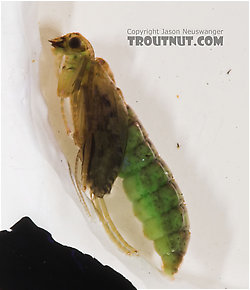 View 11 PicturesI collected this pupa and several like it from the same stream and on the same day as this larva. I suspect they're the same species. Every pupa I collected was in a brown casing like the one shown in one of the pictures below. I cut this pupa out of its case after a picture so you can see more details. It is close to but not fully developed.
View 11 PicturesI collected this pupa and several like it from the same stream and on the same day as this larva. I suspect they're the same species. Every pupa I collected was in a brown casing like the one shown in one of the pictures below. I cut this pupa out of its case after a picture so you can see more details. It is close to but not fully developed.Collected June 5, 2005 from the Long Lake Branch of the White River in Wisconsin
Added to Troutnut.com by Troutnut on May 25, 2006
Added to Troutnut.com by Troutnut on May 25, 2006
Male Drunella doddsii (Western Green Drake) Mayfly Dun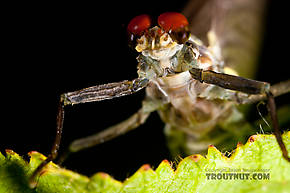 View 13 Pictures
View 13 PicturesCollected July 17, 2011 from the Gulkana River in Alaska
Added to Troutnut.com by Troutnut on July 20, 2011
Added to Troutnut.com by Troutnut on July 20, 2011
Top 10 Fly Hatches
 Baetis
 Baetidae
 Ephemerellidae
 Hexagenia limbata
 Chironomidae
 Ephemerella subvaria
 Heptageniidae
 Ephemerella
 Isonychia
 Hydropsychidae
Top Gift Shop Designs
 I outfish my daddy!
 Electric blue Hendrickson dun.
 I love buggers. Big, green, wooly ones.
 I outfish my husband!
 Be the trout.
 Eat mayflies.
Top Insect Specimens
 Baetisca obesa Mayfly Nymph
 Corydalus Hellgrammite Larva
 Neophylax Caddisfly Adult
 Pteronarcys biloba Stonefly Nymph
 Hydropsyche aenigma Caddisfly Adult
Miscellaneous Sites
Troutnut.com is copyright © 2004-2024 Jason
Neuswanger (email Jason). See my FAQ for information about use of my images.
 privacy policy
privacy policy