
Blog & Latest Updates
Fly Fishing Articles
Insects by Common Name


Saddle-case Maker Genus Glossosoma (Little Brown Short-horned Sedges)


Taxonomic Navigation -?-
Kingdom
Animalia (Animals)
» Phylum
Arthropoda (Arthropods)
» Class
Insecta (Insects)
» Order
Trichoptera (Caddisflies)
» Family
Glossosomatidae (Saddle-case Makers)
» Genus Glossosoma (Little Brown Short-horned Sedges)


13 species aren't included.
Common Names


Where & When
Regions: East, Midwest, West
Time Of Year (?): Early Summer
Preferred Waters: Riffle sections
Hatching Behavior
The pupae emerge on the surface, or by rising to the surface and then swimming to shore. The generally tend to trickle off all day in numbers too few to attract much interest or notice from either angler or trout.
Egg-Laying Behavior
Time Of Day: evenings, often at last light
Females dive underwater to oviposit. They can swarm in tremendous numbers, often mixed with several species.Larva & Pupa Biology
Current Speed: Fast, for most species
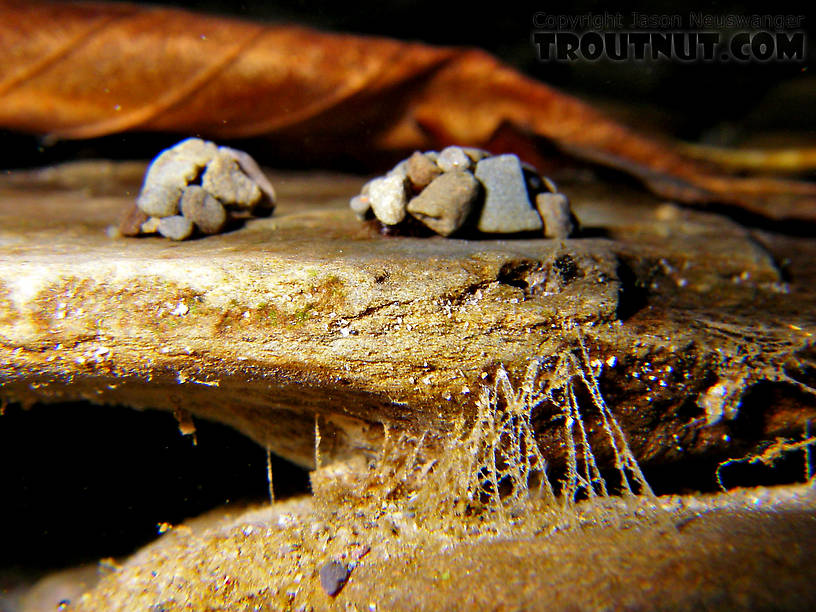
Shelter Type: Rocks, shaped kind of like a turtle shell
Because Glossosoma cases are built to a fixed size, the larvae have to abandon them and build new ones as they grow. In the process they often accidentally or deliberately end up drifting downstream for awhile. They synchronize this activity as tightly as most species synchronize emergence, prompting trout to feed selectively on the larvae. Even better news for the angler is this activity is diurnal. Unfortunately, the timing is not predictable and while generally a morning occurrence, it can happen any time of day. A further handicap is that the behavioral drift (Behavioral drift: The nymphs and larvae of many aquatic insects sometimes release their grip on the bottom and drift downstream for a while with synchronized timing. This phenomenon increases their vulnerability to trout just like emergence, but it is invisible to the angler above the surface. In many species it occurs daily, most often just after dusk or just before dawn.) is not visible. The angler will only know it's happening by periodically seining the drift or fishing proper imitations until the fish start to respond.Shelter Type: Rocks, shaped kind of like a turtle shell
This usually occurs several times during their development in the spring and summer. In Caddisflies, LaFontaine recommends imitating the naked pinkish-colored larvae drifting without their cases. They also come in shades of pale tan or yellow.
Pictures of 2 Saddle-case Maker Specimens in the Genus Glossosoma:
Glossosoma (Little Brown Short-horned Sedges) Saddle-case Maker Adult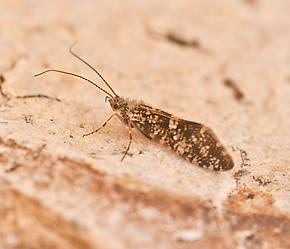 View 1 Pictures
View 1 PicturesCollected March 13, 2010 from the Big Thompson River in Montana
Added to Troutnut.com by Bnewell on June 26, 2011
Added to Troutnut.com by Bnewell on June 26, 2011
Male Glossosoma alascense Saddle-case Maker Adult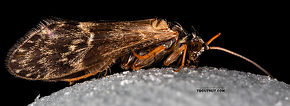 View 8 PicturesI lost track of this specimen before I could get it under my microscope, but caddis expert Dave Ruiter was able to identify it from pictures as Glossosoma, with an uncertain suggestion of G. alascense as the most likely species.
View 8 PicturesI lost track of this specimen before I could get it under my microscope, but caddis expert Dave Ruiter was able to identify it from pictures as Glossosoma, with an uncertain suggestion of G. alascense as the most likely species.2 Underwater Pictures of Glossosoma Saddle-case Makers:


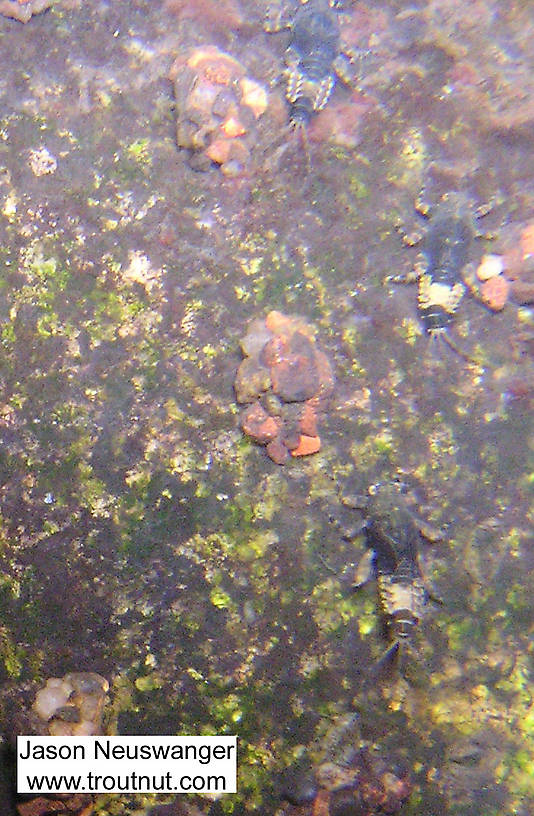
Three big Ephemerella subvaria mayfly nymphs share a rock with some cased caddis larvae.
In this picture: Mayfly Species Ephemerella subvaria (Hendrickson) and Saddle-case Maker Genus Glossosoma (Little Brown Short-horned Sedges).
In this picture: Mayfly Species Ephemerella subvaria (Hendrickson) and Saddle-case Maker Genus Glossosoma (Little Brown Short-horned Sedges).
StateWisconsin
LocationNamekagon River
Date TakenMar 20, 2004
Date AddedJan 25, 2006
AuthorTroutnut
CameraOlympus C740UZ
StateNew York
LocationEast Branch of Trout Brook
Date TakenSep 20, 2006
Date AddedOct 4, 2006
AuthorTroutnut
CameraPENTAX Optio WPi
Recent Discussions of Glossosoma
Glossosoma intermedium or nigrior 5 Replies »
Posted by Wiflyfisher on Jun 30, 2020
Last reply on Jul 31, 2020 by Creno
Caught and photographed in the Upper Midwest on May 12, 2020. I resized my original photo for the website.
(User-posted images are only viewable in the forum section.)
Replypupa color 7 Replies »(User-posted images are only viewable in the forum section.)
I was thinking very dark olive w/a ginger shuck. Sound right to any of you?
thanks
jeff
Replythanks
jeff
There are 323 more topics.
Your Thoughts On Glossosoma:
Top 10 Fly Hatches
 Baetis
 Baetidae
 Ephemerellidae
 Hexagenia limbata
 Chironomidae
 Ephemerella subvaria
 Heptageniidae
 Ephemerella
 Isonychia
 Hydropsychidae
Top Gift Shop Designs
 I outfish my daddy!
 Electric blue Hendrickson dun.
 I love buggers. Big, green, wooly ones.
 I outfish my husband!
 Be the trout.
 Eat mayflies.
Top Insect Specimens
 Baetisca obesa Mayfly Nymph
 Corydalus Hellgrammite Larva
 Neophylax Caddisfly Adult
 Pteronarcys biloba Stonefly Nymph
 Hydropsyche aenigma Caddisfly Adult
Miscellaneous Sites
Troutnut.com is copyright © 2004-2024 Jason
Neuswanger (email Jason). See my FAQ for information about use of my images.
 privacy policy
privacy policy