
Blog & Latest Updates
Fly Fishing Articles
Insects by Common Name


Insect Order Trichoptera (Caddisflies)


Taxonomic Navigation -?-
Kingdom
Animalia (Animals)
» Phylum
Arthropoda (Arthropods)
» Class
Insecta (Insects)
» Order Trichoptera (Caddisflies)


5 families aren't included.
Common Name
| Match | Common Name |
 | Caddisflies |
This is page 2 of underwater photos of Trichoptera. Visit the main Trichoptera page for:
- The behavior and habitat of Trichoptera.
- Studio pictures of 129 Trichoptera specimens.
55 Underwater Pictures of Caddisflies:

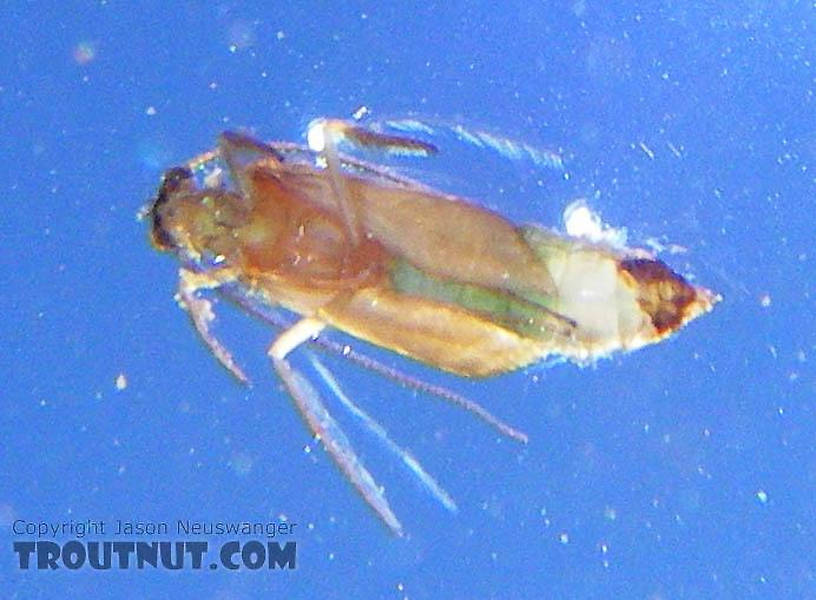
A Brachycentrus "Apple Caddis" pupa scoots around in the surface film. Apparently it had some difficulty emerging, so I was able to slip my camera underneath it and take a picture from below.
In this picture: Caddisfly Species Brachycentrus appalachia (Apple Caddis).
In this picture: Caddisfly Species Brachycentrus appalachia (Apple Caddis).

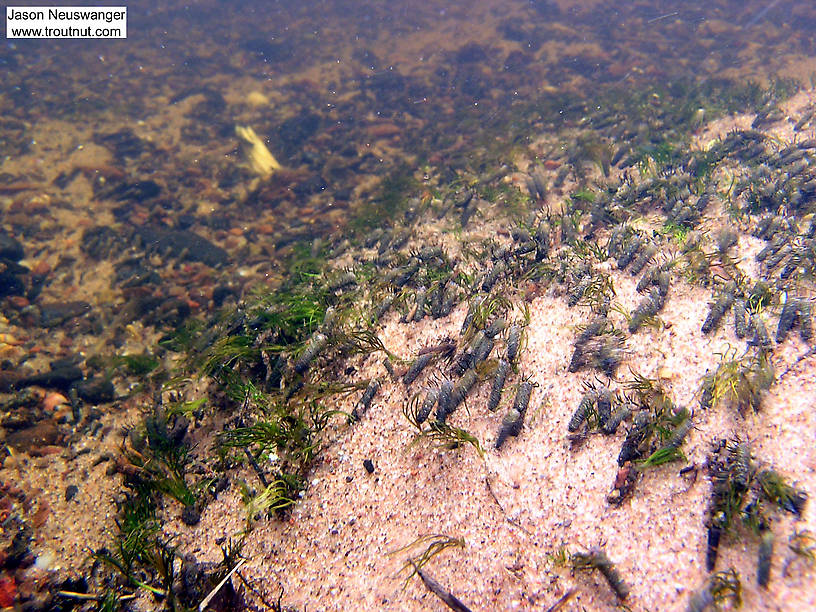
Cased caddis larvae blanket this section of stream bottom.
In this picture: Insect Order Trichoptera (Caddisflies).
In this picture: Insect Order Trichoptera (Caddisflies).
StateWisconsin
LocationEighteenmile Creek
Date TakenApr 14, 2004
Date AddedJan 25, 2006
AuthorTroutnut
CameraOlympus C740UZ
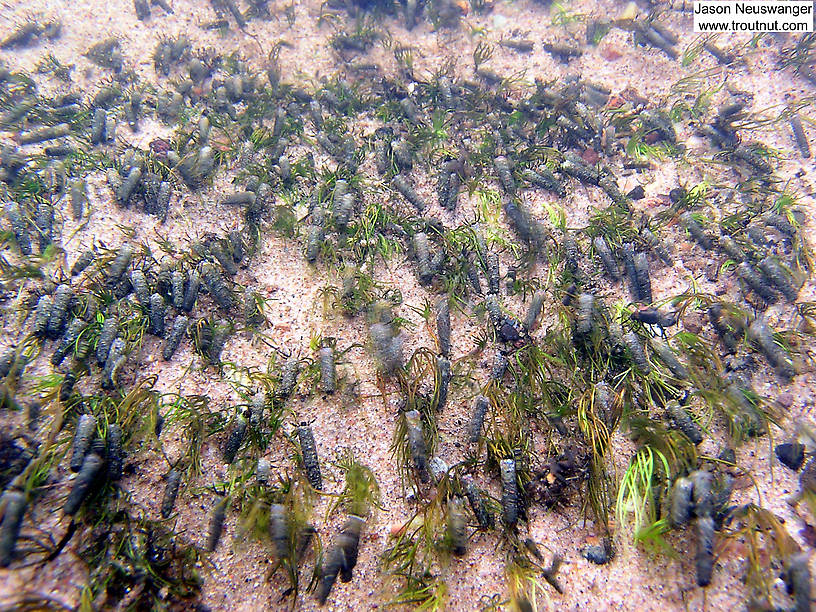
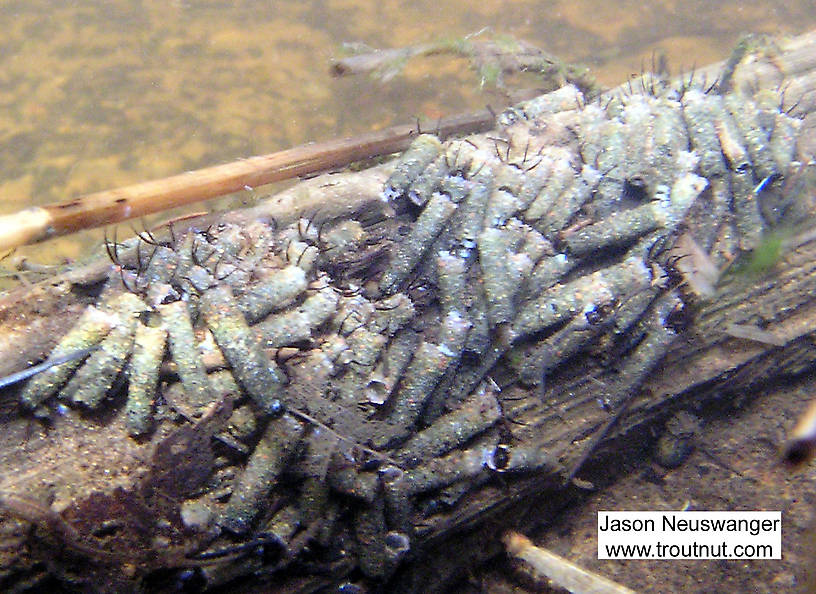
Hundreds of cased caddis larvae cling to sparse weed growth in the sand under heavy current.
In this picture: Insect Order Trichoptera (Caddisflies).
In this picture: Insect Order Trichoptera (Caddisflies).
StateWisconsin
LocationEighteenmile Creek
Date TakenApr 14, 2004
Date AddedJan 25, 2006
AuthorTroutnut
CameraOlympus C740UZ
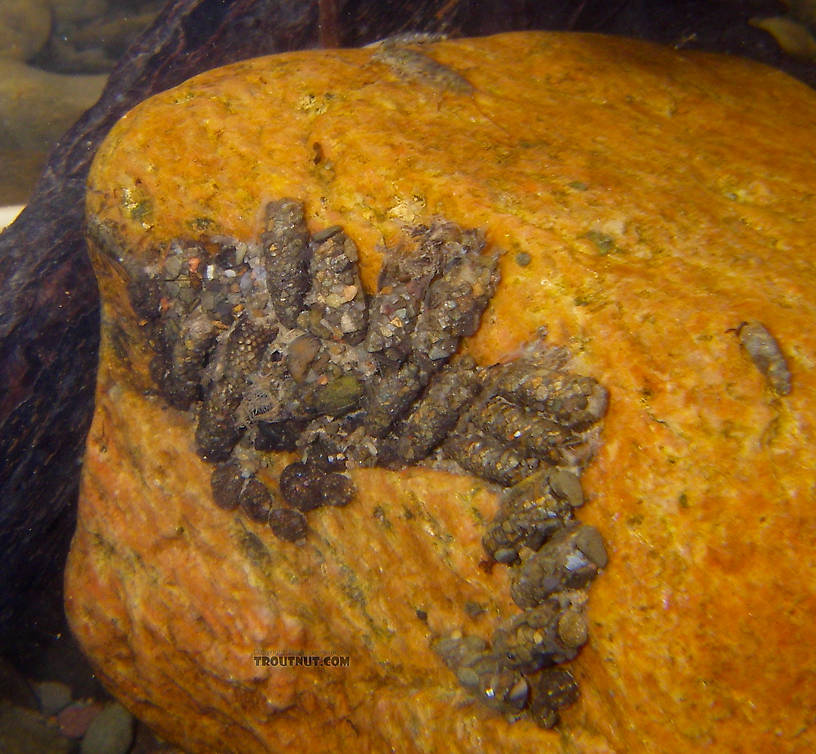
A variety of cased caddisfly larvae, probably mostly Neophylax, have clustered along the backside of a rock in fast water. There seem to be some Helicopsychidae larvae clustered along the bottom, and a few other taxa are mixed in. It's interesting that several larvae have especially large stones placed over the front openings of their cases, perhaps to block the case off for pupation.
It does seem to be the wrong time of year for Neophylax to be pupating, but that was the ID given for one of these which I collected and photographed up close.
In this picture: Caddisfly Genus Helicopsyche (Speckled Peters) and Caddisfly Genus Neophylax (Autumn Mottled Sedges).
It does seem to be the wrong time of year for Neophylax to be pupating, but that was the ID given for one of these which I collected and photographed up close.
In this picture: Caddisfly Genus Helicopsyche (Speckled Peters) and Caddisfly Genus Neophylax (Autumn Mottled Sedges).
StateNew York
LocationCayuta Creek
Date TakenApr 14, 2007
Date AddedMay 3, 2007
AuthorTroutnut
CameraPENTAX Optio WPi
StateWisconsin
LocationNamekagon River
Date TakenMar 24, 2004
Date AddedJan 25, 2006
AuthorTroutnut
CameraOlympus C740UZ
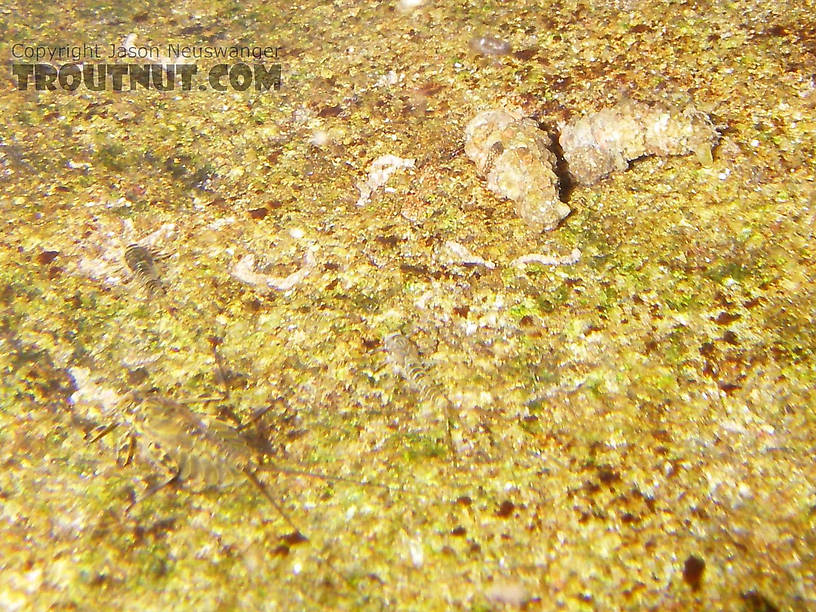
In this picture: Mayfly Family Baetidae (Blue-Winged Olives), Insect Order Trichoptera (Caddisflies), and Mayfly Genus Epeorus (Little Maryatts).
StateNew York
LocationMongaup Creek
Date TakenApr 19, 2006
Date AddedApr 22, 2006
AuthorTroutnut
CameraPENTAX Optio WPi
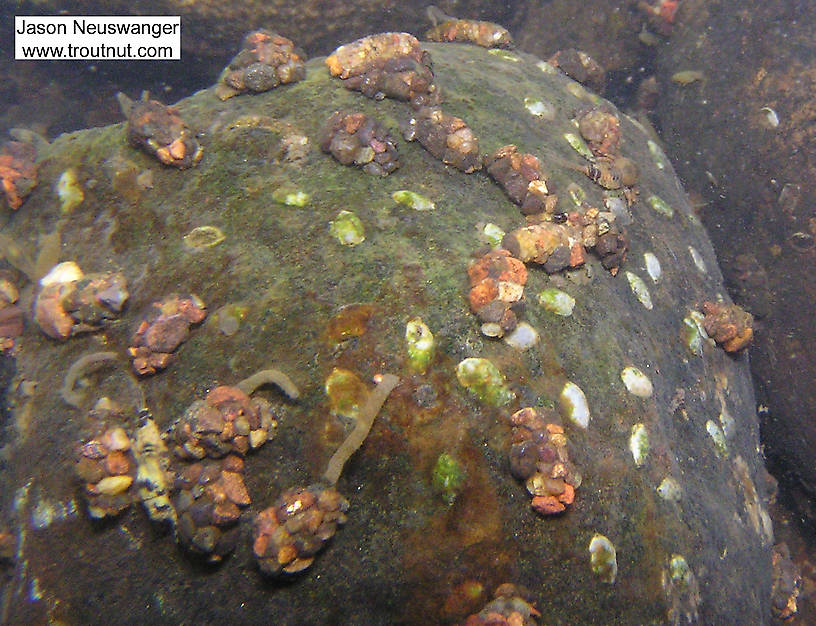
The white blotches on this rock are Leucotrichia caddisfly cases, and the wispy tubes are cases made by a type of midge.
In this picture: Mayfly Species Ephemerella invaria (Sulphur Dun), Caddisfly Species Leucotrichia pictipes (Ring Horn Microcaddis), and True Fly Family Chironomidae (Midges).
In this picture: Mayfly Species Ephemerella invaria (Sulphur Dun), Caddisfly Species Leucotrichia pictipes (Ring Horn Microcaddis), and True Fly Family Chironomidae (Midges).
StateWisconsin
LocationNamekagon River
Date TakenMar 24, 2004
Date AddedJan 25, 2006
AuthorTroutnut
CameraOlympus C740UZ
StateWisconsin
LocationEighteenmile Creek
Date TakenApr 14, 2004
Date AddedJan 25, 2006
AuthorTroutnut
CameraOlympus C740UZ
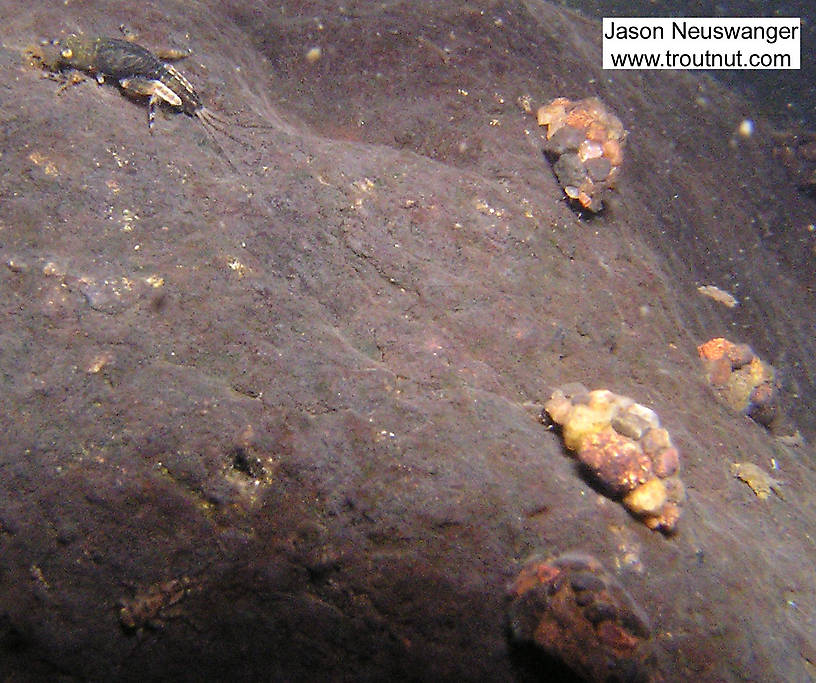
There's a large Ephemerella subvaria nymph in the top left.
In this picture: Mayfly Species Ephemerella invaria (Sulphur Dun), Insect Order Trichoptera (Caddisflies), and Mayfly Species Ephemerella subvaria (Hendrickson).
In this picture: Mayfly Species Ephemerella invaria (Sulphur Dun), Insect Order Trichoptera (Caddisflies), and Mayfly Species Ephemerella subvaria (Hendrickson).
StateWisconsin
LocationNamekagon River
Date TakenMar 20, 2004
Date AddedJan 25, 2006
AuthorTroutnut
CameraOlympus C740UZ
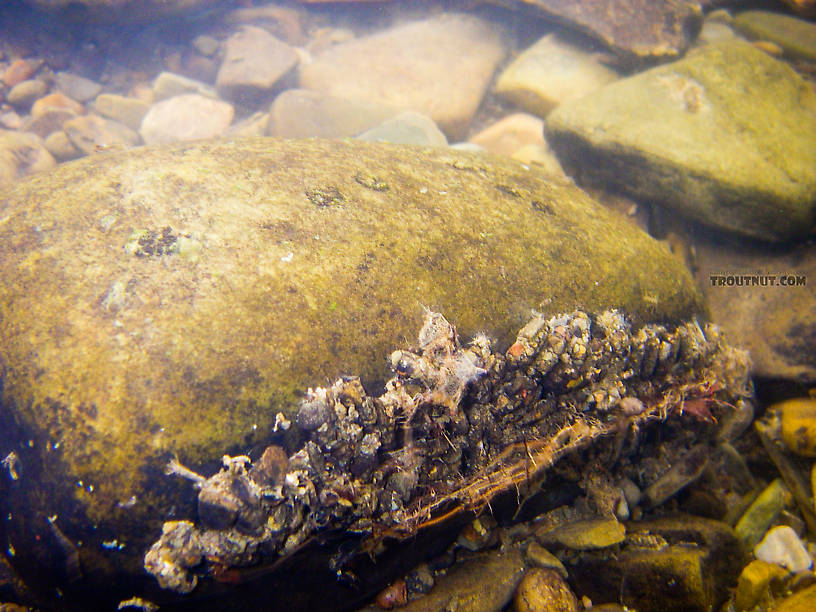
A wide variety of caddis larvae and other insects have clustered together on the backside of this rock in fast water.
In this picture: Caddisfly Genus Neophylax (Autumn Mottled Sedges).
In this picture: Caddisfly Genus Neophylax (Autumn Mottled Sedges).
StateNew York
LocationCayuta Creek
Date TakenApr 14, 2007
Date AddedMay 3, 2007
AuthorTroutnut
CameraPENTAX Optio WPi
Top 10 Fly Hatches
 Baetis
 Baetidae
 Ephemerellidae
 Hexagenia limbata
 Chironomidae
 Heptageniidae
 Ephemerella subvaria
 Ephemerella
 Isonychia
 Hydropsychidae
Top Gift Shop Designs
 I outfish my daddy!
 Electric blue Hendrickson dun.
 I love buggers. Big, green, wooly ones.
 I outfish my husband!
 Be the trout.
 Eat mayflies.
Top Insect Specimens
 Baetisca obesa Mayfly Nymph
 Corydalus Hellgrammite Larva
 Neophylax Caddisfly Adult
 Rhyacophila fuscula Caddisfly Larva
 Pteronarcys biloba Stonefly Nymph
Miscellaneous Sites
Troutnut.com is copyright © 2004-2024 Jason
Neuswanger (email Jason). See my FAQ for information about use of my images.
 privacy policy
privacy policy